
pattern

Advanced Vocabulary for the GRE - Everyone Is Entitled to Their Own Opinion!

Here you will learn some English words about opinion, such as "adhere", "pillory", "spate", etc. that are needed for the GRE exam.

Review

Flashcards

Forms

Spelling

Quiz

Start learning
Advanced Words Needed for the GRE
to adhere
to adhere
[Verb]

to devotedly follow or support something, such as a rule, belief, plan, etc.

Ex: He adheres to the teachings of his faith and practices them devoutly.
Close
Sign in
to beg
to beg
[Verb]

to avoid settling or dealing with a problem to avoid responsibility

Ex: The CEO tried to beg the matter of the company 's financial losses by emphasizing its recent successes .
Close
Sign in
to castigate

to strongly and harshly criticize someone or something

Ex: He was castigating his employees for not meeting the company 's standards .
Close
Sign in
to construe

to interpret a certain meaning from something
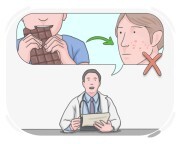
Ex: Scientists aim to construe the implications of experimental results to advance their understanding .
Close
Sign in
to debunk
to debunk
[Verb]

to reveal the exaggeration or falseness of a belief, claim, idea, etc.

Ex: In his documentary , the filmmaker aimed to debunk conspiracy theories surrounding a famous historical event .
Close
Sign in
to denigrate

to intentionally make harmful statements to damage a person or thing's worth or reputation

Ex: Rather than offering constructive criticism , the critic chose to denigrate the artist , questioning their talent and integrity .
Close
Sign in
to digress

to steer away from the main subject and focus on a different topic in speech or writing

Ex: While discussing the budget , he began to digress into unrelated financial details .
Close
Sign in
to elicit
to elicit
[Verb]

to help a student come to a conclusion themselves instead of providing them with an answer directly

Ex: In the science experiment , the instructor asked guiding questions to elicit the expected outcomes from the students .
Close
Sign in
to pillory

to publicly criticize or mock someone

Ex: By the end of the day , she will have been pilloried by critics for her performance .
Close
Sign in
to qualify

to restate something one has already said in order to limit the meaning it conveys

Ex: He qualified his praise of the project to acknowledge some ongoing challenges .
Close
Sign in
to repine
to repine
[Verb]

to either feel or display dissatisfaction

Ex: Tomorrow , they will be repining about the results of the recent review .
Close
Sign in
to vacillate

to be undecided and not know what opinion, idea, or course of action to stick to

Ex: He has been vacillating on whether to move to a new city or stay where he is .
Close
Sign in
enigma
enigma
[noun]

the quality of being very challenging to explain or understand

Ex: His motives for the decision were an enigma to his colleagues .
Close
Sign in
gumption
gumption
[noun]

the ability to think sensibly and reasonably and decide what should be done

Ex: The manager valued employees with the gumption to make sensible decisions on their own .
Close
Sign in
intimation

the indirect conveying of what one thinks or wants to say

Ex: The author ’s intimation of a deeper meaning was revealed through the subtext .
Close
Sign in
spate
spate
[noun]

an amount or number that is considered to be large

Ex: The company experienced a spate of positive reviews after the product launch .
Close
Sign in
tirade
tirade
[noun]

a lengthy speech that uses harsh and angry language and intends to condemn or criticize

Ex: She was left speechless after his angry tirade about the recent changes .
Close
Sign in
likewise
likewise
[Adverb]

used when introducing additional information to a statement that has just been made

Ex: He was concerned about the budget , and the investors likewise had financial worries .
Close
Sign in
cogent
cogent
[Adjective]

(of cases, statements, etc.) capable of making others believe that something is true with the use of logic and reasoning
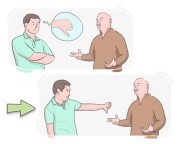
Ex: The article presented a cogent analysis of the economic challenges .
Close
Sign in
explicit
explicit
[Adjective]

expressed very clearly, leaving no doubt or confusion

Ex: His explicit explanation clarified the complex procedure for everyone .
Close
Sign in
fallacious
fallacious
[Adjective]

logically or factually flawed

Ex: The belief that all swans are white is fallacious.
Close
Sign in
germane
germane
[Adjective]

having the quality of being closely connected to the subject at hand in a way that is appropriate

Ex: Her questions were germane to the discussion about improving team performance .
Close
Sign in
hagiographic
hagiographic
[Adjective]

giving a highly exaggerated and flattering representation of a person as if they are perfect

Ex: Critics accused the documentary of presenting a hagiographic view of the celebrity .
Close
Sign in
implicit
implicit
[Adjective]

suggesting something without directly stating it

Ex: There was an implicit understanding between the team members that they would support each other .
Close
Sign in
mordant
mordant
[Adjective]

having a quality that is criticizing and harsh, yet humorous

Ex: They appreciated the mordant commentary in the editorial for its clever yet harsh observations .
Close
Sign in
puerile
puerile
[Adjective]

behaving in such a manner that displays one's lack of maturity and common sense
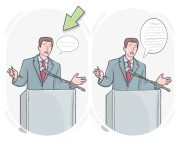
Ex: The movie was criticized for its puerile humor and lack of depth .
Close
Sign in
sententious
sententious
[Adjective]

keeping one's speech short but extremely meaningful

Ex: The coach ’s sententious pep talks were always brief but filled with motivating wisdom .
Close
Sign in
unequivocal
unequivocal
[Adjective]

expressing one's ideas and opinions so clearly that it leaves no room for doubt

Ex: She made an unequivocal statement about her position on the issue .
Close
Sign in
vitriolic
vitriolic
[Adjective]

characterized by bitter, harsh, and caustic criticism or comments

Ex: His vitriolic remarks during the debate were meant to provoke and insult .
Close
Sign in
LanGeek
Download LanGeek app
