
Insight - Intermediate - Vocabulary Insight 8
Here you will find the words from Vocabulary Insight 8 in the Insight Intermediate coursebook, such as "rush off", "at a loose end", "glamour", etc.
Review
Flashcards
Forms
Spelling
Quiz

![to [stand] on {one's} own (two|) feet](https://cdn.langeek.co/photo/41700/thumb/350?type=jpeg "to [stand] on {one's} own (two|) feet")
to be able to take care of oneself without needing any assistance from others
![to [put] {one's} foot up](/assets/img/no-pic-700w.png "to [put] {one's} foot up")
to elevate one's foot in order to rest or relax
![to [put] {one's} foot down](https://cdn.langeek.co/photo/42188/thumb/350?type=jpeg "to [put] {one's} foot down")
to firmly take control and enforce a specific action
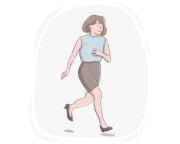
to leave quickly or abruptly, often because of an urgent or unexpected situation
![to [land] on {one's} feet](https://cdn.langeek.co/photo/40445/thumb/350?type=jpeg "to [land] on {one's} feet")
to experience success or good fortune, particularly after a period of facing challenges or setbacks
![to [get|start] off on the wrong foot](https://cdn.langeek.co/photo/40189/thumb/350?type=jpeg "to [get|start] off on the wrong foot")
to have an unsuccessful or unpleasant beginning in a relationship or activity
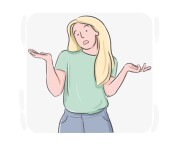
used to describe someone who has no plans or obligations, often feeling uncertain about how to spend their time
![to [make] (both|) ends meet](https://cdn.langeek.co/photo/41760/thumb/350?type=jpeg "to [make] (both|) ends meet")
to make enough money to pay for one's basic needs
to reach the conclusion or final stage of something, often after a period of time
used to refer to the conclusion or outcome of a situation or event
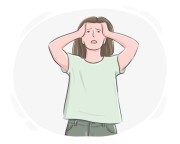
unable to cope with anything due to a lack of energy or patience
to engage in activities or behavior aimed at resolving or improving a situation involving someone or something
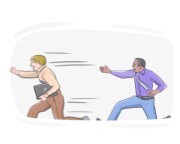
to leave somewhere with something that one does not own
![to [fall] on {one's} feet](https://cdn.langeek.co/photo/40391/thumb/350?type=jpeg "to [fall] on {one's} feet")
to find oneself in good condition after surviving a difficult experience
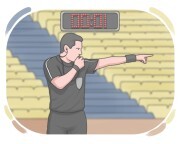
to begin to act, happen, etc. in a particular manner
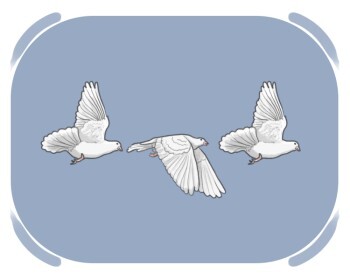

the exciting and attractive quality of a person, place, etc. that makes them desirable
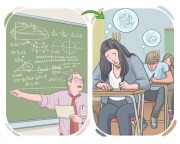
to invite someone to compete or strongly suggest they should do something, often to test their abilities or encourage action

a feeling of anxiety and worry caused by different life problems
the act of doing or performing something again
to make changes to or modify something, making it slightly different
![to [have] (a lot|too much) on {one's} plate](https://cdn.langeek.co/photo/19622/thumb/multitask/350?type=jpeg "to [have] (a lot|too much) on {one's} plate")
to have a certain amount of tasks or problems that need to be dealt with
![to [rise] to the (occasion|challenge)](https://cdn.langeek.co/photo/43080/thumb/350?type=jpeg "to [rise] to the (occasion|challenge)")
to demonstrate one's ability in surpassing obstacles and dealing with difficult situations
![[show|teach] {sb} the ropes](https://cdn.langeek.co/photo/42510/thumb/350?type=jpeg "[show|teach] {sb} the ropes")
to show or teach someone how a particular job or task is done
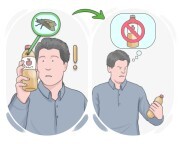
to refuse to buy, use, or participate in something as a way to show disapproval or to try to bring about a change
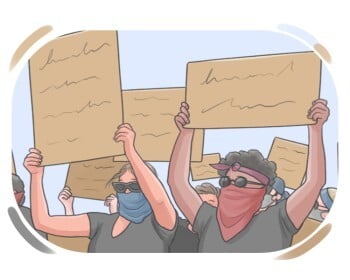
a display of support for or protest against something or someone by a march or public meeting
to walk firmly with regular steps

to put a great deal of effort to overcome difficulties or achieve a goal
having a significant purpose or importance

