pattern

SAT Natural Sciences - Geography and Oceanography

Here you will learn some English words related to geography and oceanography, such as "alpine", "glacier", "boreal", etc. that you will need to ace your SATs.

Review

Flashcards

Forms

Spelling

Quiz

Start learning
SAT Vocabulary for Natural Sciences
geographer

a person who studies the Earth's landscapes, climates, populations, and their relationships to human activities and the environment

Ex: The geographer used satellite images and GIS technology to map the changes in land use over the past decade. 
Close
Sign in
meteorologist

a scientist who studies and predicts weather conditions by analyzing atmospheric patterns, utilizing tools such as weather models, instruments, and data to provide forecasts and weather-related information

Ex: The meteorologist on the news predicted rain for the weekend. 
Close
Sign in
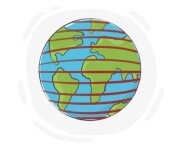
hemisphere

one of the two halves of the Earth, separated by the equator or a meridian

Ex: The Northern Hemisphere experiences winter when the Southern Hemisphere is in summer. 
Close
Sign in
stratosphere

the atmospheric layer above the troposphere, where temperature generally increases with altitude and the ozone layer is situated
Ex: The stratosphere contains the ozone layer, crucial for absorbing and blocking harmful ultraviolet radiation. 
Close
Sign in
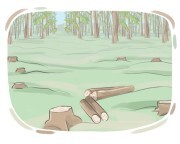
deforestation

the extensive removal of forests, typically causing environmental damage

Ex: Large-scale deforestation is driven by the demand for agricultural land. 
Close
Sign in
topographical
topographical
[Adjective]

related to the detailed mapping or description of the physical features and landscape of a particular area
Ex: The topographical survey revealed the steep slopes and valleys of the mountainous region. 
Close
Sign in
latitude
latitude
[noun]

an imaginary horizontal circle around the Earth parallel to the equator, used to measure north-south position

Ex: The explorer recorded the latitude of the new settlement. 
Close
Sign in
subterranean
subterranean
[Adjective]

situated, occurring, or existing beneath the surface of the earth

Ex: The subterranean tunnels were used for secret military operations during the war. 
Close
Sign in
boreal
boreal
[Adjective]

related to regions or climates located in the northern latitudes of the Earth, characterized by cold temperatures and typically dominated by coniferous forests

Ex: The boreal forests of Canada are home to diverse wildlife adapted to cold winters, such as moose, wolves, and bears. 
Close
Sign in
landmass
landmass
[noun]

a large, unbroken expanse of land, like a continent or a big island, standing out from smaller land features

Ex: Asia is the largest landmass on Earth, encompassing diverse climates and cultures. 
Close
Sign in
circumpolar
circumpolar
[Adjective]

related to areas or phenomena located around the poles of the Earth, particularly within the Arctic and Antarctic circles
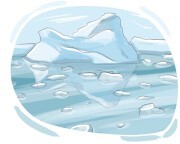
Ex: Circumpolar regions experience extreme seasonal variations in daylight, with continuous daylight in summer and darkness in winter. 
Close
Sign in
glacier
glacier
[noun]

a large mass of ice that forms over long periods of time, especially in polar regions or high mountains
Ex: Scientists study glaciers to understand the effects of climate change on ice melt and sea-level rise. 
Close
Sign in
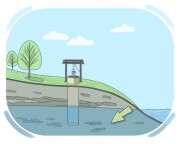
aquifer
aquifer
[noun]

a layer of rock or sediment that stores and transmits groundwater

Ex: Farmers drill wells into the aquifer to access water for irrigation. 
Close
Sign in
geodetic
geodetic
[Adjective]

related to the science of measuring and understanding the Earth's shape, size, gravitational field, and the precise locations of points on its surface

Ex: Geodetic surveys are essential for creating accurate maps and charts used in navigation and land development. 
Close
Sign in
overseas
overseas
[Adverb]

across the ocean or sea, referring to travel or transport to foreign countries or distant lands

Ex: The researchers conducted their study overseas, gathering data from coastal regions in Southeast Asia. 
Close
Sign in
alpine
alpine
[Adjective]

related to the Alps mountain range and the people who live there

Ex: The alpine villages are known for their charming architecture and stunning mountain views. 
Close
Sign in
outback
outback
[noun]

remote and sparsely populated inland regions of Australia, typically characterized by arid landscapes and minimal human habitation

Ex: The vast expanse of the Australian outback is known for its red desert sands and expansive plains. 
Close
Sign in
highlands
highlands
[noun]

the elevated regions or mountainous areas that are higher than the surrounding terrain, often characterized by cooler temperatures and diverse ecosystems

Ex: The Scottish Highlands are famous for their rugged beauty, historic castles, and picturesque lochs. 
Close
Sign in
atmospheric
atmospheric
[Adjective]

having a connection to or originating in the Earth's atmosphere

Ex: Atmospheric conditions can affect weather patterns and climate. 
Close
Sign in
smog event

a period of intense air pollution characterized by high levels of a mixture of pollutants

Close
Sign in
landfill
landfill
[noun]

a piece of land under which waste material is buried

Ex: The city opened a new landfill to accommodate its growing waste management needs. 
Close
Sign in
oceanographer

a scientist specializing in the study of oceans, focusing on their physical properties, marine life, ecosystems, and interactions with the atmosphere and land

Ex: The oceanographer conducted research aboard a research vessel to study deep-sea currents. 
Close
Sign in
epipelagic
epipelagic
[Adjective]

relating to the upper layer of the oceanic zone, extending from the surface to a depth of about 200 meters

Close
Sign in
mesopelagic
mesopelagic
[Adjective]

relating to the middle layer of the oceanic zone, extending from a depth of about 200 meters to about 1000 meters

Close
Sign in
bathypelagic
bathypelagic
[Adjective]

relating to the deep layer of the oceanic zone, extending from a depth of about 1000 meters to about 4000 meters below the surface

Close
Sign in
reservoir
reservoir
[noun]

a lake, either natural or artificial, from which water is supplied to houses

Ex: The city's reservoir, nestled in the hills, stores water from nearby rivers and supplies it to thousands of homes. 
Close
Sign in
riparian
riparian
[Adjective]

related to areas or ecosystems situated along the banks of rivers, streams, or other water bodies

Ex: The riparian zone along the riverbank is lush with vegetation that thrives on the water's edge. 
Close
Sign in
water column

the vertical column of water in a body of water, such as an ocean, sea, lake, or river, extending from the surface to the bottom

Close
Sign in
seaboard
seaboard
[noun]

the coastal regions or areas adjacent to the sea or ocean, often characterized by economic activities such as shipping, fishing, and tourism

Ex: The bustling cities and ports along the seaboard contribute significantly to the country's economy. 
Close
Sign in
intertidal
intertidal
[Adjective]

related to the zone between the high and low tide marks on the shore, where marine organisms are adapted to alternating periods of exposure to air and water

Ex: Intertidal creatures like crabs and mussels are adapted to withstand both wet and dry conditions. 
Close
Sign in
tidal station

a monitoring station located along a coastline or in a body of water that measures and records tidal data

Close
Sign in
aphotic
aphotic
[Adjective]

related to ocean zones where no sunlight penetrates, typically below 200 meters deep, supporting organisms adapted to darkness

Ex: The aphotic zone of the ocean is home to unique bioluminescent organisms that generate their own light. 
Close
Sign in
LanGeek
Download LanGeek app