Cambridge IELTS 19 - Academic - Test 2 - Listening - Part 1

Here you can find the vocabulary from Test 2 - Listening - Part 1 in the Cambridge IELTS 19 - Academic coursebook, to help you prepare for your IELTS exam.

review-disable

review

flashcard-disable

flashcard

spelling-disable

spelling

quiz-disable

quiz

start-learning
Cambridge IELTS 19 - Academic
impressive [adjective]

causing admiration because of size, skill, importance, etc.

Ex: The view from the top of the mountain was absolutely impressive .
to get [verb]

to force or convince someone to do something

Ex: He got the committee to approve his innovative idea .
at a time [adverb]

used to describe doing things in separate amounts, steps, or groups instead of all at once
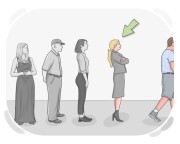
Ex: She prefers to handle one project at a time .
following [adjective]

coming immediately after a person or thing in time, place, or rank

Ex:

to briefly or casually turn one's eyes toward something, typically to see, inspect, or observe it

Ex:

to engage in a conversation, typically a casual and friendly one

Ex: Having a chat with your colleagues can help build strong relationships .
to sound [verb]

to convey or make a specific impression when read about or when heard
Ex: Your friend 's suggestion for a road trip sounds exciting .
to run [verb]

to offer educational programs or courses to individuals to participate in

Ex:

a person who organizes, plans, or manages activities and resources within a group or organization
Ex: The coordinator of the volunteer program matched volunteers with appropriate assignments .
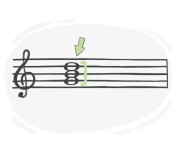
chord [noun]

three or more musical notes that form a harmony when played together

Ex: He practiced changing from one chord to another smoothly .
equally [adverb]

to the same amount or degree

Ex: She divided her time equally between her family and her career .
hopeless [adjective]

unable to do something properly, often without the possibility of improvement

Ex: They are hopeless when it comes to directions .
reassuring [adjective]

providing comfort, confidence, or relief from anxiety

Ex: The reassuring presence of his best friend gave him strength during a challenging time .

a type of dance where a person makes clear, quick sounds by hitting the floor with special shoes that have small metal plates on the bottom
Ex: He enjoys watching tap dancing shows .

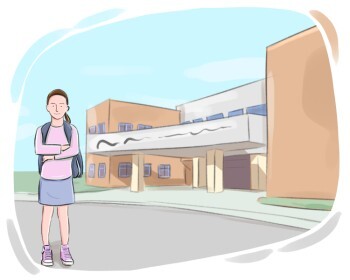
the school for young people, usually between the ages of 11 to 16 or 18 in the UK
Ex: The curriculum in secondary school typically includes a mix of core subjects , such as mathematics , science , and literature , along with elective courses that allow students to explore their passions .

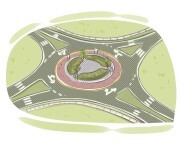
a circular intersection with a central island where traffic flows in one direction around the island
Ex: Drivers must yield to traffic already in the roundabout .
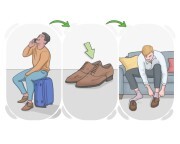
secondhand [adjective]

previously owned or used by someone else
Ex:

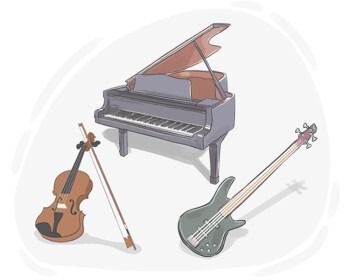
an object or device used for producing music, such as a violin or a piano

Ex: She practiced her instrument , the harp , every day to prepare for her recital .
and so on [adverb]

used to show that a list could continue in the same way without naming everything

Ex: She likes swimming , running , cycling , and so on .
typical [adjective]

representing the usual characteristics of a person, thing, or group

Ex: Her enthusiasm for learning is typical of students who excel .
to tune [verb]

to adjust or regulate the pitch or sound of a musical instrument

Ex: As the orchestra prepared for rehearsal , the conductor instructed the violinists to tune their instruments to A440 .
while [conjunction]

used to indicate a period of time during which an action takes place or a state of affairs exists, often denoting simultaneous or concurrent events

Ex: The students chatted quietly while the teacher was writing on the board .
plectrum [noun]

a small flat piece of plastic, wood, etc. that is used in plucking the strings of a musical instrument such as a guitar, harpsichord, etc.

a lasting version of sounds, images, or data made for future use

Ex: The scientist made a recording of the experiment to analyze the results later .

to provide someone or each person in a group with something

Ex:

to play a piece of music by ear, without the use of sheet music

Ex: With her keen musical ear , she easily picked out the song 's chorus .
tune [noun]

a sequence of musical notes arranged in a specific order to create a recognizable piece of music

Ex: The catchy tune of the song stayed in my head all day .

to create something by combining together different parts or ingredients

Ex: The teacher made up the lesson plan from different activities and materials .

the act of moving fingers or something like a pick across the strings of a musical instrument, such as a guitar, to make sound

Ex: The sound of steady strumming kept the tune going .

the act of plucking the strings of a musical instrument, usually a guitar, using the fingers one by one instead of brushing them across

Ex: His fingerpicking was fast and clear .
level [noun]

a person's performance or capability in comparison to others

Ex: The beginners ' Spanish course is designed for students at the A2 level .
to note [verb]

to record something in writing

Ex: The teacher asked the students to note the key points from the lesson .

to match or follow a steady beat or rhythm, usually in music, by moving or playing in the correct timing

Ex: They are keeping time with the music .
Cambridge IELTS 19 - Academic
Test 1 - Listening - Part 1 Test 1 - Listening - Part 2 Test 1 - Listening - Part 3 (1) Test 1 - Listening - Part 3 (2)
Test 1 - Listening - Part 4 (1) Test 1 - Listening - Part 4 (2) Test 1 - Reading - Passage 1 (1) Test 1 - Reading - Passage 1 (2)
Test 1 - Reading - Passage 2 (1) Test 1 - Reading - Passage 2 (2) Test 1 - Reading - Passage 2 (3) Test 1 - Reading - Passage 3 (1)
Test 1 - Reading - Passage 3 (2) Test 1 - Reading - Passage 3 (3) Test 2 - Listening - Part 1 Test 2 - Listening - Part 2 (1)
Test 2 - Listening - Part 2 (2) Test 2 - Listening - Part 3 (1) Test 2 - Listening - Part 3 (2) Test 2 - Listening - Part 4 (1)
Test 2 - Listening - Part 4 (2) Test 2 - Reading - Passage 1 (1) Test 2 - Reading - Passage 1 (2) Test 2 - Reading - Passage 1 (3)
Test 2 - Reading - Passage 2 (1) Test 2 - Reading - Passage 2 (2) Test 2 - Reading - Passage 2 (3) Test 2 - Reading - Passage 3 (1)
Test 2 - Reading - Passage 3 (2) Test 2 - Reading - Passage 3 (3) Test 3 - Listening - Part 1 Test 3 - Listening - Part 2 (1)
Test 3 - Listening - Part 2 (2) Test 3 - Listening - Part 3 (1) Test 3 - Listening - Part 3 (2) Test 3 - Listening - Part 4 (1)
Test 3 - Listening - Part 4 (2) Test 3 - Reading - Passage 1 (1) Test 3 - Reading - Passage 1 (2) Test 3 - Reading - Passage 1 (3)
Test 3 - Reading - Passage 2 (1) Test 3 - Reading - Passage 2 (2) Test 3 - Reading - Passage 2 (3) Test 3 - Reading - Passage 3 (1)
Test 3 - Reading - Passage 3 (2) Test 3 - Reading - Passage 3 (3) Test 3 - Reading - Passage 3 (4) Test 4 - Listening - Part 1 (1)
Test 4 - Listening - Part 1 (2) Test 4 - Listening - Part 2 (1) Test 4 - Listening - Part 2 (2) Test 4 - Listening - Part 3 (1)
Test 4 - Listening - Part 3 (2) Test 4 - Listening - Part 4 (1) Test 4 - Listening - Part 4 (2) Test 4 - Listening - Part 4 (3)
Test 4 - Reading - Passage 1 (1) Test 4 - Reading - Passage 1 (2) Test 4 - Reading - Passage 1 (3) Test 4 - Reading - Passage 2 (1)
Test 4 - Reading - Passage 2 (2) Test 4 - Reading - Passage 2 (3) Test 4 - Reading - Passage 2 (4) Test 4 - Reading - Passage 3 (1)
Test 4 - Reading - Passage 3 (2) Test 4 - Reading - Passage 3 (3) Test 4 - Reading - Passage 3 (4)