
Liste de Mots Niveau C1 - Galaxie et Ciel
Ici, vous apprendrez quelques mots anglais sur l'astronomie, tels que "cosmique", "comète", "naine", etc., préparés pour les apprenants de niveau C1.
Réviser
Flashcards
Orthographe
Quiz

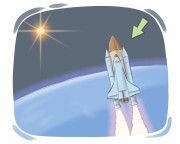
the earth's atmosphere and the space beyond it

aérospace
L'industrie aérospatiale joue un rôle crucial dans le développement de technologies avancées pour l'aviation et les voyages spatiaux.

a branch of biology that deals with the study of life in space
astrobiologie
Les scientifiques engagés dans la recherche en astrobiologie étudient les conditions nécessaires à l'épanouissement de la vie sur d'autres planètes.
having a connection to or originating in the Earth's atmosphere
atmosphérique
La pression atmosphérique à haute altitude diminue à mesure que vous montez dans les montagnes.
related to the universe and the vast space outside the earth
cosmique
Les rayons cosmiques sont des particules de haute énergie provenant de sources en dehors du système solaire.
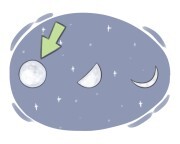
the complete and round-shaped moon as seen from the earth
pleine lune
Les photographes se sont rassemblés pour capturer la beauté du paysage sous l'éclat de la pleine lune.
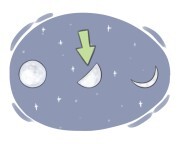
the moon when only half of its bright surface can be seen from the earth
demi-lune
Les astronomes ont pointé leurs télescopes vers le demi-lune pour étudier sa surface cratérisée.
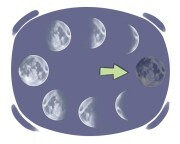
the moon when only a small portion of its bright side is visible from the earth
nouvelle lune
De nombreuses observances religieuses étaient liées à l'apparition de la nouvelle lune.

(of the sun or moon) to go out of sight below the horizon
descendre
Chaque soir, le soleil se couche derrière les montagnes, projetant une belle teinte orange.
the explosion that, according to most scientists, caused the existence of the universe
le Big Bang
Les astronomes étudient le rayonnement de fond cosmique micro-ondes pour recueillir des preuves soutenant la théorie du Big Bang.
the universe regarded as an ordered and unified whole
cosmos
any natural object in the space, such as the sun, moon, etc.
corps céleste
Les astronomes étudient les corps célestes tels que les étoiles, les planètes et les comètes.
a pale band of light seen in the sky at night that contains the solar system and billions of other stars
la Voie lactée
Par une nuit claire, vous pouvez voir la Voie lactée s'étirer à travers le ciel.

a specific group of stars that form a pattern and have a name related to their shape
constellation
Les civilisations anciennes utilisaient les constellations pour naviguer à travers les mers.
(astronomy) the celestial zone in the sky where the sun, moon, and planets appear to move, traditionally divided into twelve equal segments, each associated with a distinct name and symbol
zodiaque
L'observation attentive de la position des étoiles à l'intérieur du zodiaque était essentielle pour les premiers astronomes afin de développer des idées astrologiques.
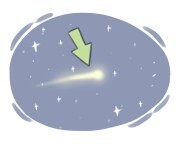
an object in space that is a mass of ice and dust and when it nears the sun it starts illuminating in the shape of a tail
comète
Les comètes sont des objets célestes composés de glace, de poussière et de matière rocheuse.
a star that is relatively small in size or mass and is not very bright
naine
a planet that is outside the solar system
exoplanète
La recherche d'exoplanètes habitables est un axe clé dans la quête pour trouver une vie extraterrestre.
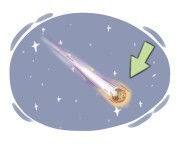
a piece of rock coming from outer space that passes through the Earth's atmosphere, producing light
météore
Les météores, également connus sous le nom d'étoiles filantes, sont souvent visibles sous forme de traînées lumineuses dans le ciel nocturne.
a piece of rock or metal from space that has hit the surface of the earth
météorite
Les météorites fournissent des informations précieuses sur la formation du système solaire primitif.
a glowing cloud of gas and dust in outer space, often the result of a star explosion or formation
nébuleuse
Une nébuleuse se forme lorsqu'une étoile explose ou perd ses couches externes.
an exploding star that as a result is emitting a very large amount of light, more than the sun
supernova
Les restes d'une supernova peuvent former des nébuleuses et enrichir le milieu interstellaire avec des éléments lourds.
a US government agency responsible for space travel and the study of space
NASA
Le rover martien de la NASA a atterri avec succès sur la surface martienne, marquant une réalisation significative dans l'exploration planétaire.
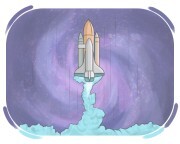
an operation carried out in space
mission
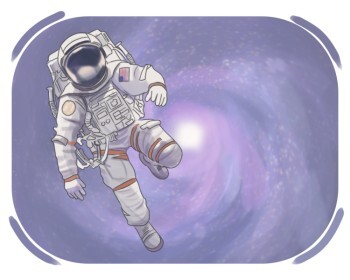
an astronaut from Russia or the former Soviet Union
cosmonaute
Les cosmonautes à bord de la Station spatiale internationale mènent des expériences scientifiques en microgravité.
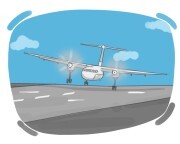
(of a spacecraft or aircraft) to leave the ground, particularly vertically
décoller, s'élever dans les airs surtout verticalement
La tension était palpable alors que le compte à rebours atteignait zéro et que l'avion décollait, s'élevant dans le ciel.
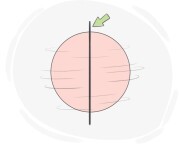
the central point or line around which an object turns
axe
Les pales du ventilateur tournaient doucement autour de leur axe.
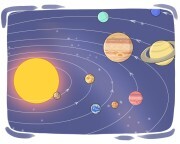
a single complete circular movement around an axis or along an orbit
rotation
La rotation des pneus a été mesurée en tours par minute.
a vehicle designed and used to go to space and return multiple times
navette spatiale
La navette spatiale Atlantis a accompli de nombreuses missions vers la Station spatiale internationale pendant ses années d'opération.
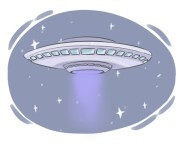
a mysterious object that some people claim to have seen flying around in the sky and assume that it is a spaceship from another world
OVNI
L'armée a enquêté sur plusieurs rapports d'objets volants non identifiés près de la base militaire.
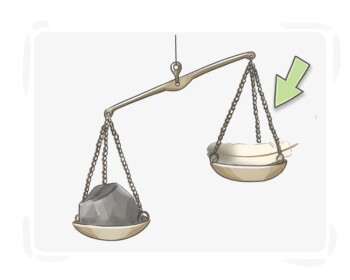
having or seeming to have no or little weight, caused by the absence of gravity
en apesanteur
La sensation de vol en apesanteur pendant les manœuvres paraboliques simule le sentiment de voyage spatial.
| Liste de Mots Niveau C1 | |||
|---|---|---|---|
| Changer | Galaxie et Ciel | C’est Punissable par la Loi ! | Mathématiques |
| Adverbes Indispensables | Explorez le Monde ! | Histoire Parle du Politique ! | |
