C1 Level Wordlist - Astronomy

Here you will learn some English words about astronomy, such as "cosmic", "comet", "dwarf", etc. prepared for C1 learners.

review-disable

review

flashcard-disable

flashcard

spelling-disable

spelling

quiz-disable

quiz

start-learning
C1 Level Wordlist

the earth's atmosphere and the space beyond it

Ex: The company specializes in aerospace manufacturing , producing components for aircraft and spacecraft .

a branch of biology that deals with the study of life in space

Ex: The discovery of extremophiles has expanded the scope of astrobiology , revealing life forms that can survive in extreme environments .
atmospheric [adjective]

having a connection to or originating in the Earth's atmosphere

Ex: Scientists study atmospheric chemistry to understand the composition of gases in the Earth 's atmosphere .
cosmic [adjective]

related to the universe and the vast space outside the earth

Ex:

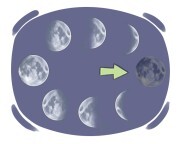
the complete and round-shaped moon as seen from the earth
Ex: The full moon illuminated the night sky , casting a soft glow over the landscape .

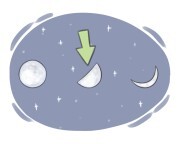
the moon when only half of its bright surface can be seen from the earth
Ex: The garden party was illuminated by the soft glow of a half-moon overhead .
new moon [noun]

the moon when only a small portion of its bright side is visible from the earth

Ex: During a new moon , the sky appears darker because the moon is not visible from Earth .

(of the sun or moon) to go out of sight below the horizon

Ex:
big bang [noun]

the explosion that, according to most scientists, caused the existence of the universe

Ex:
cosmos [noun]

the universe, particularly when it is thought of as a systematic whole

Ex: Astronomers use telescopes to observe distant phenomena in the cosmos .

any natural object in the space, such as the sun, moon, etc.

Ex: Jupiter is the largest celestial body in our solar system .

a pale band of light seen in the sky at night that contains the solar system and billions of other stars

Ex: Astronomers study the structure and evolution of the Milky Way galaxy .

a specific group of stars that form a pattern and have a name related to their shape

Ex: The Big Dipper is a prominent constellation consisting of seven bright stars .
zodiac [noun]

(astronomy) the celestial zone in the sky where the sun, moon, and planets appear to move, traditionally divided into twelve equal segments, each associated with a distinct name and symbol
Ex: The zodiac is divided into twelve astrological signs , each representing different personality traits .
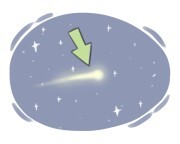
comet [noun]

an object in space that is a mass of ice and dust and when it nears the sun it starts illuminating in the shape of a tail

Ex: The tail of a comet forms when solar radiation causes ice and dust to vaporize and stream away from the nucleus .
dwarf [noun]

a star that is relatively small in size or mass and is not very bright

Ex: The discovery of a new dwarf galaxy orbiting the Milky Way provided insights into galactic evolution .

a planet that is outside the solar system
Ex: The Kepler Space Telescope has been instrumental in identifying distant exoplanets using the transit method .
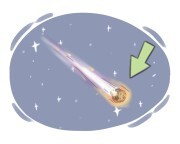
meteor [noun]

a piece of rock coming from outer space that passes through the Earth's atmosphere, producing light

Ex: The study of meteors helps astronomers understand the composition of objects from the early solar system .

a piece of rock or metal from space that has hit the surface of the earth

Ex: The impact crater was formed by a large meteorite that struck Earth millions of years ago .
Nebula [noun]

a glowing cloud of gas and dust in outer space, often the result of a star explosion or formation

Ex:

an exploding star that as a result is emitting a very large amount of light, more than the sun

Ex: Astronomers observed a distant galaxy where a supernova had recently occurred .
NASA [noun]

a US government agency responsible for space travel and the study of space
Ex: Astronauts from NASA conducted experiments aboard the International Space Station to study microgravity effects on the human body .
mission [noun]

an operation carried out in space

Ex: The Hubble Space Telescope has completed numerous scientific missions to observe distant galaxies and nebulae .

an astronaut from Russia or the former Soviet Union
Ex: Valentina Tereshkova was the first woman cosmonaut to travel to space in 1963 .

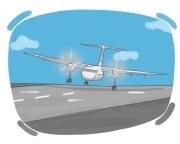
(of a spacecraft or aircraft) to leave the ground, particularly vertically
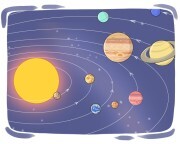
Ex: The airplane taxied down the runway , its engines gaining power , and then lifted off smoothly into the clear blue sky .
axis [noun]

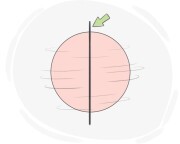
the central point or line around which an object turns
Ex: The planet 's tilt on its axis causes the seasons .
rotation [noun]

a single complete circular movement around an axis or along an orbit

Ex: Each rotation of the hand wheel raises the platform slightly .

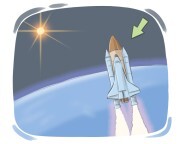
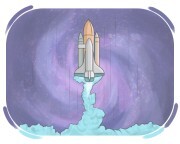
a vehicle designed and used to go to space and return multiple times
Ex: The Challenger disaster in 1986 was a tragic event that highlighted the risks associated with space shuttle missions .

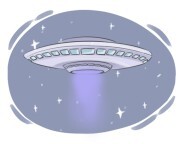
a mysterious object that some people claim to have seen flying around in the sky and assume that it is a spaceship from another world
Ex: Scientists study reports of unidentified flying objects to determine if they have natural or man-made origins .
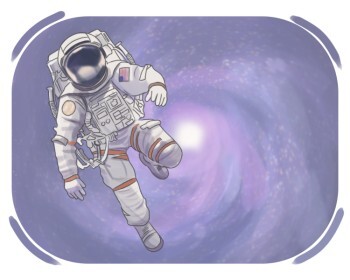
weightless [adjective]

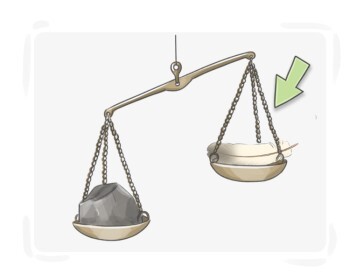
having or seeming to have no or little weight, caused by the absence of gravity

Ex: