
pattern

Elenco di Parole Livello C1 - Astronomia

Qui imparerai alcune parole in inglese sull'astronomia, come "cosmico", "cometa", "nano", ecc., preparate per gli studenti di livello C1.

Revisione

Flashcard

Ortografia

Quiz

Inizia a imparare
CEFR C1 Vocabulary
aerospace
aerospace
[sostantivo]

the earth's atmosphere and the space beyond it

aerospazio

aerospazio

Ex: She studied aerospace engineering to pursue a career in space exploration. 
Chiudi
Accedi
astrobiology
astrobiology
[sostantivo]

a branch of biology that deals with the study of life in space

astrobiologia

astrobiologia

Ex: Astrobiology explores the potential for life beyond Earth, studying environments where life could exist. 
Chiudi
Accedi
atmospheric
atmospheric
[aggettivo]

having a connection to or originating in the Earth's atmosphere

atmosferico

atmosferico

Ex: Atmospheric conditions can affect weather patterns and climate. 
Chiudi
Accedi
cosmic
cosmic
[aggettivo]

related to the universe and the vast space outside the earth

cosmico

cosmico

Ex: Cosmic phenomena encompass the vast and often mysterious aspects of the universe beyond Earth. 
Chiudi
Accedi
full moon
full moon
[sostantivo]

the complete and round-shaped moon as seen from the earth

plenilunio

plenilunio

Ex: The couple decided to take a stroll in the park under the full moon, enjoying a romantic evening. 
Chiudi
Accedi
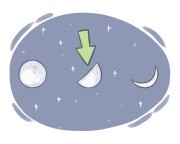
half-moon
half-moon
[sostantivo]

the moon when only half of its bright surface can be seen from the earth

mezzaluna

mezzaluna

Ex: During the evening sky, a captivating half-moon hung just above the horizon. 
Chiudi
Accedi
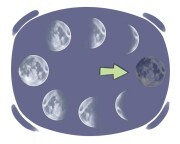
new moon
new moon
[sostantivo]

the moon when only a small portion of its bright side is visible from the earth

novilunio

novilunio

Ex: Skywatchers eagerly awaited the appearance of the new moon. 
Chiudi
Accedi
to go down
to go down
[Verbo]

(of the sun or moon) to go out of sight below the horizon

tramontare

tramontare

Ex: As we hiked to the hill's summit, we were treated to a spectacular view of the sun going down. 
Chiudi
Accedi
big bang
big bang
[sostantivo]

the explosion that, according to most scientists, caused the existence of the universe

big bang

big bang

Ex: The Big Bang theory posits that the universe began with a massive explosion approximately 13.8 billion years ago. 
Chiudi
Accedi
cosmos
cosmos
[sostantivo]

the universe, particularly when it is thought of as a systematic whole

Cosmo

Cosmo

Ex: The study of the cosmos encompasses the exploration of galaxies, stars, and planets. 
Chiudi
Accedi
celestial body
celestial body
[sostantivo]

any natural object in the space, such as the sun, moon, etc.

corpo celeste

corpo celeste

Ex: The moon is a celestial body that orbits the Earth. 
Chiudi
Accedi
the Milky Way
the Milky Way
[sostantivo]

a pale band of light seen in the sky at night that contains the solar system and billions of other stars

Via Lattea

Via Lattea

Ex: The Milky Way is a barred spiral galaxy that contains our solar system. 
Chiudi
Accedi
constellation
constellation
[sostantivo]

a specific group of stars that form a pattern and have a name related to their shape

costellazione

costellazione

Ex: Orion is a well-known constellation visible in the winter sky. 
Chiudi
Accedi
zodiac
zodiac
[sostantivo]

(astronomy) the celestial zone in the sky where the sun, moon, and planets appear to move, traditionally divided into twelve equal segments, each associated with a distinct name and symbol

Zodiaco

Zodiaco

Ex: All twelve zodiac constellations can be seen within the zodiac belt. 
Chiudi
Accedi
comet
comet
[sostantivo]

an object in space that is a mass of ice and dust and when it nears the sun it starts illuminating in the shape of a tail

cometa

cometa

Ex: Halley's Comet is one of the most famous comets, visible from Earth approximately every 76 years. 
Chiudi
Accedi
dwarf
dwarf
[sostantivo]

a star that is relatively small in size or mass and is not very bright

nano

nano

Ex: Proxima Centauri is a red dwarf star located in the Alpha Centauri star system. 
Chiudi
Accedi
exoplanet
exoplanet
[sostantivo]

a planet that is outside the solar system

extrasolare

extrasolare

Ex: Astronomers have discovered thousands of exoplanets orbiting stars beyond our solar system. 
Chiudi
Accedi
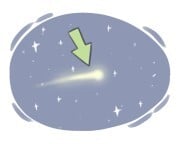
meteor
meteor
[sostantivo]

a piece of rock coming from outer space that passes through the Earth's atmosphere, producing light

meteora

meteora

Ex: We saw a bright meteor streak across the sky during the meteor shower last night. 
Chiudi
Accedi
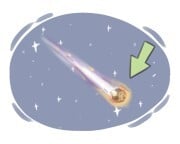
meteorite
meteorite
[sostantivo]

a piece of rock or metal from space that has hit the surface of the earth

meteorite

meteorite

Ex: Scientists analyzed the composition of the meteorite that fell in the desert last month. 
Chiudi
Accedi
Nebula
Nebula
[sostantivo]

a glowing cloud of gas and dust in outer space, often the result of a star explosion or formation

nebulosa

nebulosa

Ex: The Orion Nebula is a famous example of a stellar nursery. 
Chiudi
Accedi
supernova
supernova
[sostantivo]

an exploding star that as a result is emitting a very large amount of light, more than the sun

Supernova

Supernova

Ex: A supernova is a powerful explosion that occurs at the end of a massive star's life cycle. 
Chiudi
Accedi
NASA
NASA
[sostantivo]

a US government agency responsible for space travel and the study of space

NASA

NASA

Ex: NASA, the National Aeronautics and Space Administration, is responsible for the United States' civilian space program. 
Chiudi
Accedi
mission
mission
[sostantivo]

an operation carried out in space

missione

missione

Ex: The Apollo 11 mission successfully landed astronauts on the Moon in 1969. 
Chiudi
Accedi
cosmonaut
cosmonaut
[sostantivo]

an astronaut from Russia or the former Soviet Union

cosmonauta

cosmonauta

Ex: Yuri Gagarin was the first cosmonaut to orbit the Earth in 1961. 
Chiudi
Accedi
to lift off

(of a spacecraft or aircraft) to leave the ground, particularly vertically

decollare

decollare

Ex: The rocket lifted off with a thunderous roar, marking the beginning of the historic mission. 
Chiudi
Accedi
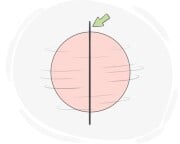
axis
axis
[sostantivo]

the central point or line around which an object turns

asse

asse

Ex: The Earth spins on its axis once every twenty-four hours. 
Chiudi
Accedi
rotation
rotation
[sostantivo]

a single complete circular movement around an axis or along an orbit

rotazione

rotazione

Ex: One full rotation of the Earth takes twenty-four hours. 
Chiudi
Accedi
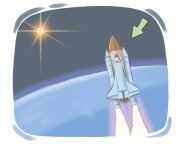
space shuttle
space shuttle
[sostantivo]

a vehicle designed and used to go to space and return multiple times

navetta spaziale

navetta spaziale

Ex: The Space Shuttle program operated by NASA allowed astronauts to travel to and from space from 1981 to 2011. 
Chiudi
Accedi
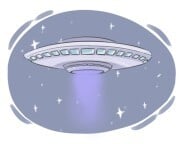
unidentified flying object

a mysterious object that some people claim to have seen flying around in the sky and assume that it is a spaceship from another world

ufo

ufo

Ex: Witnesses reported seeing an unidentified flying object hovering silently in the night sky. 
Chiudi
Accedi
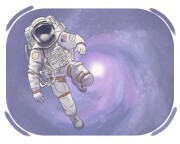
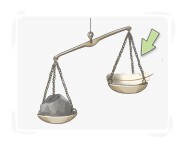
weightless
weightless
[aggettivo]

having or seeming to have no or little weight, caused by the absence of gravity

senza peso

senza peso

Ex: Objects inside the spacecraft become weightless once it reaches orbit around the Earth. 
Chiudi
Accedi
Elenco di Parole Livello C1
CambiareAstronomiaLeggeMatematica
AvverbiViaggioStoria
LanGeek
Scarica l'app LanGeek