
Verbes d'Existence et d'Action - Verbes pour le manque d'action
Ici, vous apprendrez quelques verbes anglais se référant au manque d'action tels que "abstenir", "hésiter" et "s'abstenir".
Réviser
Flashcards
formes
Orthographe
Quiz


to resist or hold back from doing or saying something

s'abstenir de
Connaissant l'importance du timing, il s'est abstenu d'interrompre l'orateur pendant la présentation.
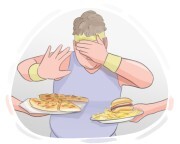
to avoid doing something, especially something that one enjoys
s'abstenir
Elle s'est abstenue d'utiliser les réseaux sociaux depuis la semaine dernière pour se concentrer sur ses études.
to stop doing something, particularly in response to a request, command, or understanding that it should be discontinued
cesser
La police a ordonné aux manifestants de cesser de bloquer la route.
to hold back from an action or behavior
se retenir
En regardant les enfants jouer dans le parc, Mary ne pouvait s'empêcher de ressentir une sensation de joie et de chaleur.

to no longer be involved in a task or obligation
se retirer, reculer
Il est acceptable de reculer si une tâche devient trop difficile.
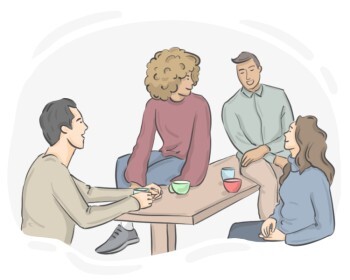
to spend time in a place, often without a specific purpose or activity
passer du temps quelque part sans but précis, traîner dans un endroit
Il a décidé de traîner autour du café pour voir si ses amis se montreraient.
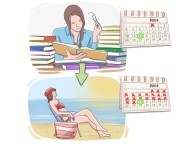
to waste time relaxing and doing nothing
perdre son temps allongé sans rien faire, rester allongé sans rien faire
Nous prévoyons de paresseux toute la journée sur la plage demain.

to not leave until a person or thing is ready or present or something happens
attendre

to remain in one spot with nothing to do, expecting something to happen
rester quelque part sans rien faire en attendant quelque chose, attendre longtemps au même endroit
Les étudiants attendirent autour de l'auditorium de l'école pour l'assemblée spéciale.
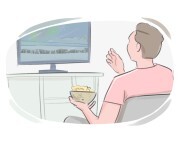
to spend time doing nothing or nothing productive
rester assis sans rien faire de productif, passer le temps sans rien faire
L'homme au chômage restait assis toute la journée, attendant que le téléphone sonne.

to pause before acting or deciding because of uncertainty, nervousness, or reluctance
hésiter
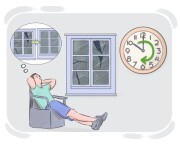
to refrain from taking action when it is necessary
rester là sans rien faire
C'est décourageant de voir quelqu'un rester à l'écart quand d'autres ont besoin d'aide.
to refrain from taking immediate action or speaking out, typically due to uncertainty, reluctance
retenir, se retenir
Elle s'est retenue, incertaine de la manière de répondre à la question inattendue.
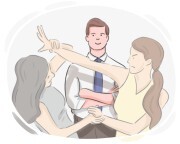
to watch an event or incident without getting involved
regarder sans intervenir, rester simple spectateur d'un événement
Les villageois regardaient avec appréhension alors que les étrangers entraient dans leur ville.
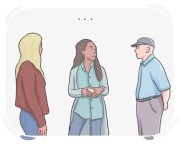
to spend time standing in a place without doing anything purposeful or without having a particular reason to be there
rester debout quelque part sans raison ou activité particulière, rester debout à ne rien faire
Les employés ne faisaient que rester là, à bavarder, au lieu d'aider les clients.
to decide not to do or have something; to abstain from
renoncer, abstenir
Malgré la vente tentante, Emily a choisi de renoncer à acheter de nouveaux vêtements et a préféré économiser de l'argent pour un futur voyage.
to hesitate to do or say something, often due to uncertainty or shyness
hésiter, rester en retrait
L'opportunité de parler avec le PDG était là, mais il a hésité et a manqué la chance de réseauter.
to stand around in a public place without an apparent or clear purpose
flâner, traîner
Le gardien de sécurité a demandé aux individus de partir car ils continuaient à flâner sur le parking.
