
Verbes de Mouvement - Verbes pour la Navigation
Ici, vous apprendrez quelques verbes anglais se référant à la navigation tels que "s'égarer", "partir", et "dérouter".
Réviser
Flashcards
formes
Orthographe
Quiz

to create or make a map to visually depict geographical features

cartographier, établir une carte
to create a visual representation that illustrates the features and details of a specific region
cartographier, dresser une carte

to mark or indicate a route, position, or specific points on a map
tracer, reporter
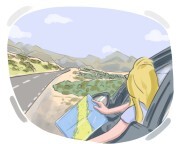
to choose the direction of and guide a vehicle, ship, etc., especially by using a map
piloter
L'agent de voyage a fourni un itinéraire détaillé, aidant les vacanciers à naviguer à travers des routes pittoresques.

to determine or adjust the direction of an object or oneself in relation to specific directions or reference points
orienter, positionner
Lors de la mise en place de la tente, les campeurs ont pris soin de l'orienter de manière à ce que l'entrée soit face au vent dominant.
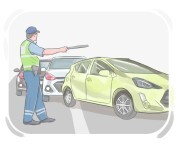
to change the originally planned path or direction of something, especially in transportation
dérouter, rediriger
La compagnie aérienne a dû rediriger le vol pour éviter des conditions météorologiques sévères, assurant ainsi la sécurité des passagers.

to cause someone to lose their sense of direction, leading to confusion or a feeling of being lost
désorienter, dérouter
Le brouillard dense désorienta le pilote, rendant difficile la navigation en toute sécurité de l'avion.
to change direction or take a different course
dévier
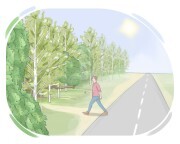
to wander off or deviate from the intended or established path
s'égarer, dévier
Le randonneur perdu a accidentellement erré dans un fourré dense, s'écartant du chemin établi.
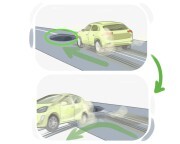
to cause something to depart from an established course
dévier
L'obstacle inattendu sur la route a dévié le conducteur de l'itinéraire prévu.
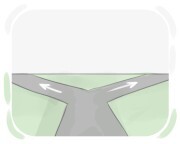
to move apart and continue in another direction
diverger, s’écarter, bifurquer, se séparer
À la bifurcation de la route, les deux voies divergèrent, menant à des destinations distinctes.

to change direction or turn aside, typically as a result of encountering an obstacle or external force
dévier, détourner
La balle a heurté une surface dure et a commencé à dévier.
to block someone or something's path in order to redirect them or prevent them from proceeding in a particular direction
intercepter, détourner
Elle a rapidement détourné son petit frère pour l'empêcher de courir dans la rue.
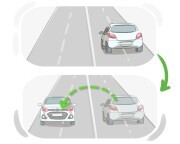
to abruptly turn to a different direction
virer, tourner
Pour éviter qu'un piéton ne marche sur la piste cyclable, le cycliste a dû virer vers la gauche.
to change direction suddenly, often to avoid something or someone in the way
dévier, faire une embardée
Le cycliste a habilement viré vers la gauche pour éviter un nid-de-poule dans la piste cyclable.
to change direction suddenly and sharply
virer brusquement
