
Vocabulaire Avancé pour le TOEFL - Littérature et Écriture
Ici, vous apprendrez quelques mots anglais sur la littérature et l'écriture, tels que "luride", "épopée", "psaume", etc., qui sont nécessaires pour l'examen TOEFL.
Réviser
Flashcards
Orthographe
Quiz

(a book, play, text, etc.) made shorter than the original by omitting some details

abrégé
(of a story, play, image, etc.) using characters or events in a symbolic sense that represent a concept, quality, etc.
allégorique
shocking or sensational, especially in a gruesome or vulgar way
choquant, à sensation
Les détails sordides du scandale de corruption ont impliqué plusieurs hauts fonctionnaires du gouvernement, provoquant une indignation publique et des demandes de responsabilité éthique.
(of speech or writing) using a serious and elevated style that makes it tedious and complicated
ampoulé, boursouflé, pompeux
Sa prose ampoulée dans l'essai a rendu le sujet autrement intéressant terne et inaccessible.
a poem or other piece of writing in which certain letters of each line, usually the initial letters, spell out a word or phrase
acrostiche
humorous and poorly written poetry
vers de mirliton
Au moment où il a fini, sa tentative de poésie s'était transformée en vers de mirliton involontairement drôles.
a song or poem expressing sadness, especially in the memory of a dead person or a bitter event in the past
élégie
La mélodie envoûtante de l'élégie du musicien a résonné dans la salle de concert, évoquant un sentiment de mélancolie et de perte.
a long poem in narrative form giving an account of the extraordinary deeds and adventures of a nation's heroes or legends
épopée
L'épopée raconte les batailles légendaires livrées par les guerriers anciens.
a Japanese poem with three unrhymed lines that have five, seven and five syllables each
haiku
Son haïku a capturé l'essence d'une matinée d'hiver sereine.
a song, musical piece, poem, etc. that expresses the feeling of sorrow and sadness after a loss or death
complainte
Son poème était une lamentation poignante pour les jours perdus de sa jeunesse.
a drawing, speech, or text aiming to criticize something or someone in a humorous manner
satire
La dernière bande dessinée de l'artiste était une satire cinglante du maire de la ville et de ses politiques controversées.
a lyric poem, written in varied or irregular metrical form, for a particular object, person, or concept
ode
Elle a composé une ode en l'honneur de son mentor bien-aimé.
a piece of writing, music, etc. that imitates the style of someone else in a humorous way
parodie
Le livre est une parodie hilarante des romans policiers classiques, mettant en scène des personnages exagérés et des rebondissements absurdes.
any holy poem, song, or hymn, especially the ones in the Book of Psalms, used in Christian and Jewish worship
psaume
a verse of Italian origin that has 14 lines, usually in an iambic pentameter and a prescribed rhyme scheme
sonnet
Le schéma de rimes et le mètre du sonnet ont démontré la compétence technique du poète.
a person who writes pieces of poetry and stories
barde
L'ancien barde voyageait de village en village, partageant des histoires de mythes et de légendes.
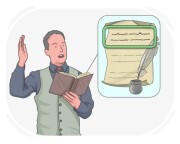
a series of lines in a poem, usually with recurring rhyme scheme and meter
strophe
La strophe a établi l'ambiance pour le reste du poème.
any of the sections into which a long poem is divided
chant
Elle a mémorisé les trois premiers chants de La Divine Comédie pour son cours de littérature.
an elaborate or far-fetched poetic image or comparison between very dissimilar things, used in literature
concept
La conceit centrale du poème assimilait le temps à un voleur.
the continuation of a line of poetry into another couplet or stanza without a break
enjambement
bombastic or meaningless language
rhétorique
a section of additional material that is usually added at the end of a book
addendum
Un glossaire détaillé a été inclus comme addendum au manuel académique.
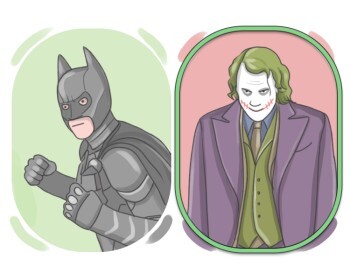
villainous character who strongly opposes another person or thing
antagoniste, adversaire
Dans le film, les plans néfastes de l'antagoniste ont posé une menace redoutable pour le héros, alimentant le conflit et faisant avancer l'intrigue.

a section at the end of a book or document containing additional information
appendice
a short promotional description of a book, motion picture, etc. published on the cover of a book or in an advertisement
texte de présentation
Les documents promotionnels du film comportaient un blurb élogieux d'un célèbre critique de cinéma louant les performances et la narration.
a list of technical terms or jargons of a particular field or text, provided in alphabetical order with an explanation for each one
glossaire, lexique
Elle a consulté le glossaire pour mieux comprendre le jargon technique utilisé dans l'article scientifique.
generally accepted rules or principles, especially those that are considered as fundamental in a field of art or philosophy
critère, canon, règles
a subject, image, idea, or phrase that recurs in a literary work
thème
an ancient book, written by hand, especially of scriptures, classics, etc.
codex
Les érudits ont passé des années à déchiffrer l'ancien codex, qui contenait des informations précieuses sur les pratiques religieuses des premières civilisations.
the greatest literary or artistic piece that an author or artist has created
magnum opus
Après des années de recherche et d'écriture, l'historienne a finalement publié son magnum opus, un compte rendu complet de la civilisation ancienne.
a work of fiction with an intermediate length, which could be considered a short novel
roman court
Son dernier travail est une nouvelle qui mêle mystère et romance.
an apparent mistake or inconsistency in the narrative of a book, motion picture, etc.
incohérence dans intrigue, incohérence dans le scénario
the fact of having an excessive number of words that results in being tedious
prolixité, verbosité
Malgré le style éloquent de l'auteur, la prolixité du roman a rendu difficile pour les lecteurs de rester engagés à travers les nombreuses digressions et descriptions verbeuses.
a brief section added at the end of a literary work, providing closure, commentary, or resolution
épilogue
Elle a lu l'épilogue pour comprendre le message final de l'auteur.
