500 Most Common English Verbs - Top 376 - 400 Verbs

Here you are provided with the part 16 of the list of the most common verbs in English such as "shape", "flow", and "rest".

review-disable

review

flashcard-disable

flashcard

spelling-disable

spelling

quiz-disable

quiz

start-learning
500 Most Common English Verbs

to move to a higher position or rank
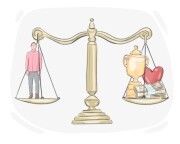
Ex: He was promoted to vice president of sales for his outstanding performance .

to do a particular thing or have the qualities needed for being punished or rewarded
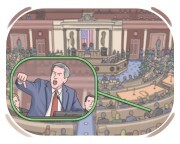
Ex: The hardworking employee deserved the bonus for exceeding the sales targets .

to strongly disagree with a policy, plan, idea, etc. and try to prevent or change it

Ex: The senator opposed the bill , citing its potential negative impact on the economy .
to shape [verb]

to give something a particular form

Ex: The carpenter used a saw to shape the wood into a curve .
to relax [verb]

to feel less worried or stressed

Ex: On Sundays , I usually relax and do nothing .

to become visible after coming out of somewhere
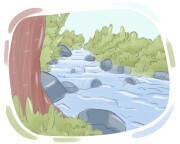
Ex: As the fog lifted , the silhouette of the old castle started to emerge .
to flow [verb]

to move smoothly and continuously in one direction, especially in a current or stream
Ex: The melted snow flowed down the mountain slopes , feeding into the river below .
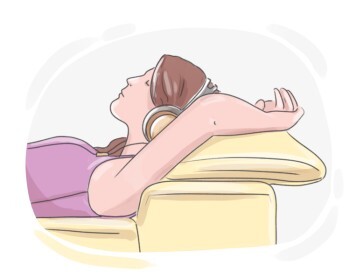
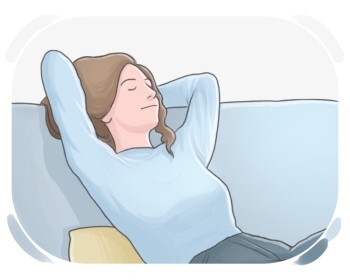
to rest [verb]

to stop working, moving, or doing an activity for a period of time and sit or lie down to relax
Ex: Please rest and take a break before you continue with your tasks .
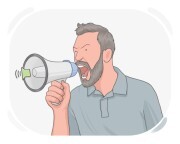
to shout [verb]

to speak loudly, often associated with expressing anger or when you cannot hear what the other person is saying
Ex: In the bustling marketplace , vendors would often shout to attract customers ' attention to their products .

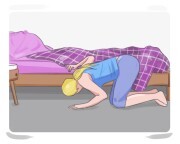
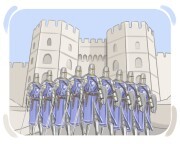
to not let any harm come to someone or something

Ex: Parents instinctively defend their children from potential threats .

to take part in or become involved with something actively
Ex:
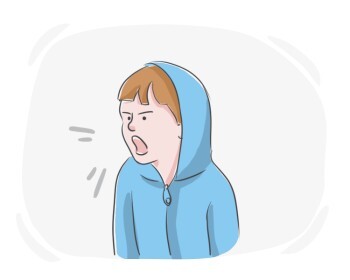
to yell [verb]

to shout very loudly

Ex: The children playing in the park would yell happily as they enjoyed the playground .
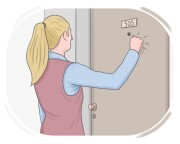
to knock [verb]

to hit a door, surface, etc. in a way to attract attention, especially expecting it to be opened
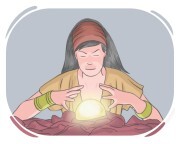
Ex: In the middle of the night , a mysterious sound made her nervous , so she cautiously knocked on her roommate 's door .

to say that something is going to happen before it actually takes place
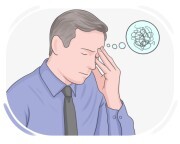
Ex: He predicted the success of the business venture based on market analysis .
to mind [verb]

(often used in negative or question form) to be upset, offended, or bothered by something
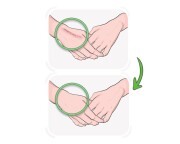
Ex: He does n't mind if people disagree with him ; he welcomes different perspectives .
to heal [verb]

to become healthy again

Ex: The injury is currently healing with the prescribed treatment .

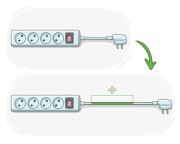
to enlarge or lengthen something

Ex: The company has extended its product line to attract a wider customer base .
to track [verb]

to follow someone or something by examining the marks they leave behind in order to catch them or know what they are doing
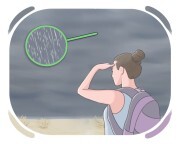
Ex: Scientists track migratory birds to study their patterns .

to show, point out, or suggest the existence, presence, or nature of something
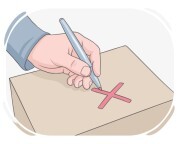
Ex: The arrow on the map indicates the next turn .
to mark [verb]

to leave a sign, line, etc. on something

Ex: Before cutting the fabric , the tailor used chalk to mark the pattern .
to split [verb]

to be divided into smaller groups or parts
Ex: After the lecture , the students split into study groups to prepare for the upcoming exam .
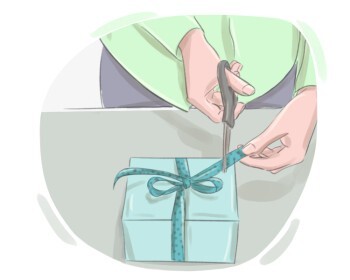
to wrap [verb]

to cover an object in paper, soft fabric, etc.

Ex: The florist expertly wrapped the bouquet in decorative paper and secured it with a bow .

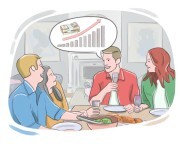
to communicate with others, particularly while spending time with them
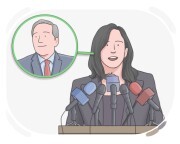
Ex: During the networking event , professionals had the opportunity to interact and exchange business cards .
to state [verb]

to clearly and formally express something in speech or writing

Ex: The employee handbook clearly states the company 's policies regarding workplace conduct .
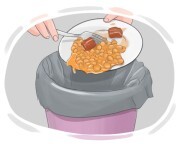
to waste [verb]

to use something without care or more than needed

Ex: