Basic Sciences - Meteorology & the Solar System
Study terms related to atmospheric layers, planetary motion, meteors, meteorites, and the planets of the solar system.
Review
Flashcards
Spelling
Quiz
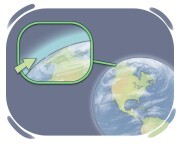
the layer of gases surrounding a planet, held in place by gravity

a part of planet where the air, land, and water are suitable for all the living things to exist on
the atmospheric layer above the troposphere, where temperature generally increases with altitude and the ozone layer is situated
the atmospheric layer above the mesosphere, where temperatures increase with altitude and it extends to the exosphere
the lowest layer of Earth's atmosphere, extending from the surface up to an average altitude of about 8-15 kilometers
a layer in the upper atmosphere containing ions and free electrons, affecting radio communication and contributing to auroras
the atmospheric layer above the stratosphere, where temperatures decrease with altitude and it extends up to the mesopause
a layer of gases in the earth's atmosphere that does not let the sun's ultraviolet radiation pass through
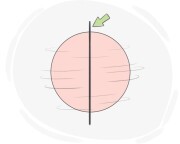
the central point or line around which an object turns
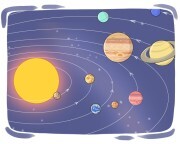
to move around a star, planet, or a large object in space
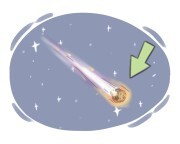
a piece of rock coming from outer space that passes through the Earth's atmosphere, producing light
a piece of rock or metal from space that has hit the surface of the earth
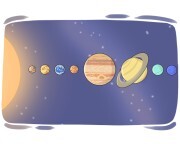
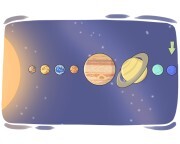
the sun and the group of planets orbiting around it, including the earth

the 1st and smallest planet in the solar system which is the closest to the sun

the 2nd planet of the solar system located between Mercury and earth
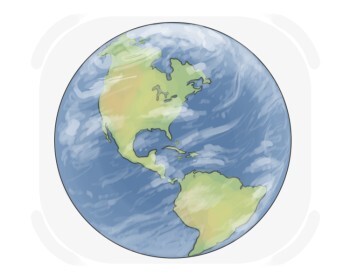
a big round mass covered in land and water, on which we all live

the 4th planet of the solar system located between earth and Jupiter
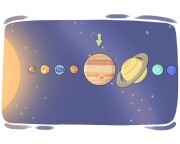
the 5th and the largest planet of the solar system located between Mars and Saturn
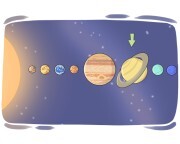
the 6th planet of the solar system located between Jupiter and Uranus, which has rings around it
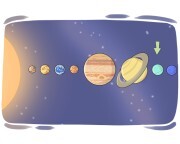
the 7th planet of the solar system with a blue-green color located between Saturn and Neptune