Solutions - Upper-Intermediate - Unit 1 - 1C

Here you will find the vocabulary from Unit 1 - 1C in the Solutions Upper-Intermediate coursebook, such as "harass", "foolhardy", "regulator", etc.

review-disable

review

flashcard-disable

flashcard

spelling-disable

spelling

quiz-disable

quiz

start-learning
Solutions - Upper-Intermediate
media [noun]

the ways through which people receive information such as newspapers, television, etc.

Ex: Media literacy education is essential in helping people critically evaluate information and navigate the vast landscape of media sources available today .

someone who is known by a lot of people, especially in entertainment business

Ex: He became a celebrity after his book became a best-seller .

media that is not under government or private control and is able to report news and express opinions freely without censorship or fear of retaliation

Ex: A free press allows citizens to access diverse viewpoints and information .

the practice of conducting thorough investigations to uncover and report on significant stories that often involve wrongdoing, corruption, or abuse of power

Ex: Through investigative journalism , the reporter exposed the environmental damage caused by illegal dumping .

someone who prepares news to be broadcast or writes for newspapers, magazines, or news websites

Ex: My sister is a journalist for a major newspaper .

freelance photographers who aggressively pursue and take pictures of celebrities, often in invasive or intrusive ways
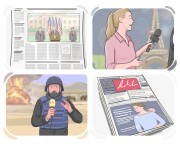
Ex: Despite attempts to avoid attention , the singer was constantly hounded by the paparazzi .
press [noun]

newspapers, journalists, and magazines as a whole

Ex: The press often influences public opinion with its coverage of political issues .

official in charge of overseeing and monitoring a specific area or activity in the public interest

Ex: A regulator ensures that companies follow industry standards .
privacy [noun]

a state in which other people cannot watch or interrupt a person

law [noun]

a country's rules that all of its citizens are required to obey

Ex: They studied constitutional law in law school .

actions or information that are meant to gain the support or attention of the public

Ex: The charity event received positive publicity after being featured in local newspapers and TV programs .
scandal [noun]

harmful and sensational gossip about someone's private life, often designed to shame or discredit them in public

Ex: They could n’t believe the scandal that had been published in the tabloids .
tabloid [noun]

a newspaper with smaller pages and many pictures, covering stories about famous people and not much serious news

Ex: The supermarket checkout line is lined with tabloids featuring the latest celebrity gossip and scandalous headlines .

used to describe someone or something that attracts a great deal of public attention

Ex: He has been in the public eye ever since his breakthrough performance .

used to describe actions or decisions that are made with the intention of benefiting the general public or society as a whole, rather than individual or private interests

Ex: The company made changes to its policies in the public interest .

to subject someone to aggressive pressure or intimidation, often causing distress or discomfort
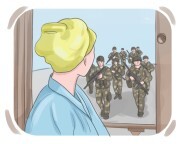
Ex: Cyberstalking involves using technology to harass someone over the internet .

to enter a territory using armed forces in order to occupy or take control of it

Ex: The conquerors were determined to invade the island and claim it for their empire .
to stalk [verb]

to follow, watch, or pursue someone persistently and often secretly, causing them fear or discomfort
Ex: After the unsettling encounter , she felt as if someone were stalking her .
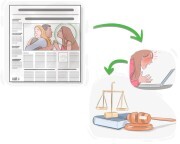
to sue [verb]

to bring a charge against an individual or organization in a law court

Ex: The author opted to sue the publisher for copyright infringement .
libel [noun]

a published false statement that damages a person's reputation

Ex: The journalist faced charges of libel for falsely accusing the businessman of fraud in an article .
arrogant [adjective]

showing a proud, unpleasant attitude toward others and having an exaggerated sense of self-importance

Ex: Her arrogant demeanor alienated her from her peers , leaving her with few friends .
self-assured [adjective]

confident in one's abilities or qualities

Ex: Despite her young age , she spoke with a self-assured tone that commanded respect .
calculating [adjective]

(of a person) using clever planning and strategies to achieve their goals
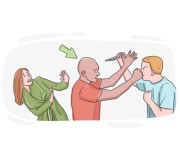
Ex:
courageous [adjective]

expressing no fear when faced with danger or difficulty
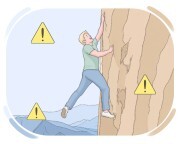
Ex: The young explorer exhibited a courageous spirit as he ventured into the uncharted wilderness in search of new discoveries .
foolhardy [adjective]

behaving in a way that is unnecessarily risky or very stupid
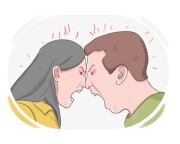
Ex: The general 's foolhardy strategy led to unnecessary casualties among his troops .
pushy [adjective]

trying hard to achieve something in a rude way

Ex: He was so pushy about getting a promotion that it started to irritate his boss .
enthusiastic [adjective]

having or showing intense excitement, eagerness, or passion for something
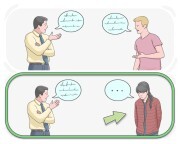
Ex: The team 's enthusiastic response to the new strategy boosted morale .
reserved [adjective]

reluctant to share feelings or problems

Ex: He 's always been a reserved person , preferring to listen rather than speak .
antisocial [adjective]

not wanting the company of others

Ex: Do n't assume someone is rude just because they 're quiet and appear antisocial .
thrifty [adjective]

using resources carefully and efficiently, often in order to save or avoid waste

Ex: Thrifty individuals often reuse items instead of throwing them away .
shrewd [adjective]

having or showing good judgement, especially in business or politics

Ex: The CEO 's shrewd decision-making led to the company 's success , even during economic downturns .
stingy [adjective]

unwilling to spend or give away money or resources

Ex: They were surprised by his stingy nature , given his high-paying job .