Solutions - Upper-Intermediate - Unit 2 - 2F

Here you will find the vocabulary from Unit 2 - 2F in the Solutions Upper-Intermediate coursebook, such as "prevention", "deter", "convict", etc.

review-disable

review

flashcard-disable

flashcard

spelling-disable

spelling

quiz-disable

quiz

start-learning
Solutions - Upper-Intermediate
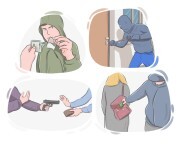
crime [noun]

an unlawful act that is punishable by the legal system
Ex:

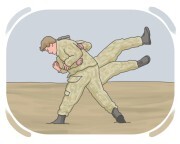
to fight or contend against someone or something, often in a physical or armed conflict
Ex: Soldiers are trained to combat enemies on the battlefield .
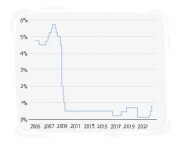
rate [noun]

the number of times something changes or happens during a specific period of time

Ex:
wave [noun]

a sudden and often temporary increase or occurrence of something, often characterized by a distinctive movement or pattern
Ex: A wave of protests swept across the country following the announcement .
violent [adjective]

(of a person and their actions) using or involving physical force that is intended to damage or harm
Ex: The violent criminal threatened others with a knife during the robbery .
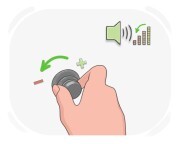
to cut [verb]

to decrease or reduce the amount or quantity of something

Ex:

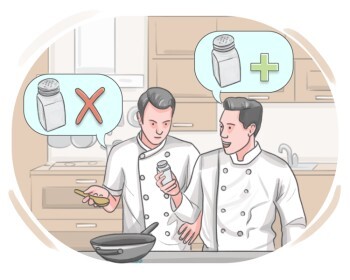
any action taken to avoid or reduce the risk of a negative outcome

recorded [adjective]

captured or stored in a permanent format, typically on media such as audio, video, or digital files, for later use or reproduction
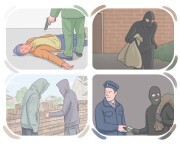
Ex: The recorded data showed fluctuations in temperature over the past year .

to do a particular thing that is unlawful or wrong
Ex: She admitted to committing perjury during the trial by providing false testimony under oath .
to deter [verb]

to stop something from happening

Ex: The teacher 's strict rules are meant to deter cheating during exams .
petty [adjective]

having little significance

Ex: The dispute between neighbors was over a petty boundary line .

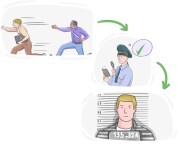
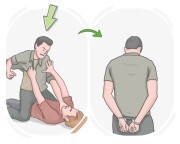
(of law enforcement agencies) to take a person away because they believe that they have done something illegal

Ex: The authorities have the power to arrest those who are caught in the act of committing a crime .

the right or power to give orders to people
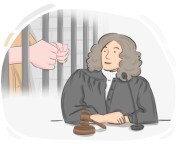
Ex: The committee was given the authority to make final decisions on budget allocations .

to announce officially that someone is guilty of a crime in a court of law
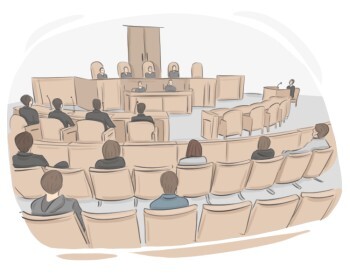
Ex: The prosecutor worked diligently to build a strong case that would convict the accused .
court [noun]

the group of people in a court including the judge and the jury
Ex: The lawyer addressed the court with a passionate closing argument .

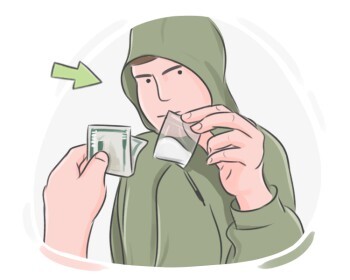
an individual who sells illegal drugs such as narcotics, opioids, etc.
Ex: He was sentenced to prison for ten years for his role as a drug dealer in the local community .
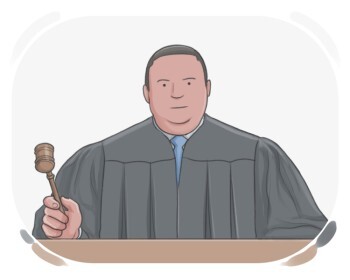
judge [noun]

the official in charge of a court who decides on legal matters

Ex: He 's known for being a fair and impartial judge in the courtroom .

a planned military or naval action, such as a maneuver, campaign, or mission, designed to achieve a specific goal

Ex: The operation was executed with precision and speed to minimize casualties .

a legal official who represents the state in criminal proceedings and brings charges against individuals or organizations suspected of breaking the law
Ex: The defense lawyer cross-examined the prosecutor to weaken the case .
to raid [verb]

(of police) to unexpectedly visit a person or place to arrest suspects or find illegal goods
Ex: Authorities planned to raid the counterfeiting operation and seize the counterfeit currency .

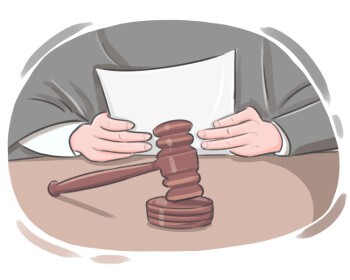
to officially state the punishment of someone found guilty in a court of law

Ex: The judge carefully considered the evidence before deciding how to sentence the defendant .

(of a judge) to explain the main points of a case to the jury at the end of a trial

Ex:

a feeling of doubt or mistrust towards someone or something, often without concrete evidence or proof

Ex: The police acted on the suspicion of foul play in the case .