Face2face - Upper-intermediate - Unit 2 - 2C

Here you will find the vocabulary from Unit 2 - 2C in the Face2Face Upper-Intermediate coursebook, such as "conclusive", "originality", "recognition", etc.

review-disable

review

flashcard-disable

flashcard

spelling-disable

spelling

quiz-disable

quiz

start-learning
Face2face - Upper-intermediate
conclusive [adjective]

providing clear and final evidence or proof, leaving no doubt or uncertainty

Ex: After reviewing all the data , the panel reached a conclusive decision on the matter .

in a way that clearly shows or proves something without doubt or uncertainty

Ex: The witness 's testimony conclusively supported the prosecution 's case .

negative feedback that highlights mistakes or areas for improvement
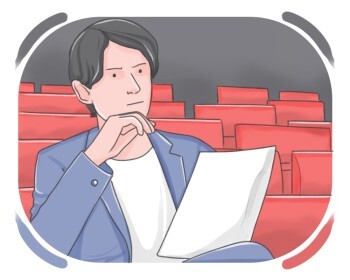
Ex: Her criticism felt personal , but it was focused on improving the work .
critic [noun]

someone who evaluates and provides opinions or judgments about various forms of art, literature, performances, or other creative works

Ex:
critical [adjective]

noting or highlighting mistakes or imperfections
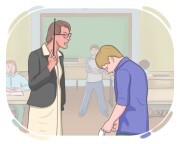
Ex: He was always critical of his own work , striving for perfection .

to point out the faults or weaknesses of someone or something
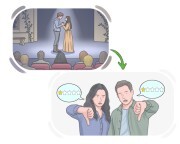
Ex: It 's easy to criticize the government 's policies , but coming up with viable alternatives is more challenging .
critically [adverb]

in a way that expresses disapproval or fault-finding

Ex: He commented critically on the artist 's latest exhibition .

to draw a logical inference or outcome based on established premises or evidence

Ex: After reviewing the historical data , historians concluded that the climate significantly influenced societal changes .

a decision reached after thoroughly considering all relevant information

Ex: The scientist 's conclusion was based on years of research and data analysis .

to start to be

Ex: The concept originated as a solution to a problem .
originally [adverb]

in a way that relates to the inherent origin or source

Ex: The family originally hailed from Normandy .
origin [noun]

the point or place where something has its foundation or beginning

Ex: The origin of the word can be found in Latin .

the skill of being able to come up with unique and innovative ideas or actions

Ex: The novel ’s originality was praised for its fresh perspective on love and loss .
realism [noun]

a practical and straightforward way of looking at things that focuses on what is actually happening rather than what we wish would happen
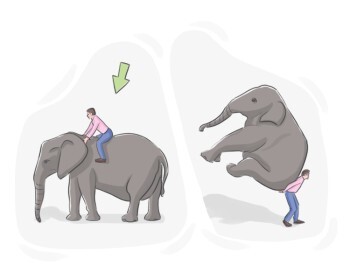
Ex: Realism in politics often involves facing harsh truths about the situation .
realistic [adjective]

concerned with or based on something that is practical and achievable in reality

Ex: A realistic budget takes into account income , expenses , and savings goals .
reality [noun]

the true state of the world and the true nature of things, in contrast to what is imagined or thought
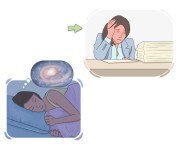
Ex: The documentary aims to explore the reality of climate change .
real [adjective]

having actual existence and not imaginary
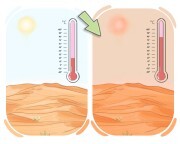
Ex:
really [adverb]

to a high degree, used for emphasis

Ex: She 's really good at chess .

to know who a person or what an object is, because we have heard, seen, etc. them before
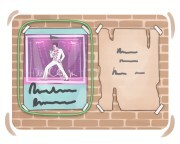
Ex: The dog recognized its owner ’s scent from a distance .

the act of accepting that something exists, is true or legal

in a way that can be easily identified or distinguished

Ex: Her writing style was recognizably unique among the authors .
recognizable [adjective]

able to be identified or distinguished from other things or people
Ex: Her artwork has a recognizable style that sets it apart from other artists .

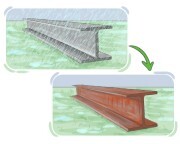
to make something physically or structurally less strong or sturdy

Ex: Ignoring warning signs of deterioration can weaken the foundation of a building .
weakness [noun]

lack of power or ability to act effectively
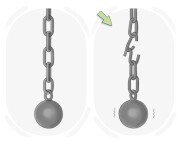
Ex: He acknowledged his weakness in time management during the meeting .
weak [adjective]

structurally fragile or lacking durability

Ex: The table leg was weak and wobbled dangerously .
weakly [adverb]

in a physically feeble manner

Ex:

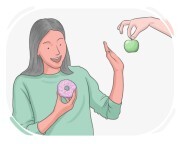
to want or choose one person or thing instead of another because of liking them more

Ex: He prefers spending his weekends reading a good book rather than going to crowded events .

a strong liking for one option or choice over another based on personal taste, favor, etc.

Ex: The company surveyed employees to understand their preferences for workplace amenities .
preferable [adjective]

more desirable or favored compared to other options

Ex: In their opinion , hiring locally was preferable to outsourcing work overseas .
preferably [adverb]

in a way that shows a liking or a priority for something over others
Ex: In job applications , candidates with relevant experience are preferably considered for the position .
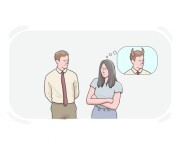
to judge [verb]

to form a decision or opinion based on what one knows
Ex: They judge the safety of the neighborhood by observing its crime rate and infrastructure .
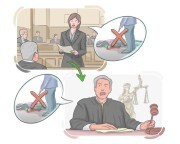
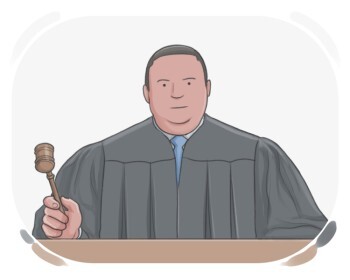
judge [noun]

the official in charge of a court who decides on legal matters

Ex: He 's known for being a fair and impartial judge in the courtroom .
judgment [noun]

the process of evaluating, assessing, or deciding about a person, situation, or event

Ex: Management exercised judgment when allocating resources .
judgmental [adjective]

based on or relying on careful consideration and assessment
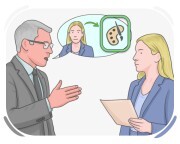
Ex: The inspector made a judgmental assessment of the building 's safety .

the obligation to perform a particular duty or task that is assigned to one
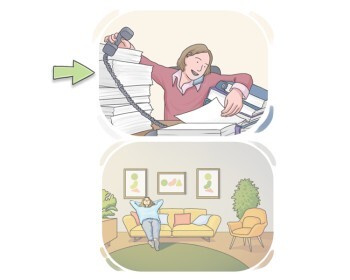
Ex: The teacher emphasized the responsibility of students to complete their homework on time .
responsible [adjective]

(of a person) having an obligation to do something or to take care of someone or something as part of one's job or role

Ex: The company is responsible for maintaining safety standards in the workplace .
responsibly [adverb]

in a careful, trustworthy, or reasonable manner
Ex: The children behaved responsibly while their parents were away .

to make someone do something using reasoning, arguments, etc.

Ex: Despite initial skepticism , she managed to convince her friends to try the new restaurant .

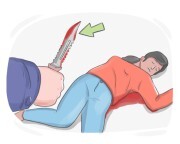
a formal declaration by which someone is found guilty of a crime in a court of law

Ex: The lawyer appealed the conviction , claiming there was a miscarriage of justice .
convinced [adjective]

having a strong belief in something

Ex:
convincing [adjective]

able to make someone believe that something is right or true

Ex: His convincing arguments persuaded the jury to vote in favor of his client .

in a manner that persuades others to believe something is true, real, or valid

Ex: He convincingly argued for the policy change during the debate .