Insight - Upper-intermediate - Unit 2 - 2A

Here you will find the vocabulary from Unit 2 - 2A in the Insight Upper-Intermediate coursebook, such as "subsistence", "endanger", "inevitably", etc.

review-disable

review

flashcard-disable

flashcard

spelling-disable

spelling

quiz-disable

quiz

start-learning
Insight - Upper-intermediate
remote [adjective]

far away in space or distant in position
Ex: The remote island in the Pacific Ocean was uninhabited .
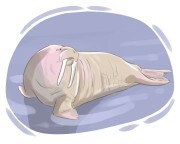
walrus [noun]

a large marine mammal like a seal with two large tusks that lives in Arctic regions

Ex: The walrus feeds on shellfish found on the ocean floor .

a situation in which one has just enough money or food to survive
Ex: Farming provided only subsistence , leaving no surplus for savings .
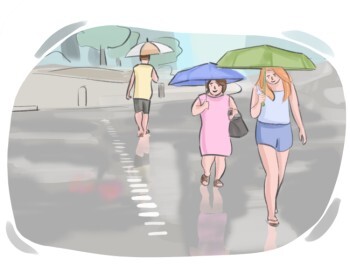
stifling [adjective]

(of weather) uncomfortably hot and lacking air circulation

Ex:
profound [adjective]

having or displaying a lot of knowledge or great understanding
Ex: We sought her counsel on the matter because of her profound expertise in international trade law .

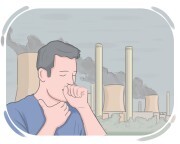
to expose someone or something to potential harm or risk

Ex: Disposing of hazardous materials improperly may endanger the environment .
harsh [adjective]

cruel and unkind toward others

Ex: His harsh tone during the meeting alienated his colleagues .
inevitably [adverb]

in a way that cannot be stopped or avoided, and certainly happens
Ex: If you neglect regular maintenance , the car will inevitably experience mechanical issues .

the obligation to perform a particular duty or task that is assigned to one

Ex: The teacher emphasized the responsibility of students to complete their homework on time .
benefit [noun]

an advantage or a helpful effect that is the result of a situation

Ex: The new policy offers several benefits to low-income families .
handful [noun]

an amount that fits in a hand

Ex: He gave her a handful of coins to use at the arcade .

to ask something from someone in an urgent and forceful manner

Ex: The protesters gathered in front of the government building to demand justice for the victims of the recent incident .

the quality of being related or useful to the current situation or topic
Ex: The topic lost its relevance over time .
to grasp [verb]

to take and tightly hold something

Ex: The climber extended their arm to grasp the rock ledge above .

to admire someone because of their achievements, qualities, etc.
Ex: She respects her mentor and admires his dedication and integrity .

an understanding of or information about a subject after studying and experiencing it
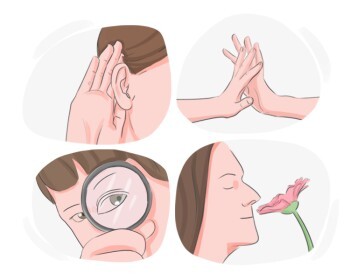
Ex: Jane gained knowledge about ancient history by reading books and visiting museums .
sense [noun]

any of the five natural abilities of sight, hearing, smell, touch, and taste

Ex: Smell is a sense that helps us detect scents and odors .
natural [adjective]

originating from or created by nature, not made or caused by humans

Ex: The table was crafted from natural wood , showcasing its organic grain patterns .

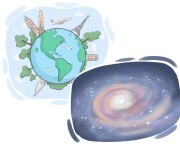
the space outside the earth's atmosphere

Ex: Satellites in outer space help with communication , weather monitoring , and scientific research by orbiting the Earth and other celestial bodies .
bay [noun]

a part of a shoreline that curves inward, larger than a cove but smaller than a gulf
Ex: The bay is surrounded by cliffs and lush green hills .
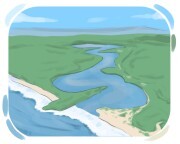
estuary [noun]

the part of a river that is wide and where it meets the sea
Ex:
glacier [noun]

a large mass of ice that forms over long periods of time, especially in polar regions or high mountains
Ex: Mountaineers face numerous challenges when attempting to traverse icy crevasses on glaciers .

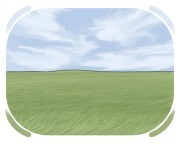
a large, open, and grass-covered area

Ex: Fires can spread quickly in dry grasslands .
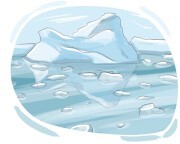
ice floe [noun]

a large piece of floating ice that has broken off from an ice sheet and is floating on the water
Ex:
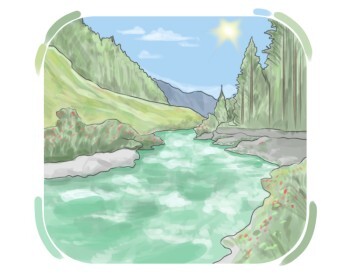
stream [noun]

a small and narrow river that runs on or under the earth
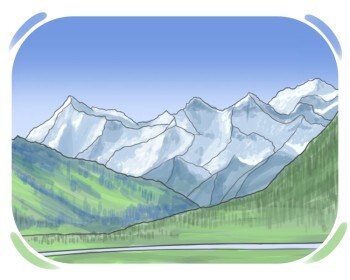
Ex: The stream was clear , and you could see the fish swimming .

a group of mountains or hills in a line

Ex: We hiked through the mountain range for days .

a large body of land that is partially surrounded by water but is attached to a larger area of land
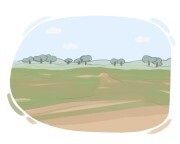
Ex: The children explored the rocky shores and lush forests of the remote peninsula during their summer vacation .
plain [noun]

a vast area of flat land

Ex: The herd of bison roamed freely across the plain , grazing on the abundant grass .
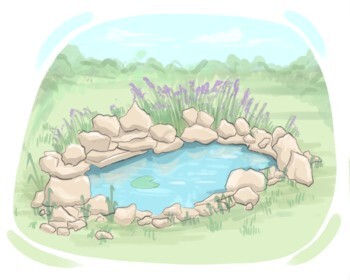
pond [noun]

an area containing still water that is comparatively smaller than a lake, particularly one that is made artificially
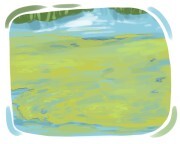
Ex: Children delighted in feeding the fish that inhabited the clear waters of the small pond in the park .
swamp [noun]

an area of land that is covered with water or is always very wet

Ex: The swamp 's ecosystem played a crucial role in filtering water and providing habitat for numerous species of birds and amphibians .
tundra [noun]

the expansive flat Arctic regions, of North America, Asia, and Europe, in which no trees grow and the soil is always frozen
Ex:
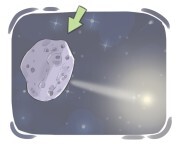
asteroid [noun]

any of the rocky bodies orbiting the sun, ranging greatly in diameter, also found in large numbers between Jupiter and Mars

Ex: The asteroid impact that led to the extinction of the dinosaurs occurred approximately 66 million years ago .

a specific group of stars that form a pattern and have a name related to their shape

Ex: The Big Dipper is a prominent constellation consisting of seven bright stars .
galaxy [noun]

a large number of star systems bound together by gravitational force

Ex: The Hubble Space Telescope has captured images of thousands of galaxies , providing insights into their formation and evolution .

a piece of rock or metal from space that has hit the surface of the earth
Ex: The impact crater was formed by a large meteorite that struck Earth millions of years ago .
moon [noun]

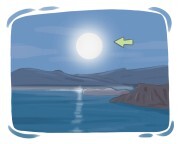
the circular object going around the earth, visible mostly at night
Ex: Selenophiles have a deep and intense love for the moon .
planet [noun]

a huge round object that moves in an orbit, around the sun, or any other star
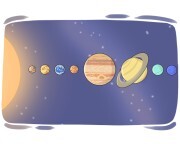
Ex: Earth is the only planet known to support life .

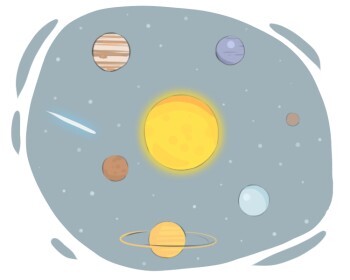
the sun and the group of planets orbiting around it, including the earth

Ex: Some moons in the solar system may have conditions suitable for life .
star [noun]

(astronomy) a shining point found in large numbers in the night sky
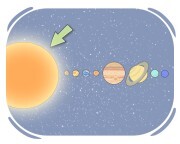
Ex: The sky was so clear that I could see countless stars .
sun [noun]

the large, bright star in the sky that shines during the day and gives us light and heat

Ex: I wear sunglasses to protect my eyes from the sun 's glare .
universe [noun]

all that exists in the physical world, such as space, planets, galaxies, etc.

Ex: Scientists use powerful telescopes to observe celestial objects and unravel mysteries of the universe .