Total English - Advanced - Unit 3 - Lesson 1

Here you will find the vocabulary from Unit 3 - Lesson 1 in the Total English Advanced coursebook, such as "allegedly", "spawn", "liberated", etc.

review-disable

review

flashcard-disable

flashcard

spelling-disable

spelling

quiz-disable

quiz

start-learning
Total English - Advanced
invasion [noun]

the act of invading or entering a territory, country, or region by force or without permission, often with the intent to control or dominate the area and its inhabitants

Ex: The general oversaw the invasion plan , ensuring strategic deployment of troops .
authentic [adjective]

real and not an imitation

Ex: The historical document was deemed authentic by historians , providing valuable insights into the past .
genuine [adjective]

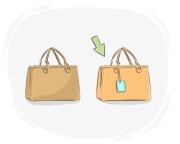
truly what something appears to be, without any falseness, imitation, or deception
Ex: The antique coin was deemed genuine by numismatic experts , with no signs of counterfeiting .

to complete or conduct a task, job, etc.
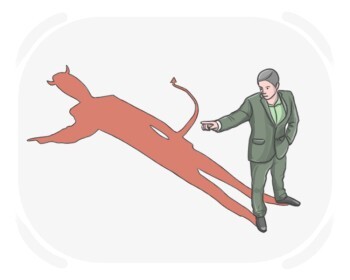
Ex: The detective was assigned to carry out the investigation into the mysterious disappearance .
to fool [verb]

to trick someone by making them believe something false or absurd

Ex: The illusionist 's performance was designed to fool the audience .
isolated [adjective]

(of a place or building) far away from any other place, building, or person

Ex: The isolated island was accessible only by boat and had no permanent residents .
hoax [noun]

a deceptive act or scheme intended to trick people
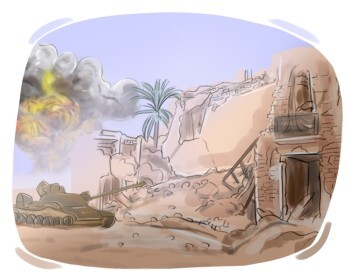
Ex: They fell for a viral hoax about a hidden treasure .
to ruin [verb]

to cause severe damage or harm to something, usually in a way that is beyond repair

Ex: Reckless actions can easily ruin relationships .

to cause damage to something in a way that it no longer exists, works, etc.

Ex: Yesterday , the fire tragically destroyed the old library , consuming many valuable books .

to act in a specific way in order to make others believe that something is the case when actually it is not so

Ex: Sometimes , pretending to be confident can help overcome nervousness in social situations .
ancient [adjective]

related or belonging to a period of history that is long gone
Ex: The artifacts displayed in the museum date back to ancient times .
vital [adjective]

absolutely necessary and of great importance

Ex: Oxygen is vital for sustaining life .
liberated [adjective]

free from traditional or conventional social norms or expectations, often suggesting a sense of empowerment or rebellion
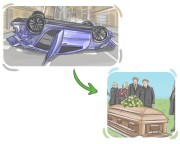
Ex: His liberated mindset challenged social norms .

to enlarge or lengthen something

Ex: The company has extended its product line to attract a wider customer base .
tragic [adjective]

extremely sad or unfortunate, often because of a terrible event or circumstances
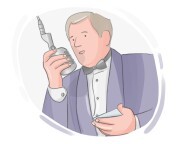
Ex: The tragic explosion at the factory killed several workers and injured many others .

to make plans or decisions known by officially telling people about them

Ex: The president is announcing changes to the organization 's leadership structure .
herald [noun]

a person or thing that announces or signals an important or significant event, development, or message
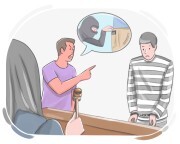
Ex: The town ’s herald proclaimed the new laws to the citizens .
allegedly [adverb]

used to say that something is the case without providing any proof

Ex: The company is facing a lawsuit for allegedly violating environmental regulations .
supposedly [adverb]

used to suggest that something is assumed to be true, often with a hint of doubt

Ex: The new restaurant is supposedly the best in town , according to online reviews .

the act of showing oneself to the public

Ex: The crowd cheered as he made his appearance on stage .
arrival [noun]

the act of arriving at a place from somewhere else
Ex: She eagerly awaited the arrival of her friends at the airport .
attack [noun]

an act of violence or aggression against a place or a person

Ex: The victim suffered severe injuries in the unprovoked dog attack .

to commit a harmful, illegal, or immoral act, such as a crime or an offense
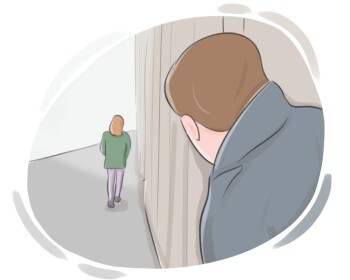
Ex: The criminal confessed to perpetrating a series of burglaries in the neighborhood .
to chase [verb]

to follow a person or thing and see where they go, often for the purpose of catching them

Ex: The dog excitedly chased the ball across the park .

to go after someone or something, particularly to catch them

Ex: The cat eagerly pursued the fluttering butterfly .

to make a person believe something untrue

Ex: It 's unethical to deceive customers with false advertising claims .
to con [verb]

to deceive someone in order to deprive them of something, such as money, property, or information

Ex: She conned her romantic partner by fabricating a sob story to borrow money that she never intended to repay .

to carry out or execute a task, duty, action, or ceremony, often in a formal or official capacity

Ex: The surgeon skillfully performed the delicate heart surgery , ensuring the patient 's well-being .
to do [verb]

to perform an action that is not mentioned by name

Ex: In times of crisis , people often come together to do whatever is necessary .

to tell someone to do something, particularly in an official manner

Ex: The teacher instructed the students to turn in their homework assignments by Friday .
to order [verb]

to give an instruction to someone to do something through one's authority

Ex: The teacher ordered the students to remain quiet during the exam .
to lead [verb]

to guide or show the direction for others to follow
Ex: The teacher led the students to the classroom .
to spawn [verb]

to cause something to be created, particularly in large numbers

Ex: The innovative idea has the potential to spawn a whole new industry .
to rise [verb]

to grow in number, amount, size, or value

Ex: Her salary rose significantly after the promotion .
to float [verb]

to be in motion on a body of water or current of air at a slow pace

Ex: The small fishing boat continued to float peacefully on the calm lake .