
Animals - The Anatomy of Fish, Insects, etc.
Here you will learn some words related to the anatomy of fish, insects, etc. in English such as "fin", "antenna", and "tentacle".
Review
Flashcards
Spelling
Quiz

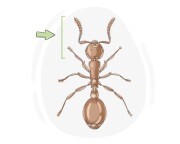
the front part of an insect's body that contains the eyes, antennae, mouth, and other sensory parts, and is connected to the rest of the body by a small joint called the neck
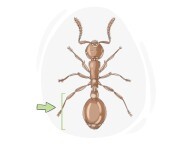
the posterior or rear section of an insect or other arthropod, following the thorax
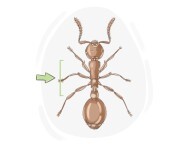
the middle part in the body of an insect between the head and the abdomen that bears the limbs or wings
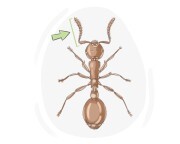
one of a pair of jointed sensory appendages on the head of insects, crustaceans, or similar organisms, often used to detect touch, taste, or movement
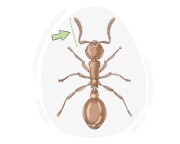
any of the pair of tentacles of an insect or crustacean that help them to sense touch or taste

fine, delicate strands produced by a spider's web, often seen floating in the air or clinging to surfaces
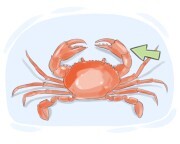
any of the sharp curved organs of an arthropod or insect, such as a crab, lobster, etc.
a long, tubular feeding organ found in many insects, such as butterflies, moths, and flies, which is used to suck up nectar, other liquids, or in some cases, blood
one of the repeated sections forming the body or an appendage of an insect or other segmented animal
a sharp, pointed organ found in certain animals that is used to inject venom or deliver a painful sting
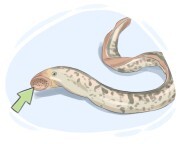
a strengthened rib forming part of the supporting framework of an insect's wing
the internal bony structure of an animal that gives it form and supports its weight
the hard outer covering that supports the body of an animal, such as an arthropod
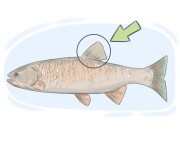
a thin flat membrane of the body of many sea creatures, used for swimming and keeping balance
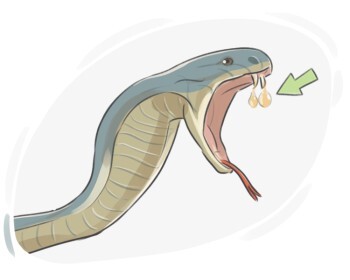
a toxic substance produced and secreted by certain animals, typically used for defense or hunting
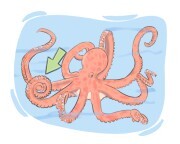
any of the various flexible limbs of an animal, especially an invertebrate, which enable it to move or hold things
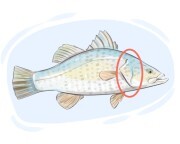
an organ of a fish or an amphibian through which it can obtain the oxygen that is dissolved in water
a paired, wing-like appendage located on the sides of the body of fish, used for stability, maneuverability, and generating lift during swimming
the rectum or external opening in some animals, such as a fish, bird, etc., through which waste is passed
the middle segment of the thorax in animals, typically bearing the middle legs and forewings in insects
the posterior of the three segments that make up the thorax, located behind the mesothorax and typically bearing the hind legs and the hindwings in insects
the anterior wing of an insect, typically larger and more developed than the hindwing, that plays a key role in flight
the posterior pair of wings in insects, located on the metathorax, and typically used for balance, maneuverability, and gliding during flight
(anatomy) each of the pair of tubes in the female body through which eggs pass to the ovary
the specialized structures located around the mouth used for feeding, grooming, and other related functions
a protective covering or lid-like structure that can be found in various organisms, such as fish, snails, and some insects
a sensory system found in fish and some aquatic animals that detects changes in water pressure
a prominent fin located on the back of fish and certain marine mammals, providing stability
a small, fleshy fin located on the back of some fish, typically behind the dorsal fin
the posterior part of a fish or aquatic animal's body, composed of fins that provide propulsion and maneuverability
a light-emitting organ found in certain animals, such as deep-sea fishes and cephalopods, which is used for communication, camouflage, or attracting prey or mates
a pair of paired fins located on the ventral side of a fish's body which aid in stability, maneuverability, and sometimes reproductive functions
