Cambridge IELTS 19 - Academic "Test 4 - Reading - Passage 3 (4)" Vocabulary

Here you can find the vocabulary from Test 4 - Reading - Passage 3 (4) in the Cambridge IELTS 19 - Academic coursebook, to help you prepare for your IELTS exam.

review-disable

review

flashcard-disable

flashcard

spelling-disable

spelling

quiz-disable

quiz

start-learning
Cambridge IELTS 19 - Academic

to provide detailed and clear information or explanations, often in a written format

Ex: The CEO set out the company 's goals in a comprehensive business strategy .
tendency [noun]

a mental disposition or attitude that favors one option over others

Ex: There is a natural tendency for people to resist change .
greedy [adjective]

having an excessive and intense desire for something, especially wealth, possessions, or power
Ex: The greedy landlord raised the rent prices without improving the living conditions for tenants .
to hold [verb]

to have a specific opinion or belief about someone or something

Ex: He holds radical views on economic reform .
belief [noun]

a strong feeling of certainty that something or someone exists or is true; a strong feeling that something or someone is right or good

Ex:
manner [noun]

the way a person acts or behaves toward others

Ex: The manager 's manner changed after the meeting .
appeal [noun]

the attraction and allure that makes one interesting

Ex: The appeal of city life attracts many young professionals .
to lie [verb]

to have its foundation in something, indicating the underlying cause, source, or essence

Ex: The solution lies not in working harder , but in working smarter .
radical [adjective]

(of actions, ideas, etc.) very new and different from the norm

Ex: His radical ideas about education sparked a lot of debate .
due to [preposition]

as a result of a specific cause or reason

Ex: He missed the meeting due to a family emergency .
to offer [verb]

to present or propose something to someone

Ex: The teacher offered valuable feedback to help the students improve their work .

to show or give something to others for inspection, consideration, or approval

Ex: The author presented her manuscript to the publisher , hoping to secure a book deal for her debut novel .
in line with [preposition]

used to convey that someone or something is conforming to a particular standard, guideline, or expectation
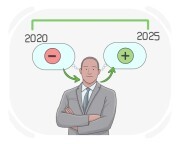
Ex: The new policy is in line with industry regulations .
attitude [noun]

the typical way a person thinks or feels about something or someone, often affecting their behavior and decisions
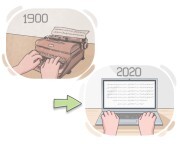
Ex: He approached the project with a can-do attitude , inspiring his team to work diligently towards success .
innovative [adjective]

(of ideas, products, etc.) creative and unlike anything else that exists

Ex: The team introduced an innovative marketing strategy that had never been attempted before .
approach [noun]

a way of doing something or dealing with a problem

Ex: His cautious approach to investing saved him from major losses .
analysis [noun]

a methodical examination of the whole structure of something and the relation between its components
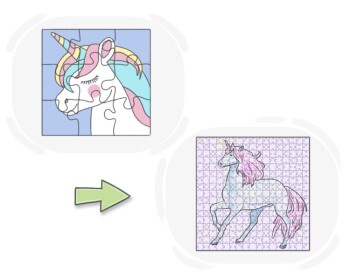
Ex: Her analysis of the literary work highlighted the underlying themes and symbols .
complex [adjective]

not easy to understand or analyze

Ex: The artwork 's meaning was complex , open to interpretation and layered with symbolism .
relatively [adverb]

to a specific degree, particularly when compared to other similar things

Ex: The cost of living here is relatively low .
plentiful [adjective]

available in large quantity

Ex: The garden yielded plentiful vegetables throughout the growing season .
inaccurate [adjective]

not precise or correct

Ex: The map was outdated and inaccurate .
previously [adverb]

before the present moment or a specific time

Ex: The current system operates more efficiently than the one used previously .
to refer [verb]

to mention something or someone particularly in speech or writing

Ex:
isolated [adjective]

(of a place or building) far away from any other place, building, or person

Ex: The isolated island was accessible only by boat and had no permanent residents .

to show a particular trait or behavior prominently

Ex: The politician exhibits charisma , captivating audiences with their charm and persuasive communication .

to share something between a large number of people

Ex: The government recently distributed pamphlets to raise awareness about public health issues .
fairly [adverb]

in a manner that is free from bias, favoritism, or injustice

Ex: The judge listened to all the evidence and ruled fairly .
moral [adjective]

following the principles of wrong and right and behaving based on the ethical standards of a society

Ex: Even in difficult situations , the moral doctor upheld patient confidentiality and acted in the best interest of their health .

to make use of something for a particular purpose

Ex: He employed his negotiation skills to finalize the deal successfully .
custom [noun]

a way of behaving or of doing something that is widely accepted in a society or among a specific group of people

Ex: The custom of celebrating New Year 's Eve with fireworks is widespread .
whereby [conjunction]

used to indicate the means or method by which something is achieved or brought about

Ex: The company introduced a rewards program whereby customers earn points for every purchase .
credit [noun]

formal approval, acknowledgment, or commendation

Ex: He earned credit from his supervisor for his diligence .

to cause someone suffering for breaking the law or having done something they should not have

Ex: Speeding drivers are often punished with fines to discourage traffic violations .

to force someone to leave or remove them from a place, group, or situation

Ex: The company decided to exclude the employee for misconduct .
considerable [adjective]

large in quantity, extent, or degree

Ex: The storm left a considerable amount of debris scattered across the neighborhood .
regarding [preposition]

in relation to or concerning someone or something

Ex:
mistaken [adjective]

(of a person) wrong in one's judgment, opinion, or belief

Ex:
warlike [adjective]

disposed to warfare or hard-line policies

a condition that causes a person or thing to be more successful compared to others

Ex: Studying abroad can provide students with a cultural advantage and language skills .
cooperative [adjective]

characterized by a willingness and ability to work harmoniously with others

Ex: Cooperative neighbors organized a block party together .

to make information that was previously unknown or kept in secrecy publicly known

Ex: After years of speculation , the archaeologists finally revealed the hidden chamber beneath the pyramid .
link [noun]

a relationship or connection between two or more things or people

Ex: The study found a link between diet and heart disease .

the process of gradually coming into existence

Ex: The emergence of eco-friendly technologies is an encouraging sign in the fight against climate change .
aggressive [adjective]

behaving in an angry way and having a tendency to be violent

Ex: She felt intimidated by his aggressive behavior during arguments .
opposing [adjective]

characterized by active hostility

Cambridge IELTS 19 - Academic
Test 1 - Listening - Part 1 Test 1 - Listening - Part 2 Test 1 - Listening - Part 3 (1) Test 1 - Listening - Part 3 (2)
Test 1 - Listening - Part 4 (1) Test 1 - Listening - Part 4 (2) Test 1 - Reading - Passage 1 (1) Test 1 - Reading - Passage 1 (2)
Test 1 - Reading - Passage 2 (1) Test 1 - Reading - Passage 2 (2) Test 1 - Reading - Passage 2 (3) Test 1 - Reading - Passage 3 (1)
Test 1 - Reading - Passage 3 (2) Test 1 - Reading - Passage 3 (3) Test 2 - Listening - Part 1 Test 2 - Listening - Part 2 (1)
Test 2 - Listening - Part 2 (2) Test 2 - Listening - Part 3 (1) Test 2 - Listening - Part 3 (2) Test 2 - Listening - Part 4 (1)
Test 2 - Listening - Part 4 (2) Test 2 - Reading - Passage 1 (1) Test 2 - Reading - Passage 1 (2) Test 2 - Reading - Passage 1 (3)
Test 2 - Reading - Passage 2 (1) Test 2 - Reading - Passage 2 (2) Test 2 - Reading - Passage 2 (3) Test 2 - Reading - Passage 3 (1)
Test 2 - Reading - Passage 3 (2) Test 2 - Reading - Passage 3 (3) Test 3 - Listening - Part 1 Test 3 - Listening - Part 2 (1)
Test 3 - Listening - Part 2 (2) Test 3 - Listening - Part 3 (1) Test 3 - Listening - Part 3 (2) Test 3 - Listening - Part 4 (1)
Test 3 - Listening - Part 4 (2) Test 3 - Reading - Passage 1 (1) Test 3 - Reading - Passage 1 (2) Test 3 - Reading - Passage 1 (3)
Test 3 - Reading - Passage 2 (1) Test 3 - Reading - Passage 2 (2) Test 3 - Reading - Passage 2 (3) Test 3 - Reading - Passage 3 (1)
Test 3 - Reading - Passage 3 (2) Test 3 - Reading - Passage 3 (3) Test 3 - Reading - Passage 3 (4) Test 4 - Listening - Part 1 (1)
Test 4 - Listening - Part 1 (2) Test 4 - Listening - Part 2 (1) Test 4 - Listening - Part 2 (2) Test 4 - Listening - Part 3 (1)
Test 4 - Listening - Part 3 (2) Test 4 - Listening - Part 4 (1) Test 4 - Listening - Part 4 (2) Test 4 - Listening - Part 4 (3)
Test 4 - Reading - Passage 1 (1) Test 4 - Reading - Passage 1 (2) Test 4 - Reading - Passage 1 (3) Test 4 - Reading - Passage 2 (1)
Test 4 - Reading - Passage 2 (2) Test 4 - Reading - Passage 2 (3) Test 4 - Reading - Passage 2 (4) Test 4 - Reading - Passage 3 (1)
Test 4 - Reading - Passage 3 (2) Test 4 - Reading - Passage 3 (3) Test 4 - Reading - Passage 3 (4)