
Le livre Total English - Pré-intermédiaire - Unité 10 - Référence
Ici, vous trouverez le vocabulaire de l'Unité 10 - Référence dans le manuel Total English Pre-Intermediate, comme "navetteur", "monter dans", "ferry", etc.
Réviser
Flashcards
formes
Orthographe
Quiz
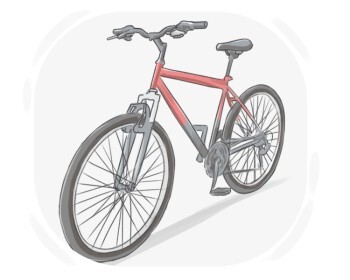
a vehicle with two wheels that we ride by pushing its pedals with our feet

bicyclette
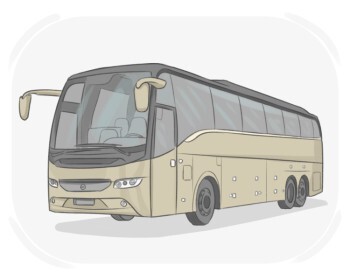
a large vehicle that carries many passengers by road
bus
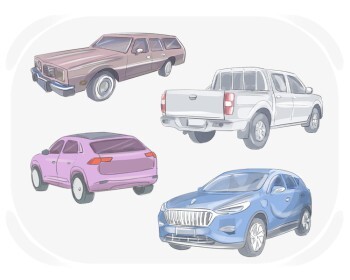
a road vehicle that has four wheels, an engine, and a small number of seats for people
voiture
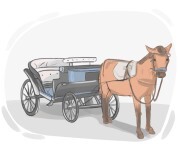
a type of carriage or vehicle used for transportation, typically pulled by horses or other animals
carrosse, voiture
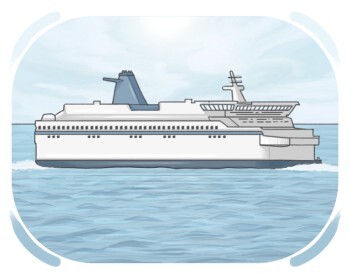
a boat or ship that regularly carries passengers and often vehicles across a body of water
ferry
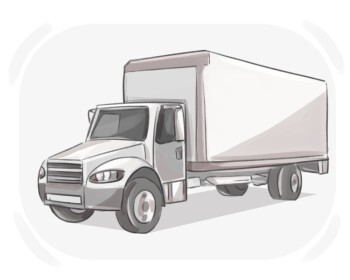
a large, heavy motor vehicle designed for transporting goods or materials over long distances
camion
Elle regarda le camion passer, chargé de produits frais pour le marché local.

a motorcycle with a weak engine and pedals
vélomoteur
La taille compacte du cyclomoteur le rend facile à manœuvrer dans les rues encombrées de la ville.

a light vehicle that has two wheels and is powered by an engine
moto, motocyclette
La moto a dépassé à toute vitesse, son moteur rugissant alors qu'elle naviguait dans la circulation.
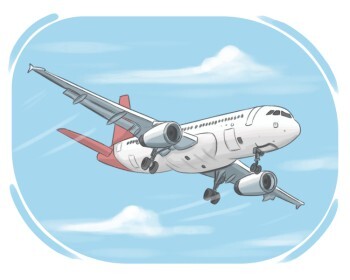
a winged flying vehicle driven by one or more engines
avion
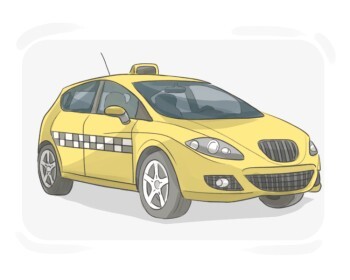
a car with a driver that passengers pay to take them to a particular place
taxi
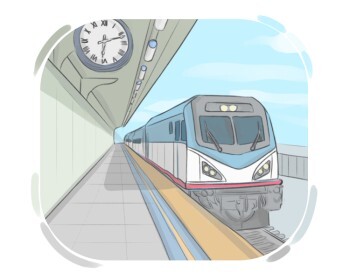
a series of connected carriages that travel on a railroad, often pulled by a locomotive
train
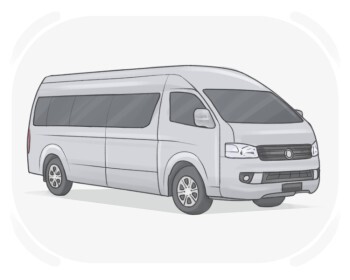
a big vehicle without back windows, smaller than a truck, used for carrying people or things
fourgon, camionnette

a train, bus, or airline designed to carry passengers frequently over short or medium distances, especially between residential areas and places of work or study
train de banlieue
Elle prend un vol navette de sa ville natale à la ville chaque jour de semaine.
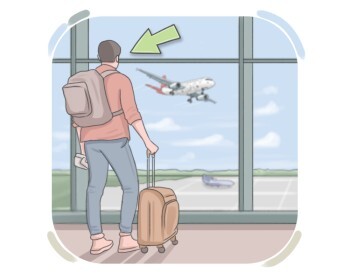
someone traveling in a vehicle, aircraft, ship, etc. who is not the pilot, driver, or a crew member
passager, passagère
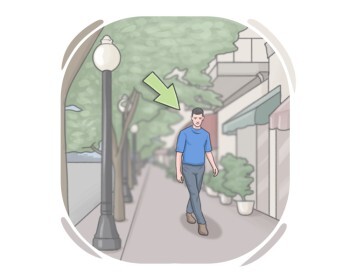
a person who is on foot and not in or on a vehicle
piéton, piétonne
Le pont offre une voie piétonne séparée pour ceux qui souhaitent marcher ou faire du jogging.

the act of travelling between two or more places, especially when there is a long distance between them
voyage
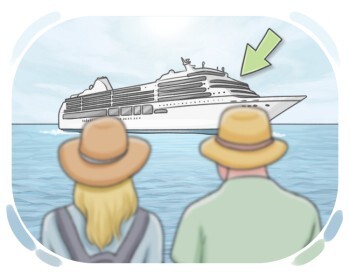
a long journey taken on a ship or spacecraft
voyage, traversée
Les marins ont embarqué pour un voyage à travers l'océan Atlantique pour explorer de nouvelles terres.
to reach and get on a bus, aircraft, or train in time
attraper, prendre
to enter or reach a location
entrer, pénétrer
Il ne pouvait pas trouver ses clés pour entrer dans son appartement.
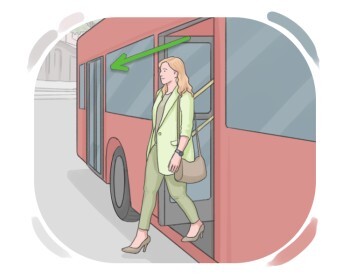
to leave a bus, train, airplane, etc.
descendre d'un moyen de transport, quitter un bus un train ou un avion
Il a réussi à descendre du bateau qui coulait juste à temps.
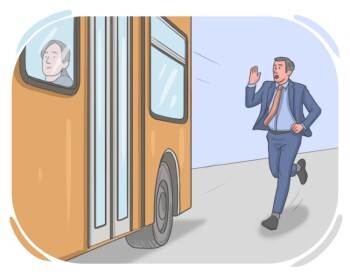
to fail to catch a bus, airplane, etc.
rater
to sit on open-spaced vehicles like motorcycles or bicycles and be in control of their movements
conduire, rouler
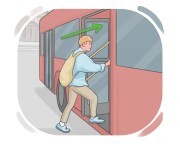
to use a particular route or means of transport in order to go somewhere
prendre

to take someone's hand and move it up and down, mainly for greeting
serrer la main
an act of taking a person's hand and shaking it as a greeting or after having made an agreement with them
poignée de main
Sa poignée de main était ferme et confiante.
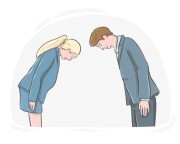
to bend the head or upper body forward as a gesture of respect, greeting, thanks, or acknowledgment
faire une révérence
a forward bending of the head or body as a gesture of respect, greeting, thanks, acknowledgment, or submission
révérence, inclinaison

a gentle touch with the lips, especially to show respect or liking
bise, bisou, baiser
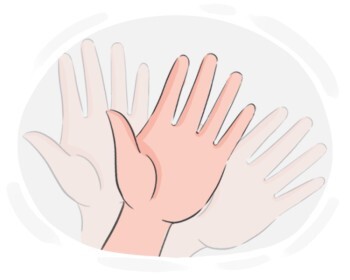
a gesture or signal made with the hand or arm, often as a form of greeting or farewell
geste, signe de la main

something that we give to someone because we like them, especially on a special occasion, or to say thank you
cadeau

feeling or showing great surprise
étonné, surpris
La foule émerveillée a éclaté en acclamations lorsque le score final a été annoncé.

extremely surprising, particularly in a good way
incroyable, extraordinaire
Elle a préparé un gâteau incroyable pour l'anniversaire de son amie.
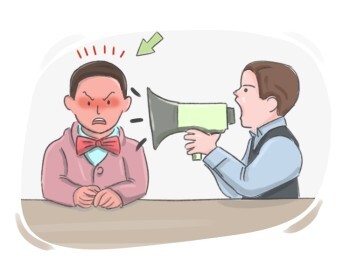
feeling slightly angry or irritated
gêné, irrité
Le client énervé s'est plaint de la longue attente au restaurant.
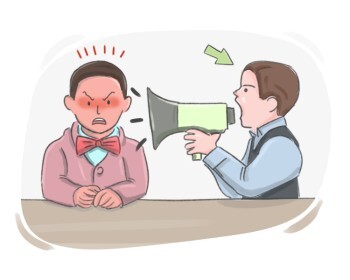
causing slight anger
énervant, agaçant
L'habitude agaçante de taper constamment du pied pendant la réunion a distrait tout le monde.
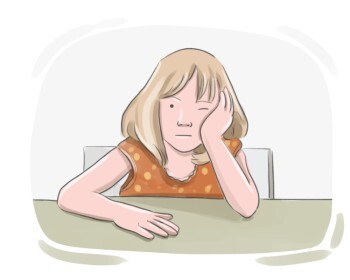
tired and unhappy because there is nothing to do or because we are no longer interested in something
qui s’ennuie
Je suis ennuyé de manger la même chose tous les jours.

making us feel tired and unsatisfied because of not being interesting
ennuyeux

feeling very unhappy and having no hope
déprimé
Il semblait déprimé, avec un poids lourd apparent dans son attitude.

making one feel sad and hopeless
déprimant
Regarder le documentaire sur la pauvreté dans le monde était une expérience déprimante.
not satisfied or happy with something, because it did not meet one's expectations or hopes
déçu
Ses parents étaient clairement déçus qu'il n'ait pas réussi l'examen.
not fulfilling one's expectations or hopes
décevant
La participation décevante à l'événement a été un revers pour les organisateurs.

feeling very happy, interested, and energetic
agité, excité

making us feel interested, happy, and energetic
passionnant
Le concert était passionnant, avec des performances incroyables de mes groupes préférés.

feeling afraid, often suddenly, due to danger, threat, or shock
effrayé
L'enfant effrayé s'est accroché à la jambe de sa mère pendant l'orage.
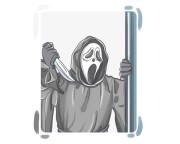
causing one to feel fear
effrayant, terrifiant
Le film avait une fin effrayante.
impressive or exceptional in a way that seems the result of a sudden creative impulse
inspiré, génial
Sa solution au problème était vraiment inspirée.
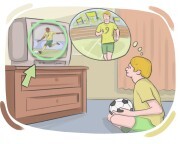
producing feelings of motivation, enthusiasm, or admiration
inspirant, motivant
Le discours prononcé par l'activiste était incroyablement inspirant, motivant le public à passer à l'action.
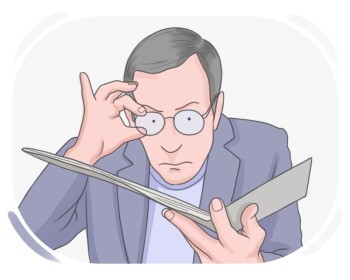
having a feeling of curiosity or attention toward a particular thing or person because one likes them
intéressé
Je ne suis pas intéressé par la politique.
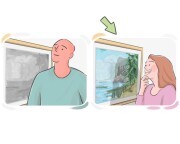
catching and keeping our attention because of being unusual, exciting, etc.
intéressant
Il est intéressant de noter comment la technologie a évolué au fil des ans.

feeling calm and at ease without tension or stress
détendu, décontracté
Assise près de la cheminée, elle se sentait détendue en écoutant le crépitement des flammes.

helping our body or mind rest
relaxant
Lire un livre dans un fauteuil confortable peut être une façon relaxante de se détendre avant de se coucher.

feeling or showing shock or amazement
surpris
Des visages surpris ont rempli la pièce lorsque l'annonce a été faite.
causing a feeling of shock, disbelief, or wonder
surprenant, étonnant
Sa victoire surprenante dans la compétition a fait les gros titres.
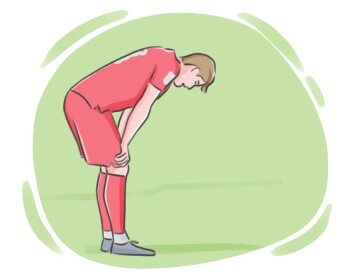
needing to sleep or rest because of not having any more energy
fatigué
Elle se sentait fatiguée et a décidé de faire une courte sieste.
(particularly of an acivity) causing a feeling of physical or mental fatigue or exhaustion
fatigant, épuisant
La tâche fatigante d'assemblage de meubles a pris plus de temps que prévu.
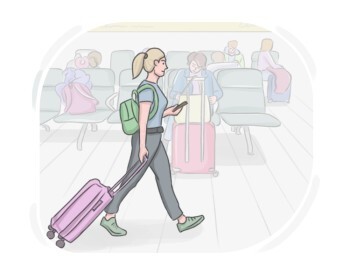
a person who is making a journey or who travels frequently
voyageur, voyageuse
