
Vocabulary for IELTS (Basic) - Language and Grammar
Here you will learn some English words about language and grammar, such as "article", "determiner", "abbreviation", etc. that are needed for the IELTS exam.
Review
Flashcards
Spelling
Quiz

the shortened form of a word, etc.

(grammar) the voice in which the subject is the agent that does the action of the verb
(grammar) a word or phrase that adds more information to another word in sense of time, manner, degree or cause

the symbol ' used in writing to show possession or omission of letters or numbers

(grammar) any type of determiner that shows whether we are referring to a particular thing or a general example of something

a verb that is used with other verbs to indicate tense, voice, etc., such as do, have, and be
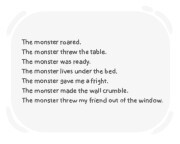
(grammar) a group of words that contains a subject and a verb and functions as a unit within a sentence

(grammar) a word such as and, because, but, and or that connects phrases, sentences, or words
a short form of a word or a group of words used instead of the full form
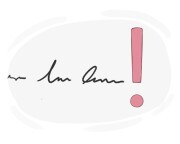
a punctuation symbol (!) placed after a word, phrase, or sentence to indicate strong feeling or emphasis
connected to the rules or the study of grammar
(phonetics) the rising and falling of the voice when speaking
(grammar) a verb without a direct object
(grammar) a verb that needs a direct object
(grammar) any of the grammatical classes that words are categorized into, based on their usage in a sentence
(in grammar) the form of a verb used when the grammatical subject is affected by the action of the verb, rather than performing it

the symbol (.) used to end a declarative sentence or mark an abbreviation

(grammar) a letter or a set of letters that are added to the beginning of a word to alter its meaning and make a new word

(grammar) a letter or a set of letters that are added to the end of a word to alter its meaning and make a new word
(grammar) describing a word that indicates that the action of the verb affects the agent performing it
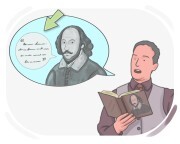
to say the exact sentence or group of words someone else used in a movie, book, etc.

(grammar) the name of a place, person, country, etc. with its first letter capitalized
(grammar) a noun that refers to an object or a concept in a category but not to a specific one

either of the symbols " " or ' ' used before and after a word or words to indicate the beginning and the end of a title or quoted remark, or to mark a jargon
(in grammar) a phrase or word that receives the action of a verb
(grammar) a noun that denotes a general quality or an idea, rather than a physical object or real world event
