
Список Слов Уровня C1 - вооруженные силы
Здесь вы выучите некоторые английские слова на военную тематику, такие как "развертывать", "рейд", "боевик" и т.д., подготовленные для учащихся уровня C1.
Обзор
Флэш-карточки
формы
Правописание
Тест


an extremely brutal act, especially in war

зверство
После окончания войны несколько лидеров были преданы суду за зверства, которые они санкционировали.
the highest-ranking officer in a fleet
адмирал
Адмирал стоял на палубе, осматривая флот с чувством гордости и ответственности.
a senior military officer, typically ranking above lieutenant colonel and below brigadier general
полковник
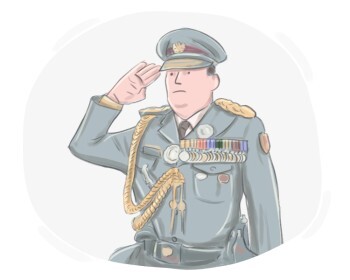
a high-ranking officer in the army, air force, or marines
генерал
a middle-ranking officer in the armed forces
майор
a person who has previously served in the armed forces, especially one who served during a war
ветеран
to murder a prominent figure in a sudden attack, usually for political purposes
совершать покушение на, убивать
Тайный агент был нанят, чтобы убить политического лидера во время саммита.
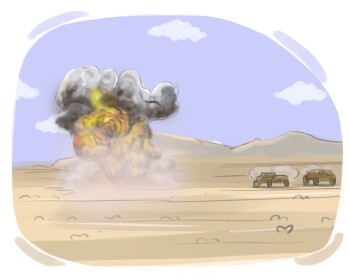
to damage, destroy, or break apart something with explosives
взрывать
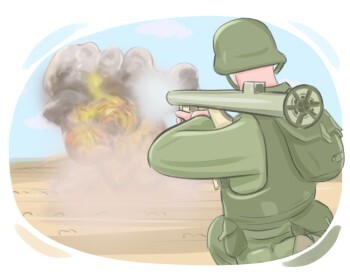
to cause something to explode
взорвать, подорвать
Режиссер фильма взорвет машину для сцены действия.
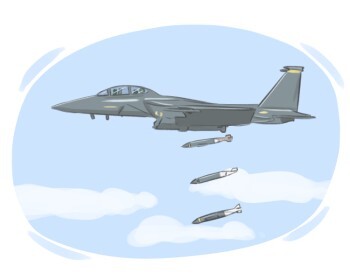
to drop bombs on someone or something continuously
бомбардировать
Во время войны вражеские самолёты бомбили город безжалостными авиаударами.
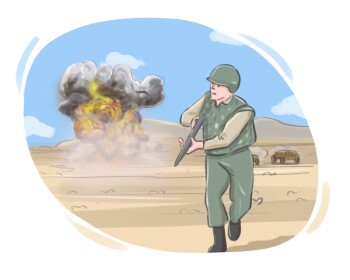
to attack violently and suddenly in a battle
атаковать
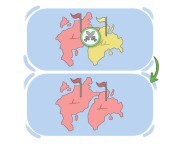
to gain control of a place or people using armed forces
завоёвывать
Армия стратегически работала, чтобы завоевать территорию врага.
to position soldiers or equipment for military action
развёртывать
Генерал решил развернуть войска по периметру для оборонительной позиции.
(of armed forces) to empty a dangerous place
эвакуировать
Военным было приказано эвакуировать потенциальные целевые районы.
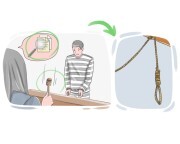
to kill someone as a legal punishment
казнить
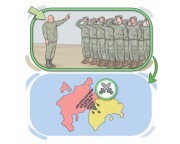
(of a state) to organize and prepare for a military operation
мобилизовать
В ответ на угрозу страна решила мобилизовать свои военные силы.
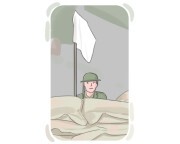
to stop fighting or resisting and accept defeat
сдаваться
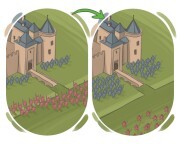
(of military forces) to withdraw from a position, especially because of danger, defeat, or enemy pressure
отступать
a member of an unofficial armed group that uses irregular tactics, such as surprise attacks, against regular military or government forces
партизан
a military group consisting of civilians who have been trained as soldiers to help the army in emergencies
ополчение
Ополчение было мобилизовано для оказания помощи в ликвидации последствий стихийного бедствия после того, как землетрясение опустошило регион.
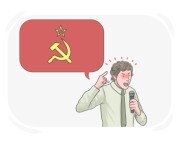
displaying violent acts for the sake of a social or political aim
воинствующий
Воинствующие активисты столкнулись с полицией во время демонстрации, что привело к нескольким арестам.
relating to the armed forces that operate at seas or waters in general
военно-морской
Военно-морская академия готовит офицеров для службы на флоте.
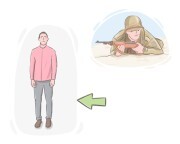
relating to people or activities that are not part of the armed forces
гражданское лицо
intended or used to protect someone or something against attack or harm
оборонительный
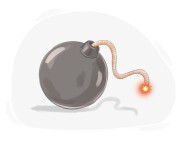
capable of exploding or causing an explosion
взрывной
a nuclear weapon with great destruction power which is released due to the fission of heavy atoms
Атомная бомба
Атомная бомба, сброшенная на Хиросиму и Нагасаки в 1945 году, имела разрушительные последствия, приведя к широкомасштабным разрушениям и гибели людей.
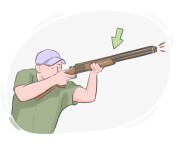
a long gun suitable for shooting a target over long distances, which is held along shoulder while aiming the target
винтовка
a group of naval vessels organized to operate together as a military unit
флот
a sudden surprise attack on a place or group, especially by an armed force
рейд, набег
an order or law that prohibits people from going outside after a specific time, particularly at night
комендантский час
Правительство ввело строгий комендантский час, требуя, чтобы все находились в помещении до 21:00 для обеспечения общественной безопасности.
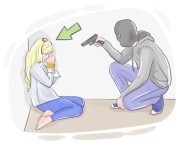
someone held prisoner by a person or group who will be set free if the demands of that person or group are met
заложник
Похитители взяли в заложники нескольких сотрудников во время ограбления банка, требуя выкуп за их освобождение.
the deliberate infliction of severe pain as punishment or to force someone to provide information or comply with demands
пытка
the act of invading and controlling a country, city, etc.
оккупация
a long narrow hole dug in the ground in which soldiers move and are protected from enemy fire
траншея, окоп
Солдаты сгрудились в окопе, ожидая сигнала для продвижения через нейтральную полосу.
an agreement according to which enemies or opponents stop fighting each other for a specific period of time
перемирие
После месяцев ожесточенных боев враждующие группировки согласились на временное перемирие, чтобы позволить гуманитарную помощь в регион.
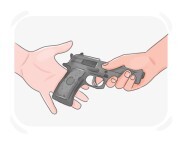
to provide individuals or groups with weapons, ensuring they have the necessary equipment for defense or offense
вооружать
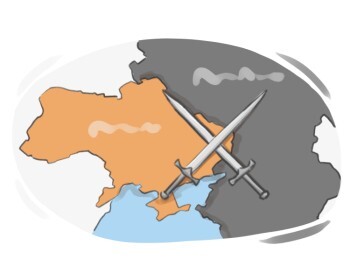
involvement in war, particularly using certain methods or weapons
военные действия
Современная война часто включает передовые технологии и кибератаки, наряду с традиционными боевыми действиями.
a gun that automatically and rapidly fires a succession of bullets upon pressing the trigger
пулемёт
Солдаты использовали установленный пулемёт для прикрытия огнём во время атаки.
the action of transferring people or being transferred to somewhere else to be safe from a dangerous situation
эвакуация
Прибрежный город приказал обязательную эвакуацию по мере приближения урагана, призывая жителей укрыться в глубине суши.
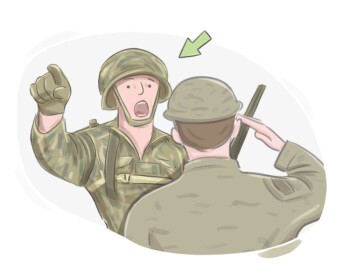
an order, particularly given by someone in a position of authority
команда
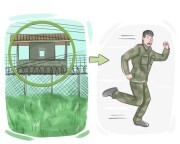
(of a soldier) having left one's military duty without being permitted to do so
самовольно отсутствующий, самовольно покинувший часть
Сержант доложил, что двое солдат ночью самовольно покинули часть.
the exact location of a nuclear explosion
эпицентр взрыва
Выжившие рассказали о разрушениях в эпицентре взрыва атомной бомбы в Хиросиме.
a member of an armed force who is specifically trained to fire large guns
стрелок
Наводчик отрегулировал угол возвышения артиллерии перед стрельбой по удалённой цели.
a tube-like weapon through which an arrow is shot if someone breathes in it forcefully
духовое ружьё
Коренное племя использовало духовые трубки для охоты на мелкую дичь в густом тропическом лесу.
an automatic gun that is not heavy and can be easily held and carried by hand
пистолет-пулемет
Солдат нес пистолет-пулемет во время тайной операции по бесшумному устранению вражеских часовых.
to send a person to a particular place in order to carry out a duty, particularly a military person
располагать, установить
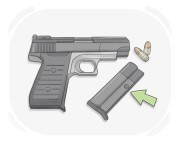
the part of a gun containing its bullets
оружейная обойма
big heavy guns that are attached on top of moving wheels or tracks
артиллерия
Артиллерийский обстрел сотрясал землю, пока снаряды сыпались на вражеские позиции.
a nuclear weapon of a country that is very powerful and serves as a protection against other countries' attacks
ядерное сдерживание
Политика ядерного сдерживания направлена на то, чтобы удерживать потенциальных противников от запуска атак путем поддержания достоверного ядерного арсенала.
a poisonous chemical that is damaging to the nervous system and is used as a war weapon
Нервно-паралитический газ
Нервно-паралитические агенты — это высокотоксичные химические вещества, которые нарушают работу нервной системы, вызывая быстрые и тяжелые последствия для здоровья.
a toxic chemical substance that interferes with the normal functioning of the nervous system
нервный газ
Нервно-паралитический газ — это мощное химическое оружие, предназначенное для нарушения работы нервной системы его жертв.
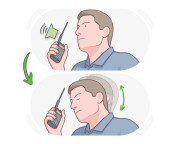
used in radio communication to confirm that a message has been received and understood
понять, ладно
a radio code used in two-way radio communication as an affirmative response or an indication of understanding
Вас понял
Диспетчер подтвердил запрос офицера простым десять-четыре по радио.
a situation where the military becomes in charge of a country, replacing regular laws with their own rule, in order to maintain order during times of crisis or disturbance
военное положение, чрезвычайное положение
Правительство объявило военное положение, чтобы восстановить порядок во время гражданских беспорядков, предоставив военным власть над гражданскими учреждениями.
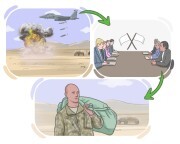
to officially release or dismiss someone from the police or armed forces
демобилизовать
