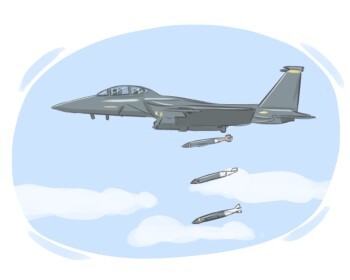
C1 Level Wordlist - Military

Here you will learn some English words about military, such as "deploy", "raid", "militant", etc. prepared for C1 learners.

review-disable

review

flashcard-disable

flashcard

spelling-disable

spelling

quiz-disable

quiz

start-learning
C1 Level Wordlist
atrocity [noun]

an extremely brutal act, especially in war

Ex: The international community condemned the atrocity , calling for immediate action to bring the perpetrators to justice .
admiral [noun]

the highest-ranking officer in a fleet

Ex: The admiral issued orders to prepare the ships for the upcoming mission , ensuring every detail was meticulously planned .
colonel [noun]

a high-ranking officer in the army, marine corps, or air force, whose rank is between a lieutenant colonel and brigadier general
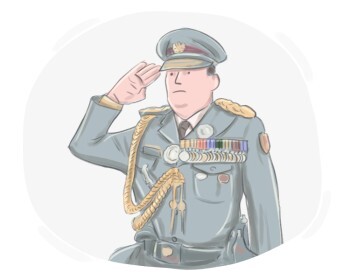
Ex: The colonel 's strategic expertise was crucial in planning the successful operation behind enemy lines .
general [noun]

a high-ranking officer in the army, Air Force, or Marines

Ex: The general 's decisions during the conflict were pivotal , showcasing his tactical brilliance and leadership under pressure .
major [noun]

a middle-ranking officer in the armed forces

Ex: The major reviewed the operation plans with his team , emphasizing the importance of precision and timing .
veteran [noun]

a former member of the armed forces who has fought in a war

Ex: The organization provides support services for homeless veterans in the community .

to murder a prominent figure in a sudden attack, usually for political purposes
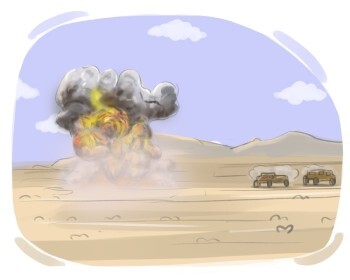
Ex: In the historical account , a plot was uncovered to assassinate the king .
to blast [verb]

to violently damage or destroy something using explosives
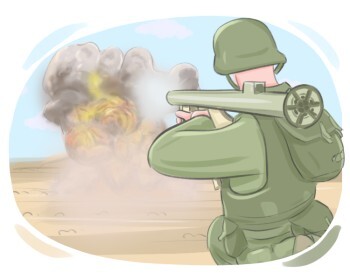
Ex: The terrorists attempted to blast the bridge with dynamite .

to drop bombs on someone or something continuously
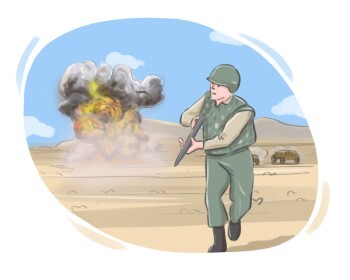
Ex: During the air raid , the city was relentlessly bombarded by enemy aircraft .

to attack violently and suddenly in a battle
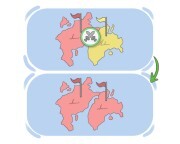
Ex: The knights mounted their horses and prepared to charge the enemy 's stronghold .

to gain control of a place or people using armed forces
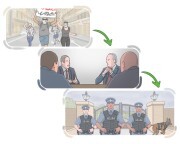
Ex: The general 's goal was to conquer the opposing forces and claim victory .

to position soldiers or equipment for military action

Ex: In response to the threat , the army was ordered to deploy additional units to the border .

(of armed forces) to empty a dangerous place
Ex: The military was ordered to evacuate potential target areas .

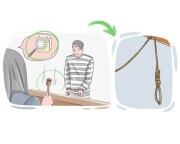
to kill someone, especially as a legal penalty
Ex: The controversial practice of executing prisoners by firing squad has been abolished in many places due to ethical concerns .

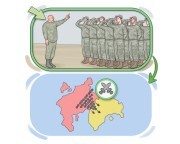
(of a state) to organize and prepare for a military operation
Ex: The military commanders swiftly mobilized troops to secure the border .

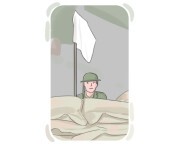
to give up resistance or stop fighting against an enemy or opponent
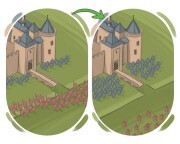
Ex: The besieged fortress eventually had to surrender due to a lack of supplies .

(of military) to move away in order to escape the danger because one has been defeated or is weak

Ex: The army had no choice but to retreat as the enemy 's advance became too formidable .

a person who participates in irregular fighting as a member of an unofficial military group

Ex: He joined the guerrilla group to fight for independence and social justice in his homeland .
militia [noun]

a military group consisting of civilians who have been trained as soldiers to help the army in emergencies
Ex: The militia members underwent rigorous training to ensure they could effectively assist the army during emergencies .
militant [adjective]

displaying violent acts for the sake of a social or political aim

Ex: The militant faction was responsible for the kidnapping of several diplomats in the region .
naval [adjective]

relating to the armed forces that operate at seas or waters in general
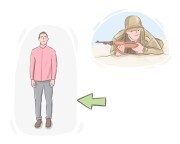
Ex: The naval base serves as a home port for warships and submarines .
civilian [adjective]

relating to a person who is not a member of the military or police force and does not hold an official position in the government

Ex:
defensive [adjective]

designed or used in a way that provides a person or thing with protection against attack
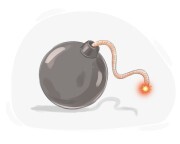
Ex: The defensive strategy focused on preventing the opponent from scoring any goals .
explosive [adjective]

having the potential to cause sudden and violent release of energy or force

Ex: The chemical reaction caused by mixing the two substances was explosive .
A-bomb [noun]

a nuclear weapon with great destruction power which is released due to the fission of heavy atoms
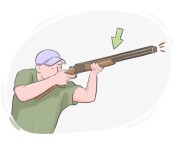
Ex: The deployment of the A-bomb marked a new era in warfare , with nations racing to enhance their nuclear arsenals .
rifle [noun]

a long gun suitable for shooting a target over long distances, which is held along shoulder while aiming the target

Ex: The soldier carried a lightweight rifle as part of his standard equipment during patrols .
fleet [noun]

a group of naval vessels organized as a single fighting or operational unit

Ex: A new destroyer joined the fleet last month .
raid [noun]

a surprise attack against a place or a group of people

Ex: The police conducted a raid on the warehouse , uncovering a large cache of illegal weapons .
curfew [noun]

an order or law that prohibits people from going outside after a specific time, particularly at night
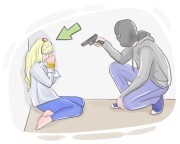
Ex: As the clock struck ten , the streets emptied quickly , with everyone rushing home to avoid breaking curfew .
hostage [noun]

someone held prisoner by a person or group who will be set free if the demands of that person or group are met

Ex: The movie depicted a tense standoff where the hero had to rescue the hostage without alerting the captors .
torture [noun]

the act of making someone suffer very much so that they do what one wants

Ex: The use of torture as a means of interrogation is morally reprehensible and ineffective .

the act of invading and controlling a country, city, etc.

Ex: The history books detailed the occupation of the city , highlighting the hardships faced by its residents under enemy control .
trench [noun]

a long narrow hole dug in the ground in which soldiers move and are protected from enemy fire

Ex:
truce [noun]

an agreement according to which enemies or opponents stop fighting each other for a specific period of time
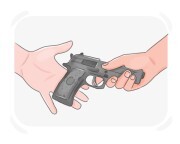
Ex: During the Christmas truce of 1914 , soldiers from both sides emerged from their trenches to exchange greetings and play football .
to arm [verb]

to provide individuals or groups with weapons, ensuring they have the necessary equipment for defense or offense
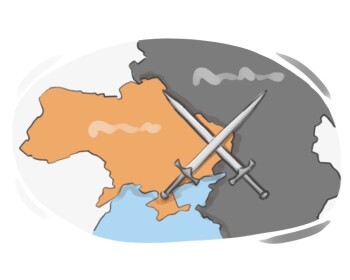
Ex: In times of war , nations often arm their troops with the latest firearms and protective gear .
warfare [noun]

involvement in war, particularly using certain methods or weapons

Ex: Guerrilla warfare tactics were employed by the resistance to effectively harass and undermine the occupying forces .

a gun that automatically and rapidly fires a succession of bullets upon pressing the trigger

Ex: The invention of the machine gun revolutionized warfare , allowing for unprecedented rates of fire and battlefield dominance .

the action of transferring people or being transferred to somewhere else to be safe from a dangerous situation
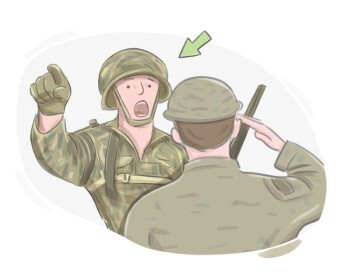
Ex: The fire department coordinated the evacuation of the building after a gas leak was detected .
command [noun]

an order, particularly given by someone in a position of authority
Ex: The CEO 's command to cut costs led to layoffs and restructuring within the company .
AWOL [adjective]

(of a soldier) having left one's military duty without being permitted to do so

Ex: Last month , she went AWOL from her military duty , resulting in disciplinary action from her commanding officer .

the exact location of a nuclear explosion

Ex: The memorial at ground zero in New York City commemorates the lives lost during the terrorist attacks on September 11th .
gunner [noun]

a member of an armed force who is specifically trained to fire large guns

Ex: As a skilled gunner , he earned a reputation for precision and accuracy on the firing range .
blowgun [noun]

a tube-like weapon through which an arrow is shot if someone breathes in it forcefully

Ex: The blowgun was traditionally crafted from bamboo , with a small dart coated in poison for hunting purposes .

an automatic gun that is not heavy and can be easily held and carried by hand

Ex: Law enforcement officers rely on submachine guns for tactical operations requiring swift and precise firepower .

to send a person to a particular place in order to carry out a duty, particularly a military person
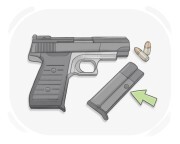
Ex:
magazine [noun]

the part of a gun containing its bullets

Ex: Before the competition , the marksman carefully inspected his pistol 's magazine for any defects .

big heavy guns that are attached on top of moving wheels or tracks

Ex: The artillery battery moved into position to provide support for the advancing infantry .

a nuclear weapon of a country that is very powerful and serves as a protection against other countries' attacks

Ex: The concept of nuclear deterrent hinges on the principle of mutually assured destruction .

a poisonous chemical that is damaging to the nervous system and is used as a war weapon

Ex: The soldiers were equipped with protective gear to shield themselves from exposure to nerve agents during chemical warfare drills .

a toxic chemical substance that interferes with the normal functioning of the nervous system
Ex: International treaties prohibit the production and use of nerve gas due to its extreme toxicity and indiscriminate effects .
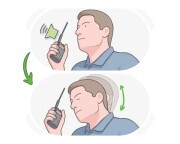
roger [interjection]

used as a confirmation message in radio communication to indicate that a message has been received and understood

Ex:
ten-four [interjection]

a radio code used in two-way radio communication as an affirmative response or an indication of understanding

Ex: The truck driver radioed in a " ten-four " to indicate he understood the new route given by dispatch .

a situation where the military becomes in charge of a country, replacing regular laws with their own rule, in order to maintain order during times of crisis or disturbance
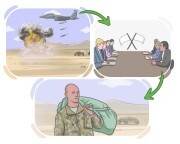
Ex: The imposition of martial law suspended certain civil liberties and empowered military commanders to enforce law and order .

to make someone leave the armed forces or police and relieving them from their duties

Ex: