

pattern

Beşeri Bilimler SAT - Tarih ve Arkeoloji

Burada, SAT'larınızda başarılı olmak için ihtiyacınız olacak "excavate", "antiquity", "relic" gibi tarih ve arkeoloji ile ilgili bazı İngilizce kelimeler öğreneceksiniz.

Gözden Geçir

Flash kartlar

Yazım

Quiz

Öğrenmeye başla
SAT Vocabulary for Humanities
Renaissance

the period between the 14th and 16th centuries in Europe, marked by a rise of interest in Greek and Roman cultures, which is dominant in the art, philosophy, etc. of the times

Rönesans

Rönesans

Ex: The Renaissance period is known for its remarkable achievements in art, science, and literature. 
antiquity
antiquity
[isim]

the historical period before the Middle Ages, especially before the sixth century when Greeks and Romans were the most prosperous

antik çağ

antik çağ

Ex: Antiquity refers to the period in history before the Middle Ages, encompassing the civilizations of ancient Greece and Rome. 
pre-industrial

relating to the period of time before the widespread adoption of industrial processes and technologies

sanayi öncesi, endüstriyel öncesi

sanayi öncesi, endüstriyel öncesi

Ex: Life expectancy was generally shorter in pre-industrial societies due to limited access to healthcare and sanitation. 
contemporary
contemporary
[sıfat]

belonging to the current era

çağdaş

çağdaş

Ex: We studied the contemporary political landscape to understand today's issues. 
mesopotamia

an ancient region located in the eastern Mediterranean, primarily within modern-day Iraq, and parts of Iran, Syria, and Turkey

Mezopotamya, Mezopotamya bölgesi

Mezopotamya, Mezopotamya bölgesi

Ex: The ancient cultures of Mesopotamia, such as the Sumerians and Babylonians, made significant contributions to human history. 
clay tablet

a small, flat piece of clay that has been molded and hardened, typically used as a medium for writing or inscribing information in ancient civilizations

kil tableti, kilden tablet

kil tableti, kilden tablet

Ex: In ancient Mesopotamia, clay tablets were used for recording administrative documents such as inventories, contracts, and receipts. 
hieroglyph

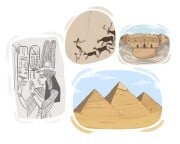
a system of writing used in ancient Egypt, consisting of pictorial symbols or characters that represent objects, ideas, or sounds, and were commonly used for inscriptions on temple walls, tombs, and other monumental structures

resimyazı

resimyazı

to predate

to exist or occur at an earlier time than something else

erkene almak

erkene almak

Ex: Fossils of dinosaurs predate modern humans by millions of years. 
monument
monument
[isim]

a place or building that is historically important

tarihi yapı

tarihi yapı

Ex: The Eiffel Tower is a famous monument in Paris, attracting millions of tourists each year. 
relic
relic
[isim]

an object or part of an object surviving from the past, typically with historical or emotional value, often linked to a person, event, or era

kalıntı

kalıntı

Ex: The museum displayed a relic from the Bronze Age, drawing historians from all over the country. 
catacomb
catacomb
[isim]

an underground burial place with tunnels and chambers for tombs or graves

katakomp

katakomp

Ex: The catacombs beneath the city were used for centuries as burial sites. 
to mummify

to preserve a dead body by treating it with chemicals or natural substances to prevent decay

mumyalamak, tahnit etmek

mumyalamak, tahnit etmek

Ex: The ancient Egyptians mummified their pharaohs to prepare them for the afterlife. 
alchemy
alchemy
[isim]

the ancient practice of trying to turn common metals into gold

simya

simya

Ex: While no one succeeded in using alchemy to create gold, it led to modern chemistry's birth. 
scribe
scribe
[isim]

a person who writes copies of documents by hand

katip

katip

Ex: Before the invention of the printing press, scribes played a crucial role in the dissemination of knowledge by copying books by hand. 
ancestral
ancestral
[sıfat]

related to or inherited from one's ancestors

atalardan kalma, soydan gelen

atalardan kalma, soydan gelen

Ex: She felt a deep connection to her ancestral homeland. 
ancient
ancient
[sıfat]

related or belonging to a period of history that is long gone

eski zamandan kalma

eski zamandan kalma

Ex: She studied ancient civilizations like the Egyptians and Greeks in her history class. 
genealogy
genealogy
[isim]

the study of family lineages and the history of descent

soybilim

soybilim

Ex: Thanks to advancements in technology and online databases, conducting genealogy research has become more accessible to individuals interested in their family history. 
epoch
epoch
[isim]

a period of time in history or someone's life, during which significant events happen

devir

devir

Ex: The Renaissance was an epoch of great cultural and artistic achievements in Europe. 
provenance

the origin or source of a particular thing

köken, menşe

köken, menşe

Ex: The provenance of the painting was traced back to the 18th century. 
medievalist

a scholar or researcher who specializes in the study of the Middle Ages

ortaçağ uzmanı, ortaçağ araştırmacısı

ortaçağ uzmanı, ortaçağ araştırmacısı

Ex: The renowned medievalist published a groundbreaking study on medieval manuscript illumination. 
archeologist

a person whose job is to study ancient societies using facts, objects, buildings, etc. remaining in excavation sites

arkeolog

arkeolog

preservationist

a person who advocates or works to protect and maintain natural, historical, or cultural resources from decay, destruction, or neglect

koruma uzmanı, korumacı

koruma uzmanı, korumacı

Ex: The preservationist campaigned to save the historic building from demolition. 
paleontologist

a scientist who studies fossils and ancient life forms to understand the history of life on earth

paleontolog

paleontolog

Ex: The paleontologist discovered a new dinosaur species in the fossil-rich region. 
paleobiologist

a scientist who studies ancient life forms, their evolution, behaviors, habitats, and interactions with the environment through the analysis of fossils and other remnants of past life

paleobiyolog, eski yaşam formlarını inceleyen bilim insanı

paleobiyolog, eski yaşam formlarını inceleyen bilim insanı

Ex: The paleobiologist excavated fossils from the ancient riverbed to study the evolution of early amphibians. 
cryptographer

a specialist who studies and develops systems for secure communication and information protection

kriptograf, şifreleme uzmanı

kriptograf, şifreleme uzmanı

Ex: The cryptographer devised a new encryption algorithm to enhance data security. 
artifact
artifact
[isim]

a man-made object, tool, weapon, etc. that was created in the past and holds historical or cultural significance

insan yapımı

insan yapımı

Ex: Artifacts of early tool-making like stone knives and projectile points show the ingenuity and resourcefulness of Paleolithic humans. 
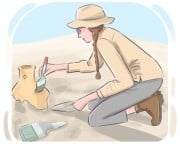
to excavate

to uncover or expose by digging, especially to reveal buried artifacts, structures, or remains

kazı yapmak

kazı yapmak

Ex: Paleontologists excavated a dinosaur fossil, carefully removing layers of sediment to reveal the skeleton. 
radiocarbon dating

a method used by scientists to determine the age of organic materials by measuring the amount of carbon-14 they contain

radyokarbon tarihlendirme, karbon-14 tarihlendirmesi

radyokarbon tarihlendirme, karbon-14 tarihlendirmesi

Ex: Scientists use radiocarbon dating to estimate the age of ancient artifacts and fossils. 
paleolithic

a prehistoric period characterized by the development of the first stone tools, spanning from about 2.5 million years ago to around 10,000 years ago

paleolitik, eski taş devri

paleolitik, eski taş devri

Ex: The Paleolithic era is known for the emergence of early human societies and their use of simple stone tools. 
prehistoric
prehistoric
[sıfat]

relating or belonging to the time before history was recorded

tarih öncesi

tarih öncesi

Ex: Archaeologists discovered prehistoric artifacts in the cave. 
LanGeek
LanGeek uygulamasını indir