pattern

SAT Humanities - History and Archaeology

Here you will learn some English words related to history and archaeology, such as "excavate", "antiquity", "relic", etc. that you will need to ace your SATs.

review-disable

Review

flashcard-disable

Flashcards

spelling-disable

Spelling

quiz-disable

Quiz

Start learning
SAT Vocabulary for Humanities
Renaissance

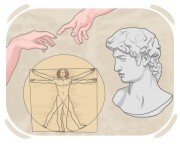
the period between the 14th and 16th centuries in Europe, marked by a rise of interest in Greek and Roman cultures, which is dominant in the art, philosophy, etc. of the times

Ex: Florence is often considered the birthplace of the Renaissance due to its flourishing cultural and artistic environment .
daily words
wordlist
Close
Sign in
antiquity
antiquity
[noun]

the historical period before the Middle Ages, especially before the sixth century when Greeks and Romans were the most prosperous

Ex: The decline of the Roman Empire marked the end of antiquity and the beginning of the Middle Ages , as Europe entered a period of political fragmentation and cultural change .
daily words
wordlist
Close
Sign in
pre-industrial
pre-industrial
[Adjective]

relating to the period of time before the widespread adoption of industrial processes and technologies
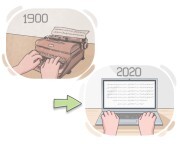
Ex: Pre-industrial transportation relied heavily on animal power , carts , and boats for long-distance travel and trade .
daily words
wordlist
Close
Sign in
contemporary
contemporary
[Adjective]

belonging to the current era

Ex: Her novel explores contemporary issues that parallel ongoing social changes .
daily words
wordlist
Close
Sign in
mesopotamia

an ancient region located in the eastern Mediterranean, primarily within modern-day Iraq, and parts of Iran, Syria, and Turkey

Ex: The epic of Gilgamesh, one of the oldest known literary works, originated in ancient Mesopotamia.
daily words
wordlist
Close
Sign in
clay tablet

a small, flat piece of clay that has been molded and hardened, typically used as a medium for writing or inscribing information in ancient civilizations

Ex: The clay tablet found in the ruins of the temple contained instructions for rituals and offerings to be performed by the priests .
daily words
wordlist
Close
Sign in
hieroglyph

a system of writing used in ancient Egypt, consisting of pictorial symbols or characters that represent objects, ideas, or sounds, and were commonly used for inscriptions on temple walls, tombs, and other monumental structures
daily words
wordlist
Close
Sign in
to predate

to exist or occur at an earlier time than something else

Ex: Early forms of currency predate modern monetary systems.
daily words
wordlist
Close
Sign in
monument
monument
[noun]

a place or building that is historically important

Ex: The Taj Mahal is a stunning monument built in memory of Emperor Shah Jahan ’s beloved wife , Mumtaz Mahal .
daily words
wordlist
Close
Sign in
relic
relic
[noun]

an object or part of an object surviving from the past, typically with historical or emotional value, often linked to a person, event, or era

Ex: The worn-out baseball glove , a relic from my youth , brings back memories of summer games with my friends .
daily words
wordlist
Close
Sign in
catacomb
catacomb
[noun]

an underground burial place with tunnels and chambers for tombs or graves

Ex: The catacombs provided a peaceful resting place for the deceased away from the surface .
daily words
wordlist
Close
Sign in
to mummify

to preserve a dead body by treating it with chemicals or natural substances to prevent decay

Ex: Mummifying a body required careful preparation and specialized knowledge of anatomy .
daily words
wordlist
Close
Sign in
alchemy
alchemy
[noun]

the ancient practice of trying to turn common metals into gold

Ex: In his quest for wealth , the medieval scientist dedicated years to the art of alchemy, hoping to produce gold .
daily words
wordlist
Close
Sign in
scribe
scribe
[noun]

a person who writes copies of documents by hand

Ex: The scribe carefully transcribed the old , fading manuscripts to preserve their contents for future generations .
daily words
wordlist
Close
Sign in
ancestral
ancestral
[Adjective]

related to or inherited from one's ancestors
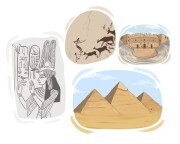
Ex: The tribal elders shared stories of their ancestral heroes and legends .
daily words
wordlist
Close
Sign in
ancient
ancient
[Adjective]

related or belonging to a period of history that is long gone

Ex: The museum housed artifacts from ancient Egypt, including pottery and jewelry.
daily words
wordlist
Close
Sign in
genealogy
genealogy
[noun]

the study of family lineages and the history of descent

Ex: Genealogy websites and DNA tests have become popular tools for individuals interested in exploring their family history .
daily words
wordlist
Close
Sign in
epoch
epoch
[noun]

a period of time in history or someone's life, during which significant events happen

Ex: The Civil Rights Movement was an epoch of profound social change and progress in the United States .
daily words
wordlist
Close
Sign in
provenance

the origin or source of a particular thing

Ex: Historians study the provenance of manuscripts to understand their historical significance .
daily words
wordlist
Close
Sign in
medievalist

a scholar or researcher who specializes in the study of the Middle Ages
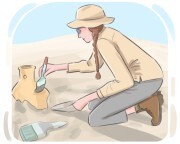
Ex: The medievalist's expertise in medieval law provided valuable insights into legal practices during the Middle Ages .
daily words
wordlist
Close
Sign in
archeologist

a person whose job is to study ancient societies using facts, objects, buildings, etc. remaining in excavation sites

daily words
wordlist
Close
Sign in
preservationist

a person who advocates or works to protect and maintain natural, historical, or cultural resources from decay, destruction, or neglect

Ex: He dedicated his career as a preservationist to safeguarding the region 's natural landscapes .
daily words
wordlist
Close
Sign in
paleontologist

a scientist who studies fossils and ancient life forms to understand the history of life on earth

Ex: The museum exhibit featured findings from the fieldwork of renowned paleontologists.
daily words
wordlist
Close
Sign in
paleobiologist

a scientist who studies ancient life forms, their evolution, behaviors, habitats, and interactions with the environment through the analysis of fossils and other remnants of past life

Ex: The paleobiologist analyzed microfossils to understand climate changes during the Pleistocene era .
daily words
wordlist
Close
Sign in
cryptographer

a specialist who studies and develops systems for secure communication and information protection

Ex: The government hired cryptographers to decode intercepted messages during wartime .
daily words
wordlist
Close
Sign in
artifact
artifact
[noun]

a man-made object, tool, weapon, etc. that was created in the past and holds historical or cultural significance

Ex: This artifact, a beautifully carved statue , was a significant find that helped date the historical site .
daily words
wordlist
Close
Sign in
to excavate

to uncover or expose by digging, especially to reveal buried artifacts, structures, or remains

Ex: The archaeologists excavated the ruins of an old castle , revealing hidden chambers and artifacts .
daily words
wordlist
Close
Sign in
radiocarbon dating

a method used by scientists to determine the age of organic materials by measuring the amount of carbon-14 they contain

Ex: Advances in radiocarbon dating have revolutionized the study of prehistoric cultures and environmental history .
daily words
wordlist
Close
Sign in
paleolithic

a prehistoric period characterized by the development of the first stone tools, spanning from about 2.5 million years ago to around 10,000 years ago
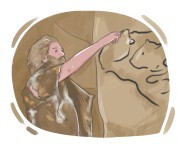
Ex: Artifacts from the Paleolithic era, such as flint knives and axes, are displayed in the museum's prehistoric exhibit.
daily words
wordlist
Close
Sign in
prehistoric
prehistoric
[Adjective]

relating or belonging to the time before history was recorded

Ex: Researchers use carbon dating to determine the age of prehistoric artifacts .
daily words
wordlist
Close
Sign in
LanGeek
Download LanGeek app