pattern

ACT Science - Electromagnetism and Mechanics

Here you will learn some English words related to electromagnetism and mechanics, such as "torque", "anode", "fulcrum", etc. that will help you ace your ACTs.

Review

Flashcards

Forms

Spelling

Quiz

Start learning
ACT Vocabulary for Science
voltage
voltage
[noun]

total potential energy provided by a power source

Ex: Industrial machines require 480V to operate.
Close
Sign in
resistor
resistor
[noun]

an electrical component designed to limit or control the flow of electric current in a circuit, typically by providing resistance
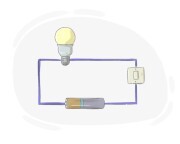
Ex: Resistors play a role in shaping the frequency response of audio circuits , influencing the tone in electronic musical instruments .
Close
Sign in
circuit
circuit
[noun]

the complete circle through which an electric current flows, typically consists of the source of electric energy

Ex: The current in the circuit can be measured using an ammeter .
Close
Sign in
semiconductor

a solid substance that conducts electricity or heat better than insulators, but not as well as most metals

Close
Sign in
superconductivity

a phenomenon where certain materials conduct electricity without resistance when cooled to extremely low temperatures

Ex: Understanding superconductivity could revolutionize electronics and power grids .
Close
Sign in
to electrify

to apply an electric charge to a conductor

Ex: To demonstrate the concept , the teacher showed how to electrify a balloon by rubbing it on wool .
Close
Sign in
electrode
electrode
[noun]

a conductor through which electricity travels to or from an object, such as batteries

Close
Sign in
anode
anode
[noun]

a positively charged electrode in an electrical device where oxidation occurs, resulting in the release of electrons

Ex: An anode rod is used in water heaters to prevent corrosion of the tank by attracting corrosive elements.
Close
Sign in
cathode
cathode
[noun]

a negatively charged electrode within an electrical device, from which electrons flow out into the external circuit

Ex: In a rechargeable battery , such as a lithium-ion battery , the cathode undergoes reduction during charging , allowing it to store energy for later use .
Close
Sign in
static electricity

a form of electricity generated by friction between two materials, resulting in an imbalance of electric charges on their surfaces

Ex: Static electricity is used in photocopiers and laser printers to attract toner particles to paper .
Close
Sign in
rechargeable
rechargeable
[Adjective]

(of a battery or device) capable of being supplied with electrical power again
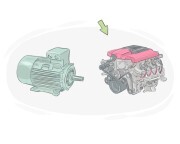
Ex: His bike lights are rechargeable via a USB cable .
Close
Sign in
generator
generator
[noun]

a machine that produces electricity by converting mechanical energy into electrical energy
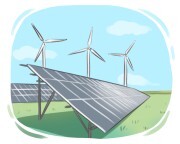
Ex: Portable generators are useful during camping trips or emergencies to provide temporary electrical power .
Close
Sign in
solar cell

a device that converts the energy of the sun into electricity
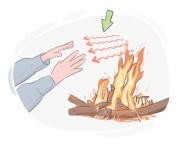
Ex: Installing solar cells on rooftops can reduce dependence on fossil fuels and lower electricity bills .
Close
Sign in
solar irradiance

the amount of solar energy received per unit area on Earth's surface

Close
Sign in
radiation
radiation
[noun]

energy transmitted through space or matter in the form of waves or particles

Ex: The lab measured radiation levels in the room .
Close
Sign in
photovoltaic
photovoltaic
[Adjective]

related to the technology that turns sunlight directly into electricity

Ex: Research in photovoltaic materials aims to improve the efficiency of solar energy conversion .
Close
Sign in
electromagnetic
electromagnetic
[Adjective]

referring to the combined interaction of electric and magnetic fields, often associated with waves or radiation

Ex: Electromagnetic induction occurs when a changing magnetic field induces an electric current in a conductor .
Close
Sign in
magnetic field

an invisible area around a magnetic object where magnetic forces can attract or repel other objects
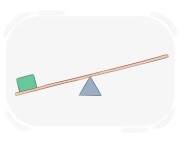
Ex: Magnets can attract certain metals because they create a magnetic field around them .
Close
Sign in
lever
lever
[noun]

a long rigid bar that is put under a heavy object in order to move it

Ex: With the help of a lever, they managed to pry open the stuck door .
Close
Sign in
vibration
vibration
[noun]

the rapid back-and-forth movement of an object

Ex: Tuning forks produce a clear tone when struck due to their precise vibration.
Close
Sign in
fulcrum
fulcrum
[noun]

a point or support on which a lever pivots or rotates in order to lift or move objects
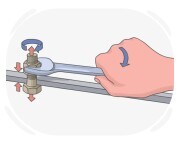
Ex: His unwavering support was the fulcrum upon which the team 's success rested , providing stability and guidance during challenging times .
Close
Sign in
torque
torque
[noun]

a rotational force measured in newton-meters or foot-pounds

Ex: The force applied to turn a steering wheel involves torque.
Close
Sign in
spring constant

a measure of a spring's stiffness, indicating how much force is needed to stretch or compress it

Close
Sign in
counterweight

a mass used to provide balance to another mass

Ex: In the clock mechanism , the counterweight helps regulate the movement of the pendulum .
Close
Sign in
supersonic
supersonic
[Adjective]

having a speed greater than that of sound

Ex: The military relies on supersonic missiles for swift and precise strikes against targets .
Close
Sign in
aviation
aviation
[noun]

the study of the design, development, and operation of aircrafts, focusing on principles of aerodynamics, propulsion, and material science
Close
Sign in
robotics
robotics
[noun]

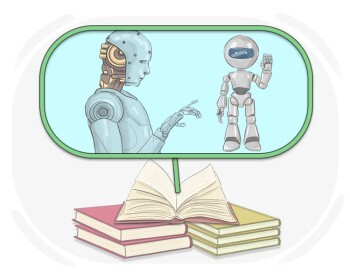
an area of technology that is concerned with the study or use of robots

Close
Sign in
acceleration

(physics) the increase in velocity over time

Ex: Faster acceleration means quicker velocity change .
Close
Sign in
terminal velocity

the constant speed reached by a falling object when the drag force equals the gravitational force pulling it downward, resulting in no further acceleration
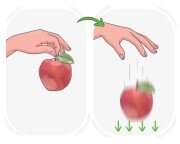
Ex: Meteorologists study terminal velocity to predict how fast hailstones will fall during storms .
Close
Sign in
hydraulic
hydraulic
[Adjective]

relating to the transmission or control of fluids under pressure within confined systems or machinery

Ex: Optimization of pressurized flows within marine vessels constitutes an active area of hydraulic study .
Close
Sign in
gravity
gravity
[noun]

(physics) the universal force of attraction between any pair of objects with mass

Ex: The strength of gravity on Earth 's surface is approximately 9.81 meters per second squared ( m / s² ) .
Close
Sign in
LanGeek
Download LanGeek app