Cambridge IELTS 19 - Academic - Test 3 - Reading - Passage 2 (3)

Here you can find the vocabulary from Test 3 - Reading - Passage 2 (3) in the Cambridge IELTS 19 - Academic coursebook, to help you prepare for your IELTS exam.

review-disable

review

flashcard-disable

flashcard

spelling-disable

spelling

quiz-disable

quiz

start-learning
Cambridge IELTS 19 - Academic
devastating [adjective]

causing severe damage, destruction, or emotional distress

Ex: The devastating consequences of climate change are becoming increasingly evident around the world .
sediment [noun]

particles of solid material that settle at the bottom of a liquid

Ex: Over time , sediment builds up in the bottom of a pond , affecting its water quality .
invisible [adjective]

not capable of being seen with the naked eye

Ex: The invisible stains on the carpet were only revealed under UV light .

the process of obtaining something from a mixture or compound by chemical or physical or mechanical means

seldom [adverb]

used to refer to something that happens rarely or infrequently

Ex: He seldom attends social events .
to blame [verb]

to say or feel that someone or something is responsible for a mistake or problem
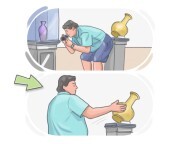
Ex: The investigation revealed no evidence to blame the company for the unexpected equipment failure .
deliberate [adjective]

done on purpose

Ex: Her deliberate actions showed careful consideration of the consequences .

to begin doing something in order to reach a goal

Ex: The company set out on a mission to reduce its carbon footprint in the industry .

to earn an amount of money that enables one to support oneself and pay for one's needs
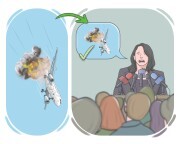
Ex: He chose to become a musician to make a living doing what he loves .

to openly accept something as true or real

Ex: Many scientists acknowledge the impact of climate change on global weather patterns .

to completely understand, acknowledge, or become aware of the existence, validity, or importance of something

Ex: It is important to recognize the signs of burnout and take action to address them .
approach [noun]

a way of doing something or dealing with a problem

Ex: His cautious approach to investing saved him from major losses .
to value [verb]

to regard highly and consider something as important, beneficial, or worthy of appreciation

Ex: The manager consistently values open discussions during team meetings .

the capacity to be maintained for a long time and causing no harm to the environment

Ex: Urban planners focus on sustainability to reduce cities ' carbon footprints .
right [noun]

a thing that someone is legally, officially, or morally allowed to do or have

Ex: She fought for her right to receive equal pay for equal work .
fortune [noun]

the potential outcome or destiny of someone or something, often influenced by luck or circumstance
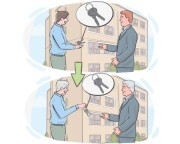
Ex: The fortune of the village was forever altered after the natural disaster .
long-term [adjective]

continuing or taking place over a relatively extended duration of time
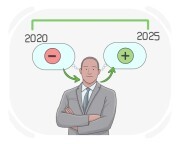
Ex:
attitude [noun]

the typical way a person thinks or feels about something or someone, often affecting their behavior and decisions
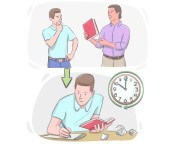
Ex: He approached the project with a can-do attitude , inspiring his team to work diligently towards success .

to move from one item or topic to the next in a sequence or discussion

Ex:
priority [noun]

the fact or condition of being regarded or treated as more important than others
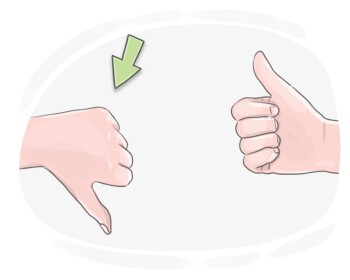
Ex: The firefighter ’s first priority was to save the trapped residents .
to deny [verb]

to reject or refute the truth or existence of something

Ex: He denied the theory of evolution , arguing that it contradicted his religious beliefs .
cautiously [adverb]

in a way that shows carefulness and attention to potential danger, risk, or harm
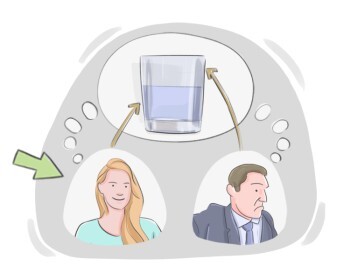
Ex: They approached the injured animal cautiously .
optimistic [adjective]

having a hopeful and positive outlook on life, expecting good things to happen
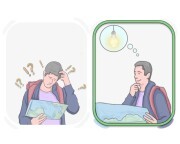
Ex: Despite the setbacks , he stayed optimistic that things would improve .

knowledge or understanding of a specific situation, fact, or issue

rapid [adjective]

occurring or moving with great speed

Ex: The rapid heartbeat indicated excitement or anxiety .
pace [noun]

the rate or speed at which something progresses or changes
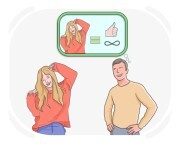
Ex: The project moved at a steady pace , meeting all the deadlines .

an opinion or feeling that one has about someone or something, particularly one formed unconsciously

Ex: He had the impression that the meeting went well , despite the lack of feedback .
sinking [noun]

a slow fall or decline (as for lack of strength)

a mention or citation of something, often to provide context or support for an idea
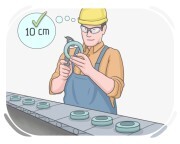
Ex: The report contained a reference to the latest research in the field .

to make sure that something will happen

Ex: The teacher is ensuring that students understand the new lesson .

a person or animal that resides in a particular place

Ex: The forest is home to a variety of inhabitants , including deer , foxes , and numerous bird species .

the result obtained when one quantity considered in relation to the whole

Ex: They discussed the proportion of profits that would be reinvested into the company .

to fully understand or recognize the qualities, significance, or worth of something

Ex: The professor encouraged students to appreciate the complexity of the subject matter .

to say something about someone or something, without giving much detail

Ex: Can you mention where you found that interesting article ?

the state of being important or worthy of attention

Ex: The significance of teamwork in achieving success can not be ignored .

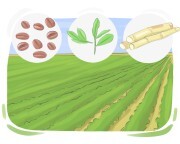
a large piece of land used for growing sugar cane, coffee, tea, etc., particularly in a hot country
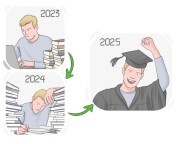
Ex: A variety of crops can be cultivated on a single plantation .
eventually [adverb]

after or at the end of a series of events or an extended period

Ex: They faced many obstacles , but eventually , they overcame all difficulties and reached their goal .
loss [noun]

the act or process of no longer having someone or something
Ex: He felt a profound loss when his job ended .
region [noun]

a large area of land or of the world with specific characteristics, which is usually borderless

Ex: The Middle East is a geopolitically significant region , characterized by diverse cultures , religions , and political landscapes .

to make someone or something become part of something such as a whole

Ex: We should include diverse perspectives in our discussions .
policy [noun]

a set of ideas or a plan of action that has been chosen officially by a group of people, an organization, a political party, etc.

Ex: The university enacted a diversity and inclusion policy to promote equity among students and faculty .
to vary [verb]

to differ or deviate from a standard or expected condition

Ex: The opinions of the group members varied widely on the proposed solution .

something that one is aiming, wanting, or planning to do

Ex: The company 's intention was to expand into new markets by launching innovative products in the coming year .

to change something such as a process, situation, etc. to be the opposite of what it was before
Ex: The school board voted to reverse the decision to eliminate art and music programs .
complex [adjective]

not easy to understand or analyze

Ex: The artwork 's meaning was complex , open to interpretation and layered with symbolism .
runoff [noun]

the flow of water or substances that drain away from an area of land, often carrying dirt, chemicals, or other materials

Ex: Farmers are concerned about the runoff from fertilizers into nearby rivers .

the process of causing something to exist or appear

Ex: The experiment promoted the generation of novel compounds .

the process of something becoming worse, weaker, or damaged, especially in quality, condition, or value

Ex: Air pollution leads to the degradation of buildings over time .
towards [preposition]

used to indicate a person's attitude, opinion, or behavior regarding someone or something

Ex: The community 's sentiment towards the new policy is divided .
Cambridge IELTS 19 - Academic
Test 1 - Listening - Part 1 Test 1 - Listening - Part 2 Test 1 - Listening - Part 3 (1) Test 1 - Listening - Part 3 (2)
Test 1 - Listening - Part 4 (1) Test 1 - Listening - Part 4 (2) Test 1 - Reading - Passage 1 (1) Test 1 - Reading - Passage 1 (2)
Test 1 - Reading - Passage 2 (1) Test 1 - Reading - Passage 2 (2) Test 1 - Reading - Passage 2 (3) Test 1 - Reading - Passage 3 (1)
Test 1 - Reading - Passage 3 (2) Test 1 - Reading - Passage 3 (3) Test 2 - Listening - Part 1 Test 2 - Listening - Part 2 (1)
Test 2 - Listening - Part 2 (2) Test 2 - Listening - Part 3 (1) Test 2 - Listening - Part 3 (2) Test 2 - Listening - Part 4 (1)
Test 2 - Listening - Part 4 (2) Test 2 - Reading - Passage 1 (1) Test 2 - Reading - Passage 1 (2) Test 2 - Reading - Passage 1 (3)
Test 2 - Reading - Passage 2 (1) Test 2 - Reading - Passage 2 (2) Test 2 - Reading - Passage 2 (3) Test 2 - Reading - Passage 3 (1)
Test 2 - Reading - Passage 3 (2) Test 2 - Reading - Passage 3 (3) Test 3 - Listening - Part 1 Test 3 - Listening - Part 2 (1)
Test 3 - Listening - Part 2 (2) Test 3 - Listening - Part 3 (1) Test 3 - Listening - Part 3 (2) Test 3 - Listening - Part 4 (1)
Test 3 - Listening - Part 4 (2) Test 3 - Reading - Passage 1 (1) Test 3 - Reading - Passage 1 (2) Test 3 - Reading - Passage 1 (3)
Test 3 - Reading - Passage 2 (1) Test 3 - Reading - Passage 2 (2) Test 3 - Reading - Passage 2 (3) Test 3 - Reading - Passage 3 (1)
Test 3 - Reading - Passage 3 (2) Test 3 - Reading - Passage 3 (3) Test 3 - Reading - Passage 3 (4) Test 4 - Listening - Part 1 (1)
Test 4 - Listening - Part 1 (2) Test 4 - Listening - Part 2 (1) Test 4 - Listening - Part 2 (2) Test 4 - Listening - Part 3 (1)
Test 4 - Listening - Part 3 (2) Test 4 - Listening - Part 4 (1) Test 4 - Listening - Part 4 (2) Test 4 - Listening - Part 4 (3)
Test 4 - Reading - Passage 1 (1) Test 4 - Reading - Passage 1 (2) Test 4 - Reading - Passage 1 (3) Test 4 - Reading - Passage 2 (1)
Test 4 - Reading - Passage 2 (2) Test 4 - Reading - Passage 2 (3) Test 4 - Reading - Passage 2 (4) Test 4 - Reading - Passage 3 (1)
Test 4 - Reading - Passage 3 (2) Test 4 - Reading - Passage 3 (3) Test 4 - Reading - Passage 3 (4)