Cambridge IELTS 17 - Academic - Test 1 - Reading - Passage 3 (1)

Here you can find the vocabulary from Test 1 - Reading - Passage 3 (1) in the Cambridge IELTS 17 - Academic coursebook, to help you prepare for your IELTS exam.

review-disable

review

flashcard-disable

flashcard

spelling-disable

spelling

quiz-disable

quiz

start-learning
Cambridge IELTS 17 - Academic

to share personal opinions about a book, movie, or media to inform and provide insights into its strengths and weaknesses

Ex: As a critic , it 's important to review not only the plot but also the technical aspects of a movie , such as sound design and editing .

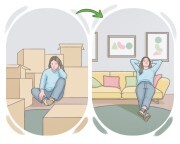
a war that is between people who are in the same country
Ex: Civil wars often result in devastating consequences for the affected country , including loss of life and destruction of infrastructure .

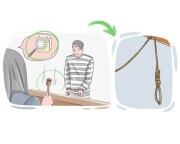
to kill someone, especially as a legal penalty

Ex: The controversial practice of executing prisoners by firing squad has been abolished in many places due to ethical concerns .

a person elected to the British Parliament, specifically to the House of Commons

Ex: The parliamentarian worked tirelessly to represent the interests of their constituents .

a fundamental belief or guideline based on what is morally right that influences one's actions and decisions

Ex: She taught her children the importance of having principles and standing by them .

to engage in a negotiation or agreement, often in a business context, to reach mutually beneficial terms

Ex:
Scot [noun]

someone who is from Scotland

Ex: The famous actor is a Scot , born and raised in Edinburgh .
in return for [preposition]

used to indicate an action, item, or favor given or done as a compensation for something else
Ex: The company provided a bonus to employees in return for meeting their sales targets .
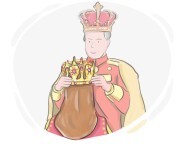
to crown [verb]

to place a crown on someone's head in a ceremony so that person officially becomes a king or queen

Ex: The majestic ceremony took place in the grand hall , where the queen was gracefully crowned by the royal dignitary .

to encourage someone to do or say something

Ex: The coach prompted the team to give their best effort .
parliamentary [adjective]

relating to a form of government where the legislature, known as parliament, has significant control over making laws and monitoring the government
Ex: The parliamentary elections determine the composition of the legislature and , indirectly , the executive branch .

to enter a territory using armed forces in order to occupy or take control of it

Ex: The conquerors were determined to invade the island and claim it for their empire .

a surprise attack that is launched in order to prevent the enemy from doing it to you

invasion [noun]

the act of invading or entering a territory, country, or region by force or without permission, often with the intent to control or dominate the area and its inhabitants

Ex: The general oversaw the invasion plan , ensuring strategic deployment of troops .
meadow [noun]

a piece of land covered in grass and sometimes wild flowers, often used for hay

subject [noun]

someone or something that is being described, discussed, or dealt with

Ex: She found the subject of quantum mechanics challenging but intriguing .
manhunt [noun]

an organized search (by police) for a person (charged with a crime)

to evade [verb]

to get away from or avoid someone or something, often using cleverness or deceit

Ex: Using a series of fake addresses , the scammer evaded authorities for months .
refuge [noun]

a safe or secure place, often emphasizing security or sanctuary
Ex: The monastery provided refuge for travelers .
penniless [adjective]

having no money or financial resources

Ex: After losing his job , he became penniless and struggled to afford even basic necessities .

to travel around without a clear purpose or direction, often covering a large area
Ex: The lost hiker wandered the dense forest for hours , unsure of which direction would lead him to safety .
loyal [adjective]

showing firm and constant support to a person, organization, cause, or belief

Ex: Her loyal dedication to the cause inspired others to join the movement and work towards positive change .

the reinstatement of the monarchy in England, particularly the return of King Charles II to the throne in 1660

Ex:
diarist [noun]

someone who keeps a diary, especially for the purpose of publication

something that one is aiming, wanting, or planning to do

Ex: The company 's intention was to expand into new markets by launching innovative products in the coming year .
extraordinary [adjective]

remarkable or very unusual, often in a positive way

Ex: The singer 's voice was extraordinary , captivating audiences with its beauty and power .
episode [noun]

any of the separate events or series of events occurring in a sequence

to narrate or recount a story, event, or series of events

Ex: During the interview , the witness related the sequence of events with clarity .
to dye [verb]

to change the color of something using a liquid substance

Ex: Tomorrow , he will dye his hair with a bold color .
to scour [verb]

to conduct a thorough search of a place, text, or area in order to find something

Ex: She scoured the report for any errors before submitting it .

to extend in time, length, or duration, often longer than necessary

Ex: In an effort to be thorough , the teacher chose to draw out the lesson , covering each topic in depth .
preposterous [adjective]

absurd and contrary to common sense

Ex: Her assertion that she had traveled back in time to the Middle Ages was deemed preposterous by historians .
to adopt [verb]

to select a new title, place, or practice in place of a former one
Ex: He decided to adopt a new stage name for his career as a musician .
disguise [noun]

any item that is worn to change or alter the appearance or to hide someone's identity

on the grounds that [conjunction]

used to give the reason for something

Ex: She quit her job on the grounds that the working conditions were unsafe .
dignity [noun]

the quality of being worthy of respect and honor, which can be attributed to a person's behavior, actions, or sense of self-worth

tension [noun]

(psychology) a strong feeling of stress or pressure

Ex: Chronic tension from work led to his insomnia .
presence [noun]

the state of being present; current existence
cautiously [adverb]

in a way that shows carefulness and attention to potential danger, risk, or harm

Ex: They approached the injured animal cautiously .
reformed [adjective]

caused to abandon an evil manner of living and follow a good one

a person who follows or adheres to Protestantism

Ex: He identifies as a Protestant rather than a Catholic .

to shock or horrify someone, causing them to feel alarmed or deeply unpleasantly surprised

Ex:

the act of punishing a criminal by death

Ex: The execution of the convicted murderer sparked public protests against capital punishment .
firmly [adverb]

in a resolute, determined, or unwavering manner, often indicating certainty or strength of conviction

Ex: He firmly rejected the idea of changing the project 's direction .
to bolt [verb]

to secure things together by using a metal pin that fits into a corresponding metal hole

Ex: The blacksmith taught the apprentice how to properly bolt the metal parts together for durability .
head [noun]

the front of a military formation or procession

invasion [noun]

the act of invading or entering a territory, country, or region by force or without permission, often with the intent to control or dominate the area and its inhabitants
Ex: The general oversaw the invasion plan , ensuring strategic deployment of troops .
force [noun]

a group of trained and organized people such as the police, soldiers, etc.

Ex: The fire department force demonstrated incredible bravery and teamwork while extinguishing the massive blaze .
desperate [adjective]

(of people) behaving dangerously or aggressively due to the circumstances

Ex: The hostages feared for their lives as the desperate assailant threatened them with a weapon .
courtier [noun]

an attendant at the court of a sovereign

order [noun]

a group of people organized together because they share similar interests or goals

Ex: The international order of scientists collaborated on groundbreaking research projects .
chivalry [noun]

the medieval principles governing knighthood and knightly conduct

knight [noun]

(in the Middle Ages) a man of high social rank, wearing armor and riding a horse, who is loyal to his king

Ex: Knights trained rigorously in martial arts and chivalry .

to represent or show something or someone by a work of art

Ex: The mural on the city wall depicts scenes from local history , showcasing significant events and figures .
canvas [noun]

a piece of cloth that artists paint on, especially with oil paints

Ex: After weeks of hard work , the painter finally completed her canvas , a vibrant depiction of a bustling city scene that conveyed the energy of urban life .
fugitive [noun]

a person who is actively avoiding capture or is being pursued by law enforcement authorities due to legal charges or criminal activity

Ex: The international fugitive was wanted in multiple countries for his involvement in illegal activities .

one who holds or guards secrets

Ex: He whispered the hidden treasure 's location to his secretary .

to find a place to live and embrace a more stable and routine way of life

Ex: The artist decided to settle down in a peaceful village to focus on her work .
scene [noun]

an incident or event, either real or imagined, that is depicted or described with specific details and context

Ex: The detective arrived at the crime scene to gather evidence .

someone whose job is to write the story of a movie, play, TV show, etc.

Ex: The scriptwriter revised the script based on the director ’s feedback .

to start an action or event

Ex: The company will commence production of the new model next week .

a story or an account of something especially one that is told in a movie, novel, etc.

Ex: Her new book presents a compelling narrative of survival and hope .
agricultural [adjective]

related to the practice or science of farming

Ex: Agricultural land is often characterized by vast fields of crops such as corn , wheat , and soybeans .
shears [noun]

a gardening tool closely resembling scissors as it is made of two large blades that cross each other, used for cutting grass, bushes, and hedges

sitting [noun]

the act of assuming or maintaining a seated position

a version of a story or event that has been told again, often with changes in style, details, or point of view

Ex:
in train [phrase]

in a state or condition of progression or occurrence

Ex:
on the run [phrase]

moving from one place to another in an attempt to not get caught or arrested

Ex: