
Lista de Palabras Nivel C1 - Geografía
Aquí aprenderás algunas palabras en inglés sobre geografía, como "ravine", "plateau", "fertile", etc. preparadas para estudiantes de C1.
Revisión
Tarjetas de memoria
Ortografía
Cuestionario


the distance between an object or point and sea level

altitud, altura
Los escaladores experimentaron dificultades para adaptarse a la gran altitud durante su ascenso.
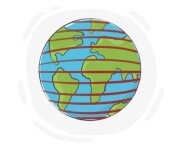
an imaginary horizontal circle around the Earth parallel to the equator, used to measure north-south position
latitud
La latitud ayuda a los marineros a determinar su posición norte-sur.
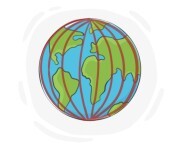
the distance of a point east or west of the meridian at Greenwich that is measured in degrees
longitud
Los marineros usan la longitud para navegar a través de los océanos utilizando la navegación celestial.
a part of a shoreline that curves inward, larger than a cove but smaller than a gulf
bahía, golfo
La bahía está rodeada de acantilados y colinas verdes y frondosas.
a smaller part of a river that is separated from the main and larger part
brazo
Durante la inundación, la rama del río se hinchó, inundando los campos circundantes.
a treeless area in a forest
claro
Los silvicultores crean claros para promover el crecimiento de árboles jóvenes.
a small curved area of land that partly encloses a specific part of the sea
cala
Una cala apartada proporcionaba un lugar perfecto para un picnic romántico.
the round top of a volcano
cráter
El cráter de impacto en Arizona es un sitio geológico famoso que atrae a visitantes de todo el mundo.
a layer of matter that has been accumulated, particularly by a body of water
yacimiento, depósito
Los arqueólogos submarinos descubrieron depósitos de cerámica antigua en el lecho marino.
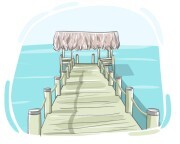
a structure built out into the water so that people can get on and off boats or ships
dársena
Los trabajadores repararon el muelle dañado por la tormenta.
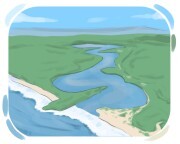
the part of a river that is wide and where it meets the sea
estuario, ría
El delta se formó en la desembocadura del río donde fluye hacia el estuario.
the state of moving constantly and steadily
corriente
El flujo de lava del volcán creó nuevas formaciones terrestres en la isla.
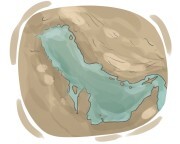
an area of sea that is partly surrounded by land, with a narrow opening
golfo
Navegaron a través del golfo entre las dos islas.
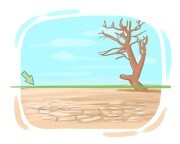
the line where the sky and earth seem to come in contact with each other
horizonte
Los marineros navegaban por las estrellas en mar abierto, usando el horizonte como referencia.
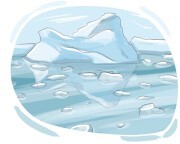
a very large floating piece of ice
iceberg
La lechuga iceberg recibe su nombre por su textura crujiente y acuosa que recuerda a las formaciones de hielo flotante.
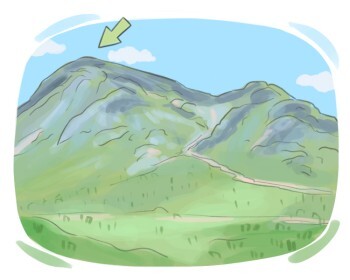
the pointed top of a mountain
cumbre, cima
Desde la cima, podían ver a kilómetros en todas las direcciones.
a large body of land that is partially surrounded by water but is attached to a larger area of land
península
Los niños exploraron las costas rocosas y los bosques frondosos de la remota península durante sus vacaciones de verano.
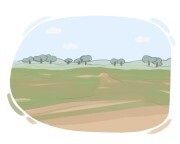
a vast area of flat land
llanura
La manada de bisontes vagaba libremente por la llanura, pastando en la abundante hierba.
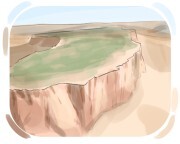
an area of land that is flat and higher than the land surrounding it
meseta
Después de una empinada subida, los excursionistas llegaron a la cima de la meseta, donde fueron recompensados con vistas panorámicas del valle que se extendía abajo.
the most northern or most southern points of the earth that are joined by its axis of rotation
polo
Debido a la inclinación del eje de la Tierra, los polos experimentan seis meses de luz diurna seguidos de seis meses de oscuridad cada año.
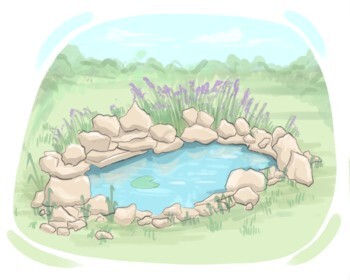
an area containing still water that is comparatively smaller than a lake, particularly one that is made artificially
estanque
Los niños disfrutaban alimentando a los peces que habitaban las aguas claras del pequeño estanque del parque.
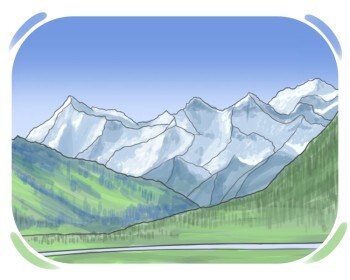
a line of mountains or hills
cordillera, cadena
La cordillera del Himalaya incluye algunos de los picos más altos del mundo, como el Monte Everest y el K2.
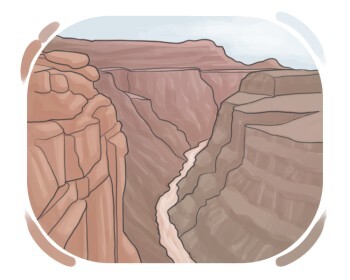
a deep narrow valley with steep sides, usually worn by a stream
barranco
Los excursionistas descendieron con cautela por el barranco, sorteando el terreno rocoso y la vegetación colgante.
a lake, either natural or artificial, from which water is supplied to houses
embalse, presa
Los pescadores disfrutan de las oportunidades recreativas que ofrece el embalse, conocido por su abundante población de peces.
the top of a mountain
cima, cumbre
La caminata hasta la cumbre fue desafiante, pero las vistas impresionantes hicieron que valiera la pena.
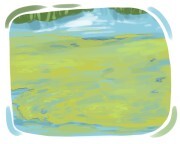
an area of land that is covered with water or is always very wet
pantano
El ecosistema del pantano desempeñó un papel crucial en la filtración del agua y en proporcionar hábitat para numerosas especies de aves y anfibios.
the expansive flat Arctic regions, of North America, Asia, and Europe, in which no trees grow and the soil is always frozen
tundra
Durante la corta temporada de verano, la tundra cobra vida con coloridas flores silvestres y aves migratorias anidando.

(of natural forces such as wind, water, or other environmental factors) to gradually wear away or diminish the surface of a material
erosionar
El tráfico continuo de peatones puede erosionar el camino en un área natural.
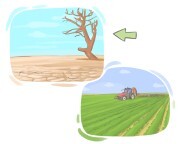
(of land or a climate) very dry because of not having enough or any rain
árido
Las plantas y los animales en entornos áridos se han adaptado para sobrevivir con un mínimo de agua, utilizando características especializadas como raíces profundas o comportamiento nocturno.
(of land or soil) not capable of producing any plants
árido, estéril
A pesar de los esfuerzos por cultivar la tierra, el suelo permaneció estéril e improductivo.
related to or situated along the coast, the area where land meets the sea
costero
La región costera alberga una vida marina diversa, que incluye peces, delfines y aves marinas.
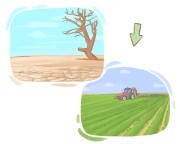
(of land or soil) able to produce crops or plants well
fértil
Las antiguas civilizaciones se asentaron cerca de valles fluviales fértiles, donde podían cultivar y mantener a grandes poblaciones.
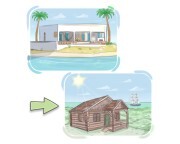
located away from the coast
del interior, interior
Ella prefiere el ambiente tranquilo de los lagos interiores para pescar.
situated or occurring in the sea, typically away from the shore or coast
del mar
Disfruta del buceo en arrecifes costeros para explorar la vida marina.
related to the sea and the different life forms that exist there
marino, naval
Los esfuerzos de conservación marina tienen como objetivo proteger las especies en peligro de extinción y preservar los hábitats marinos.
(of a place) close to another
vecino
Los pueblos vecinos colaboran en proyectos comunitarios para mejorar la infraestructura y los servicios.
against the current of a river or stream
río arriba, contra la corriente
Los canoeros lucharon mientras se movían río arriba, lidiando contra el río de corriente rápida.
