pattern

C1 Level Wordlist - Geography

Here you will learn some English words about geography, such as "ravine", "plateau", "fertile", etc. prepared for C1 learners.

Review

Flashcards

Forms

Spelling

Quiz

Start learning
CEFR C1 Vocabulary
altitude
altitude
[noun]

the distance between an object or point and sea level
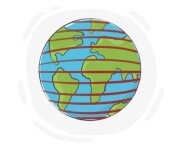
Ex: Meteorologists study altitude variations to understand atmospheric pressure changes .
Close
Sign in
latitude
latitude
[noun]

an imaginary horizontal circle around the Earth parallel to the equator, used to measure north-south position
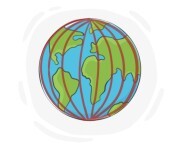
Ex: Latitude coordinates are paired with longitude to specify locations.
Close
Sign in
longitude
longitude
[noun]

the distance of a point east or west of the meridian at Greenwich that is measured in degrees

Ex: Time zones are determined based on lines of longitude around the globe.
Close
Sign in
bay
bay
[noun]

a part of a shoreline that curves inward, larger than a cove but smaller than a gulf

Ex: Tourists enjoy kayaking and sailing in the calm waters of the bay.
Close
Sign in
branch
branch
[noun]

a smaller part of a river that is separated from the main and larger part

Ex: The bridge spanned the branch of the river , providing a scenic view of the surrounding landscape .
Close
Sign in
clearing
clearing
[noun]

a treeless area in a forest

Ex: Local residents use the clearing for community gatherings and picnics during the summer .
Close
Sign in
cove
cove
[noun]

a small curved area of land that partly encloses a specific part of the sea

Ex: The cliffs surrounding the cove offered stunning views of the sunset over the ocean .
Close
Sign in
crater
crater
[noun]

the round top of a volcano

Ex: The volcanic crater was filled with lava that glowed orange at night.
Close
Sign in
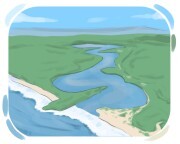
deposit
deposit
[noun]

a layer of matter that has been accumulated, particularly by a body of water
Ex: Engineers study sediment deposits in rivers to predict flooding risks .
Close
Sign in
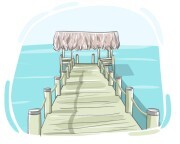
dock
dock
[noun]

a structure built out into the water so that people can get on and off boats or ships
Ex: The port authority expanded the dock to accommodate larger ships .
Close
Sign in
estuary
estuary
[noun]

the part of a river that is wide and where it meets the sea

Ex: Environmentalists work to protect estuaries from pollution and habitat destruction .
Close
Sign in
flow
flow
[noun]

the state of moving constantly and steadily
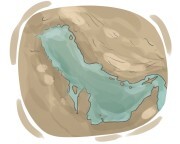
Ex: The movement of sand dunes is influenced by the wind 's direction and flow.
Close
Sign in
gulf
gulf
[noun]

an area of sea that is partly surrounded by land, with a narrow opening
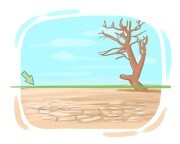
Ex: The boat was anchored in a quiet gulf.
Close
Sign in
horizon
horizon
[noun]

the line where the sky and earth seem to come in contact with each other
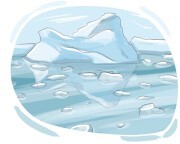
Ex: The sunset painted the horizon with hues of pink and orange .
Close
Sign in
iceberg
iceberg
[noun]

a very large floating piece of ice

Ex: The expedition team carefully navigated their ship around the towering iceberg.
Close
Sign in
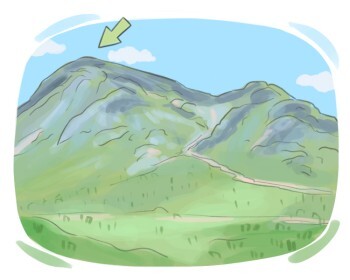
peak
peak
[noun]

the pointed top of a mountain

Ex: The mountain 's peak was often shrouded in clouds , giving it a mysterious appearance .
Close
Sign in
peninsula
peninsula
[noun]

a large body of land that is partially surrounded by water but is attached to a larger area of land
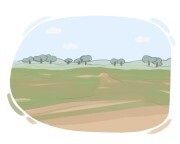
Ex: The Arabian Peninsula is a vast desert region rich in oil and cultural history, bordered by several bodies of water, including the Red Sea and the Persian Gulf.
Close
Sign in
plain
plain
[noun]

a vast area of flat land

Ex: During their expedition , the explorers crossed a vast plain that seemed to go on forever .
Close
Sign in
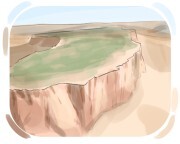
plateau
plateau
[noun]

an area of land that is flat and higher than the land surrounding it

Ex: The Qinghai-Tibet Plateau , often called the " Roof of the World , " is the highest and largest plateau in the world .
Close
Sign in
pole
pole
[noun]

the most northern or most southern points of the earth that are joined by its axis of rotation
Ex: The magnetic poles are not aligned exactly with the geographic poles and can shift due to changes in the Earth 's magnetic field .
Close
Sign in
pond
pond
[noun]

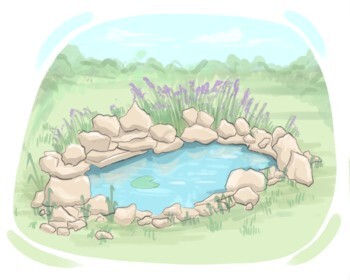
an area containing still water that is comparatively smaller than a lake, particularly one that is made artificially
Ex: In winter , the pond froze over , allowing people to enjoy ice skating and other activities on its surface .
Close
Sign in
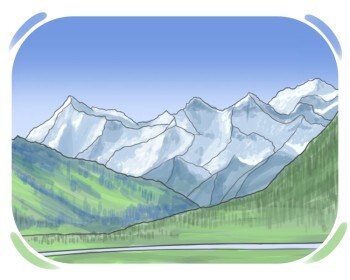
range
range
[noun]

a line of mountains or hills

Ex: The Andes range runs along the western coast of South America , influencing the region 's climate and geography .
Close
Sign in
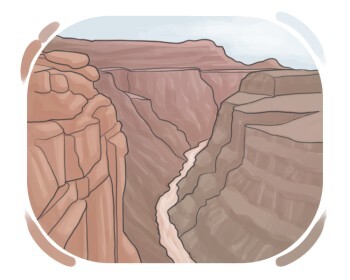
ravine
ravine
[noun]

a deep narrow valley with steep sides, usually worn by a stream

Ex: Geologists study the formation of ravines to understand how water shapes the Earth 's surface over millennia .
Close
Sign in
reservoir
reservoir
[noun]

a lake, either natural or artificial, from which water is supplied to houses

Ex: Environmentalists monitor the reservoir's water quality to ensure it meets health standards for both wildlife and human consumption .
Close
Sign in
summit
summit
[noun]

the top of a mountain

Ex: From the summit, they could see for miles in every direction , with valleys and peaks stretching out before them .
Close
Sign in
swamp
swamp
[noun]

an area of land that is covered with water or is always very wet

Ex: Local folklore often tells tales of mysterious creatures lurking in the depths of the swamp, adding to its allure and mystery .
Close
Sign in
tundra
tundra
[noun]

the expansive flat Arctic regions, of North America, Asia, and Europe, in which no trees grow and the soil is always frozen

Ex: Climate change poses a threat to tundra regions worldwide, affecting wildlife habitats and contributing to permafrost thawing.
Close
Sign in
to erode
to erode
[Verb]

(of natural forces such as wind, water, or other environmental factors) to gradually wear away or diminish the surface of a material
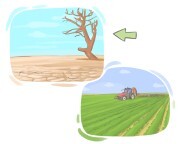
Ex: Over time , acidic rain eroded the ancient stone statues , gradually wearing away their features .
Close
Sign in
arid
arid
[Adjective]

(of land or a climate) very dry because of not having enough or any rain

Ex: Arid regions are susceptible to desertification , a process where fertile land becomes increasingly dry and unable to support vegetation due to human activities or climate change .
Close
Sign in
barren
barren
[Adjective]

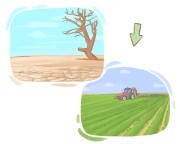
(of land or soil) not capable of producing any plants

Ex: Environmental restoration projects aim to rehabilitate barren areas by reintroducing native plants and improving soil fertility .
Close
Sign in
coastal
coastal
[Adjective]

related to or situated along the coast, the area where land meets the sea
Ex: Coastal communities often rely on fishing and tourism for economic livelihood .
Close
Sign in
fertile
fertile
[Adjective]

(of land or soil) able to produce crops or plants well
Ex: The fertile delta of the Ganges River in India provides vital nutrients for rice cultivation .
Close
Sign in
inland
inland
[Adjective]

located away from the coast

Ex: The inland plains are ideal for agriculture due to fertile soil .
Close
Sign in
offshore
offshore
[Adjective]

situated or occurring in the sea, typically away from the shore or coast

Ex: Offshore platforms extract natural gas from beneath the seabed .
Close
Sign in
marine
marine
[Adjective]

related to the sea and the different life forms that exist there

Ex: Marine biology focuses on studying the organisms and environments of the ocean .
Close
Sign in
neighboring
neighboring
[Adjective]

(of a place) close to another

Ex: The neighboring houses were built in similar styles, creating a cohesive look along the street.
Close
Sign in
upstream
upstream
[Adverb]

against the current of a river or stream

Ex: The village was located upstream from the industrial plant , ensuring clean water for its residents .
Close
Sign in
LanGeek
Download LanGeek app