
Accord et Désaccord - Le Désaccord et l'Opposition 4
Ici, vous apprendrez quelques mots anglais liés au désaccord et au contraste tels que "se battre", "s'opposer" et "hostile".
Réviser
Flashcards
Orthographe
Quiz

diverging from established norms

hétérodoxe
Le physicien a attiré l'attention pour une hypothèse hétérodoxe sur la matière noire qui contredisait les modèles dominants.
the practice of holding and expressing beliefs that differ from established or conventional norms
hétérodoxie, dissidence
Le festival culturel a célébré l'hétérodoxie des diverses traditions, remettant en question les récits dominants.
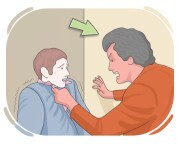
unfriendly, antagonistic, or aggressive toward someone or something
hostile
unfriendly or antagonistic feelings, attitudes, or behavior toward someone or something
hostilité
used to politely express disagreement with what has just been stated
permettez-moi de ne pas être d'accord, avec tout le respect, je ne suis pas d'accord
Vous dites que le plan est trop risqué, mais permettez-moi de ne pas être d'accord.
a difficult situation in which opposing parties cannot reach an agreement
impasse
Les pourparlers de paix ont abouti à une impasse, sans voie claire à suivre.

a strong disagreement or conflict between two countries that often involves military action
incident
bitter disagreement or rivalry among members of the same group or organization
conflits internes, querelles internes, luttes intestines, dissensions internes
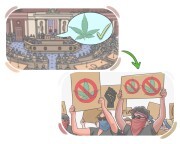
used to convay that one is strongly against someone or something
s'opposer à
Elle s'est opposée à l'intimidateur, défendant son amie.

deserving blame for a mistake, argument, accident, etc.
être en faute, être fautif, être fautive
(of ideas, positions, etc.) extremely different in a way that reaching an agreement is impossible
inconciliable

problems or difficulties that arise, especially in relation to a service or facility, which require resolution or attention
problème, objet de litige
to argue with another person, particularly in a formal occasion such as a debate
jouter
to become involved in an argument or fight with someone
se heurter à quelqu'un, entrer en conflit avec quelqu'un
Elle se heurte souvent à son frère à propos de l'argent.
to act or behave in a way that is likely to cause a problem, fight, or argument
chercher des ennuies
![to [make] mincemeat (out|) of {sb/sth}](https://cdn.langeek.co/photo/39969/thumb/350?type=jpeg "to [make] mincemeat (out|) of {sb/sth}")
to completely defeat or win against someone or something in a convincing and overwhelming manner, whether it be in a competition, argument, game, or other activity
réduire en miettes, laminer
Elle a réduit son argument en miettes en deux minutes.
a report presented by members of a group who do not agree with the majority
rapport minoritaire
a minor disagreement or conflict
désaccord
Un petit malentendu a provoqué une dispute temporaire.
to start a fight or argument with someone
se battre, se castagner, se taper dessus
a subject about which there are different opinions or disagreements
question controversée, point débattu
La date limite était réglée, mais le budget restait un point débattu.
a person who is in the middle of two fighting or arguing sides
pris entre deux feux, coincé entre deux camps
Les deux services se rejetaient la faute, et moi j'étais pris entre deux feux.
the act of expressing disagreement or contradiction through speech
négation, refus
Le discours du politicien était rempli de négations des affirmations de son adversaire.

indicating or implying refusal, denial, disagreement, or omission
négatif
to refuse to accept a request or proposal
blackbouler, évincer
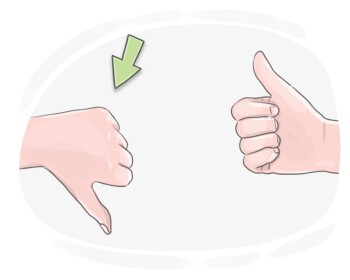
used to indicate denial, refusal, or disagreement in response to a question or offer
non

used to tell a person that one does not want any resentment to remain between them after arguing with them or defeating them in a contest
sans rancune, pas de rancune
J'espère qu'il n'y a pas de rancune entre nous.
used to express strong disagreement with a suggestion or statement
peu probable, peu vraisemblable

to express disapproval of something
être en désaccord avec, s'opposer à

used to acknowledge what someone has said, especially to signal that no further explanation, criticism, or argument is wanted
OK, d'accord, d'ac
someone who disagrees with a system, plan, etc. and intends to put an end to it or change it
opposant, opposante
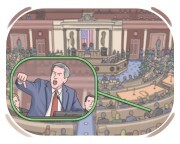
to strongly disagree with a policy, plan, idea, etc. and try to prevent or change it
s’opposer à

trying to stop something because one strongly disagrees with it
opposé à
Le parti politique était opposé à l'augmentation d'impôt proposée, arguant qu'elle pèserait sur les familles à faible revenu.
the act of resisting, disagreeing with, or countering something
opposition
in a situation that is likely to cause a disagreement or fight
en voie de conflit, vers une confrontation
Les deux dirigeants vont vers une confrontation sur la politique étrangère.

without consideration and hesitation
sans même y réfléchir, d'emblée
Ne rejette pas son idée sans même y réfléchir ; elle pourrait vraiment marcher.
