
Liste de Mots Niveau B2 - Scientifiquement Parlant !
Ici, vous apprendrez quelques mots anglais sur le monde de la science, tels que "biochimie", "biologique", "bactéries", etc., préparés pour les apprenants de niveau B2.
Réviser
Flashcards
Orthographe
Quiz


a field of science that deals with the chemistry of organisms

biochimie
Comprendre la biochimie est essentiel pour développer de nouveaux traitements et médicaments.

relating to biology or the scientific study of living organisms
biologique

made or produced by people rather than occurring naturally
artificiel

(microbiology) single-celled microorganisms that can be found in various environments, including soil, water, and living organisms, and can be beneficial, harmful, or neutral
bactéries
Les antibiotiques sont utilisés pour traiter les infections causées par des bactéries nocives.

a living thing, such as a tree, human, animal, etc.
être, créature
Les arbres sont des êtres vivants qui fournissent de l'oxygène et un abri à de nombreuses espèces.
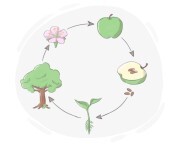
(biology) a series of transformations and events that happen in an animal or plant's lifetime
cycle
Chez les plantes, le cycle de vie comprend des étapes allant de la germination des graines à la floraison et à la production de graines.

(biochemistry) a chemical substance that carries the genetic information, which is present in every cell and some viruses
ADN
Chaque molécule d'ADN est constituée de deux brins qui forment une forme de double hélice.

the branch of biology that deals with how individual features and different characteristics are passed through genes
génétique
Les progrès en génétique ont conduit à des développements importants en médecine et en agriculture.

to undergo genetic changes across generations as a species or population
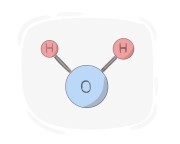
a pure substance formed from two or more chemical elements chemically bonded in fixed proportions
composé
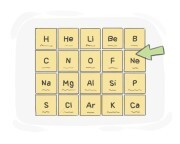
a substance that is composed of only one type of atom, typically characterized by specific physical and chemical properties
élément
L'or est un métal précieux et un élément chimique avec le symbole Au.
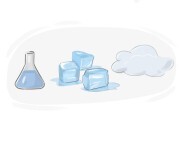
a physical substance that occupies space and exists in every material in the universe
matière
La matière peut changer d'état, comme passer de solide à liquide lorsqu'elle est chauffée.

a naturally occurring inorganic solid with a characteristic chemical composition and physical structure
minéral

the smallest unit of a substance that can exist independently while retaining its chemical properties
molécule
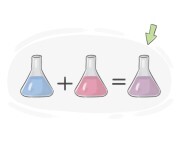
a mixture of different liquids
solution
Les solutions peuvent varier en concentration, selon la quantité de chaque liquide utilisé.
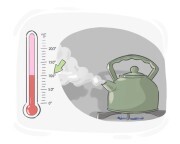
the temperature at which a liquid starts boiling
point d'ébullition
Le point d'ébullition de l'éthanol est inférieur à celui de l'eau.

the temperature at which liquid becomes solid
point de congélation
Comprendre les points de congélation de différentes substances est crucial pour de nombreux processus industriels.
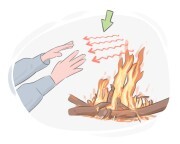
energy emitted or transmitted through space or matter in the form of waves or particles
radiation

to help something develop, progress, or become more successful
faire avancer
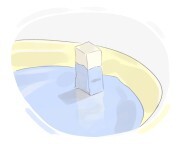
to take in a liquid, gas, or other substance, especially gradually
absorber

to make a substance radioactive by exposing it to radiation or nuclear particles
activer

to produce energy, such as heat, electricity, etc.
produire
Les panneaux solaires sur le toit génèrent de l'énergie renouvelable à partir de la lumière du soleil pour alimenter tout le bâtiment.
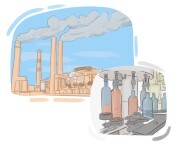
the manufacture of goods using raw materials, particularly in factories
industrie
Les réglementations environnementales ont eu un impact sur l'industrie minière.

a field of engineering that deals with the design, construction, and repair of buildings, bridges, roads, etc.
génie civil
Le domaine du génie civil comprend des domaines comme le transport, l'environnement et le génie structurel.

a machine or device that detects any changes in the environment and sends the information to other electronic devices
senseur
Un capteur de mouvement détecte les mouvements dans une certaine zone, déclenchant des alarmes ou des lumières.
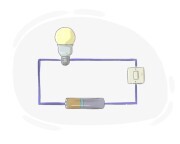
the complete circle through which an electric current flows, typically consists of the source of electric energy
circuit
Un circuit fermé permet à l'électricité de circuler continuellement, tandis qu'un circuit ouvert arrête le flux.
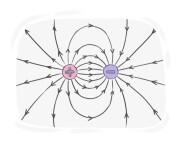
(physics) the space or area within which the effect of a particular force exists
champ
Un champ magnétique entoure un aimant et affecte d'autres matériaux magnétiques à proximité.
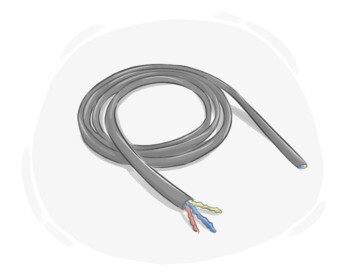
a long and thin piece of metal that carries an electric current
fil électrique
Le fil dans le circuit était endommagé, provoquant une panne de courant.

a wire that carries electrical current and has the potential to cause electric shock or injury if touched
fil sous tension,conducteur sous tension
L'électricien a identifié le fil sous tension en utilisant un testeur de tension.
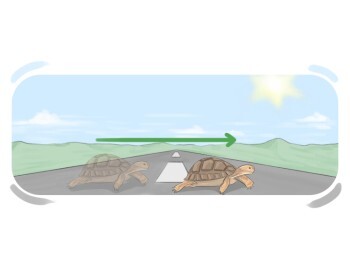
a natural process involving a change in position or orientation of an object
mouvement
Les vagues démontrent un mouvement constant à la surface de la mer.

to carefully check the quality, activity, or changes of something or someone for a period of time
surveiller
Le scientifique expérimenté a surveillé le projet tout au long de son développement.
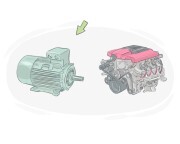
a machine that converts any form of energy into mechanical energy
moteur
Il a réparé le moteur de sa voiture pour améliorer ses performances.
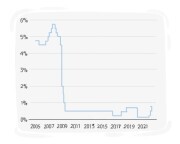
the number of times something changes or happens during a specific period of time
taux
Le taux d'adoption des nouvelles technologies dépend de l'acceptation des utilisateurs.

the effect of sunlight, wind, or rain, on rocks that makes them change color or appearance
altération,érosion
L'altération joue un rôle important dans la formation du sol en décomposant la matière rocheuse mère.

preventing a substance such as liquid from passing through
imperméable,étanche
La barrière imperméable empêche l'eau de s'infiltrer dans le sous-sol.
