
Architettura e Costruzione - Architettura Medievale
Qui imparerai alcune parole inglesi relative all'architettura medievale come "lanterna", "campanile" e "fossato".
Revisione
Flashcard
Ortografia
Quiz

the ornamental stonework or decorative patterns of interlacing shapes and lines, typically found in Gothic architecture

traceria, decorazione a traforo
an enclosed courtyard or garden, typically surrounded by buildings or walls
un cortile interno, un giardino recintato
a decorative protruding knob or ornament found at the intersection of ribs in vaulted ceilings or at the center of a ceiling or arch
chiave di volta, nodo decorativo
a decorative or functional vessel for holding burning material, used for lighting purposes
braciere, lampada a olio
a protruding structure that supports a building or wall and is made out of bricks or stones
contrafforte
Il maniero in stile neogotico aveva contrafforti ornamentali che aggiungevano un senso di dramma e verticalità alla sua facciata, rievocando lo spirito dell'architettura medievale.
the semi-circular or triangular space enclosed by the lintel and arch above a doorway, often decorated with sculptural reliefs or intricate designs
timpanon, timpano
La grande sala del castello medievale presentava un timpanum sopra l'ingresso, adornato con lo stemma della famiglia regnante, a simboleggiare la loro autorità e potere.
a decorative architectural feature commonly found in Gothic architecture, characterized by a fan-like pattern of interlocking stone ribs or wooden beams that create intricate vaulted ceilings or window designs
traceria a ventaglio, decorazione a ventaglio
a small tower attached on top of a castle, large building, or wall
torretta, piccola torre
a low wall with alternating raised sections and indentations built along the top of a fortified structure for defensive purposes
merlo, battifredo
an architectural feature commonly found in medieval fortifications, consisting of openings or holes in the floor or wall that allowed defenders to drop projectiles or pour boiling substances on attackers below
caditoia, piombatoio
a chamber or compartment in a tower or building where bells are stored or rung
campanile, torre campanaria
a narrow vertical opening in medieval fortifications for shooting arrows
feritoia, saettiera
a temporary wooden fence or barricade erected for protection or construction purposes
recinzione in legno, barriera temporanea
a small, decorative structure with windows that allow light to enter and illuminate the surrounding area
lanterna, fanale
a small, turret-like structure typically found on the corners or edges of a fortified building, often used for observation or defense
bartizano, garitta
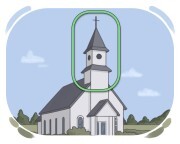
a tall structure designed to house and ring bells, serving as a prominent architectural feature and often associated with religious or civic buildings
campanile, torre campanaria
a designated space or building where guards or sentries are stationed to perform security duties and maintain surveillance over a specific area or entrance
sala di guardia, corpo di guardia
a fortified structure or building that serves as an entrance or gateway to a larger complex, such as a castle or estate, often featuring defensive features such as towers, walls, and gates
casermetta, torre d'ingresso
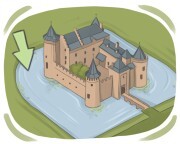
a wide and deep hole, often filled with water, that is dug around a castle and used as an extra protection against attack of enemies
fossato, vallo
a defensive fortification or rampart that is positioned in front of or outside the main fortification, providing an additional layer of protection and serving as a barrier against enemy attacks
controscarpa, opera avanzata
a sloping earthwork or artificial slope in front of a fortification or defensive structure, designed to protect it from direct enemy fire and to make it more difficult for attackers to approach
glacis, pendio artificiale
a raised walkway or path built along the top of a defensive wall or fortification, allowing guards to patrol and monitor the perimeter for potential threats
cammino di ronda
an outwork fortification that is shaped like a horn or crescent and is typically located in front of a main fortification or entrance
opera a corno, fortificazione a forma di corno
the central tower of a castle or fortress, typically the strongest and most secure part
maschio, torrione
a defensive structure or system constructed to protect an area or position from enemy attacks, typically including walls, towers, and other defensive elements
fortificazione, struttura difensiva
a heavy, vertically sliding gate or barrier made of metal or wood, typically found in medieval fortifications, that is used to control access to a castle, fortress, or other fortified structure
saracinesca, grata di chiusura
a fortified entrance structure for protection and control
barbacane, struttura d'ingresso fortificata
a fortified structure extending from a wall, typically angled, for defensive purposes
bastione, baluardo
I soldati presidiavano le merlature lungo le sommità dei bastioni, utilizzando le viste dominanti per avvistare eventuali forze nemiche in avvicinamento.
an opening or loophole in a fortification or wall, usually in the form of a narrow vertical slit, designed for observation or the discharge of weapons
feritoia, cannone
a secure gate or entrance in a fortification or defensive wall that allows for controlled entry and exit, often used for sallies or sorties during a siege
porta di sortita, uscita di sicurezza
a triangular or polygonal fortification with a raised platform located outside the main defensive walls of a fortress, used to defend the approach and provide additional protection against enemy attacks
rivellino, mezzaluna
a tower located within the walls of a castle or fortress, used to provide additional space for soldiers or for storing weapons and supplies
torre di cortina, torre cortina
the point or curve formed by the intersection of two arcs or curves, commonly seen in the tracery of Gothic architecture
la cuspide, il vertice
a large, grand room within a building, often found in medieval castles or palaces, used for dining, entertaining, and important gatherings
grande sala, sala delle feste
a decorative motif or ornament in the shape of a small spherical bud or flower, typically found in Gothic architecture
fiore a palla, bocciolo ornamentale
a decorative architectural feature that involves creating a sequence of small projecting elements in a repeating pattern along the top of a parapet or gable
brattishing, decorazione architettonica a sbalzo
a decorative architectural element or design motif consisting of three overlapping circles or lobes, often used in Gothic architecture and representing the leaves of a clover
trifoglio, motivo trilobato
a fortified stronghold, often situated in a commanding location for defense purposes
cittadella, fortezza
Durante i periodi di guerra, la cittadella serviva come rifugio per gli abitanti della città, offrendo riparo e sicurezza.
the central tower of a medieval castle or fortress, often serving as the main stronghold
maschio, torrione
Il signore risiedeva nel mastio mentre sovrintendeva alle terre circostanti.
a tall structure or building used for observation and surveillance, often associated with defensive or strategic purposes
torre di guardia, garitta
an old fortified castle that is surrounded by an outer wall and is located on a small hill
castello motte e bailey, castello fortificato motte e cortile
