


언어적 행동의 동사 - 암시하고 언급하기 위한 동사

여기에서는 "암시하다", "신호를 보내다", "언급하다"와 같은 암시와 언급을 나타내는 몇 가지 영어 동사를 배우게 됩니다.

review-disable

리뷰

flashcard-disable

플래시카드

spelling-disable

철자법

quiz-disable

퀴즈

학습 시작
언어적 행동의 동사
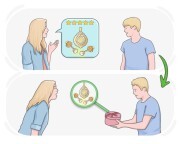
to suggest [동사]
اجرا کردن

암시하다

Ex: The CEO 's nod of approval suggested satisfaction with the team 's performance during the presentation .

CEO의 승낙하는 고개 끄덕임은 프레젠테이션 동안 팀의 성과에 대한 만족을암시했습니다.
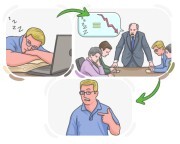
to imply [동사]
اجرا کردن

암시하다

Ex: The politician 's vague statement implied support for the controversial policy .

정치인의 모호한 성명은 논란의 여지가 있는 정책에 대한 지지를암시했다.

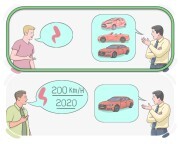
to hint [동사]
اجرا کردن

암시하다

Ex: The author skillfully hinted at the plot twist throughout the novel , keeping readers engaged until the surprising conclusion .

저자는 소설 전체에 걸쳐 플롯 트위스트를 능숙하게 암시하며 독자들을 놀라운 결말까지 사로잡았다.

اجرا کردن

암시하다

Ex: Instead of openly expressing dissatisfaction , he insinuated his disappointment by making sarcastic comments about the team 's performance .

공개적으로 불만을 표현하는 대신, 그는 팀의 성과에 대해 비꼬는 말을 함으로써 자신의 실망을 암시했다.

to connote [동사]
اجرا کردن

함축하다

Ex: His choice of formal language in the email connotes professionalism and seriousness .

이메일에서 그의 공식적인 언어 선택은 전문성과 진지함을암시합니다.

to intimate [동사]
اجرا کردن

암시하다

Ex: The speaker intimated his intentions for the future without explicitly stating them .

연설자는 미래에 대한 그의 의도를 명시적으로 말하지 않고 암시했다.

to signal [동사]
اجرا کردن

신호를 보내다

Ex: In a crowded room , she discreetly signaled her friend across the table to join her .

붐비는 방에서, 그녀는 테이블 건너편에 있는 친구에게 조용히 신호를 보내 그녀와 함께하라고 했다.

اجرا کردن

암시하다

Ex: His silence during the meeting implicated his disagreement with the proposed changes .

회의 중 그의 침묵은 제안된 변경 사항에 대한 그의 반대를 암시했다.

to get at [동사]
اجرا کردن

이해하다

Ex: She 's always so secretive ; it 's hard to get at her true feelings .

그녀는 항상 매우 비밀스러워서; 그녀의 진정한 감정을 파악하기 어렵다.

اجرا کردن

암시하다

Ex: In his speech , the professor alluded to a famous quote to emphasize the importance of education .

교수는 그의 연설에서 교육의 중요성을 강조하기 위해 유명한 인용구를 언급했습니다.

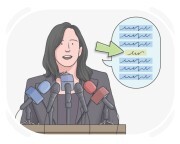
to mention [동사]
اجرا کردن

언급하다

Ex: Can you mention where you found that interesting article ?

그 흥미로운 기사를 어디에서 찾았는지 언급해 줄 수 있나요?

to touch on [동사]
اجرا کردن

간략히 언급하다

Ex: The article touched on various aspects of the environmental impact .

그 기사는 환경 영향의 다양한 측면을 언급했다.

to refer to [동사]
اجرا کردن

언급하다

Ex: In the book , the author frequently refers to the protagonist 's inner struggles .

책에서 저자는 주인공의 내적 갈등을 자주 언급합니다.

to bring up [동사]
اجرا کردن

언급하다

Ex:

협상 중에 과거의 불만을 꺼내지 않도록 노력하세요.

to broach [동사]
اجرا کردن

꺼내다

Ex: The teacher skillfully broached the subject of diversity to encourage open dialogue in the classroom .

교사는 교실에서 열린 대화를 장려하기 위해 다양성에 대한 주제를 능숙하게 꺼냈습니다.

to moot [동사]
اجرا کردن

제기하다

Ex: The committee mooted the possibility of introducing new policies to address environmental concerns in the company .

위원회는 회사의 환경 문제를 해결하기 위해 새로운 정책을 도입할 가능성을 논의했습니다.

to quote [동사]
اجرا کردن

인용하다

Ex: The student quoted a historical document to support his argument about the cultural significance of a particular event .

학생은 특정 사건의 문화적 중요성에 대한 그의 주장을 뒷받침하기 위해 역사적 문서를 인용했습니다.

to cite [동사]
اجرا کردن

인용하다

Ex: The author cited literary works to demonstrate the evolution of the genre .

저자는 장르의 진화를 보여주기 위해 문학 작품을 인용했습니다.

to posit [동사]
اجرا کردن

가정하다

Ex: The scientist decided to posit the existence of an undiscovered particle to explain the anomalies in the experimental data .

과학자는 실험 데이터의 이상 현상을 설명하기 위해 발견되지 않은 입자의 존재를 가정하기로 결정했다.

to advance [동사]
اجرا کردن

제안하다

Ex: In the academic conference , the researcher advanced a groundbreaking theory that challenged existing notions in the field .

학술 회의에서 연구원은 그 분야의 기존 개념에 도전하는 획기적인 이론을 제안했다.