pattern

Verbs of Verbal Action - Verbs for Implying and Mentioning

Here you will learn some English verbs referring to implying and mentioning such as "hint", "signal", and "refer to".

Review

Flashcards

Forms

Spelling

Quiz

Start learning
Categorized English Verbs of Verbal Action
to suggest

to convey something without explicitly stating it
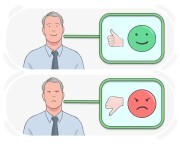
Ex: The CEO 's nod of approval suggested satisfaction with the team 's performance during the presentation .
Close
Sign in
to imply
to imply
[Verb]

to suggest without explicitly stating
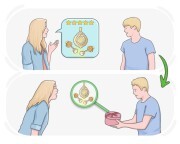
Ex: The advertisement 's imagery implied that using their product would lead to success .
Close
Sign in
to hint
to hint
[Verb]

to indirectly suggest something

Ex: The author skillfully hinted at the plot twist throughout the novel , keeping readers engaged until the surprising conclusion .
Close
Sign in
to insinuate

to suggest something in an indirect manner

Ex: In the meeting , the employee subtly insinuated that the manager 's decision might have been influenced by personal biases .
Close
Sign in
to connote

to implicitly convey something such as an idea, feeling, etc. in addition to something's basic meaning

Ex: The dark clouds in the sky connote an approaching storm, creating a sense of foreboding.
Close
Sign in
to intimate

to indirectly state something

Ex: The subtle tone of her voice intimated dissatisfaction with the current situation .
Close
Sign in
to signal
to signal
[Verb]

to give someone a message, instruction, etc. by making a sound or movement

Ex: The referee signaled a penalty by raising the yellow card .
Close
Sign in
to implicate

to convey something indirectly

Ex: His silence during the meeting implicated his disagreement with the proposed changes .
Close
Sign in
to get at
to get at
[Verb]

to reach an understanding of something through questioning, investigation, or analysis
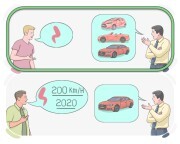
Ex: We need to get at the truth of the matter to resolve this dispute .
Close
Sign in
to allude to

to mention something without directly talking about it in detail

Ex: During the conversation , he alluded to a shared experience without openly discussing it .
Close
Sign in
to mention

to say something about someone or something, without giving much detail
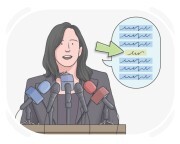
Ex: If you have any dietary restrictions , please mention them when making the reservation .
Close
Sign in
to touch on

to briefly mention a subject in written or spoken discussion
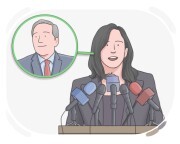
Ex: The speaker briefly touched on the challenges faced by the team .
Close
Sign in
to refer to

to mention or discuss someone or something
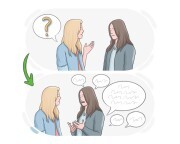
Ex: When discussing history , it 's important to refer to key events that shaped the world .
Close
Sign in
to bring up

to mention a particular subject

Ex: Could you bring up your concerns at the next meeting ?
Close
Sign in
to broach
to broach
[Verb]

to introduce a subject for discussion, especially a sensitive or challenging matter
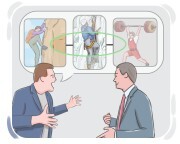
Ex: In the interview , the journalist skillfully broached the controversial topic , eliciting candid responses from the interviewee .
Close
Sign in
to moot
to moot
[Verb]

to bring up a topic or question for discussion
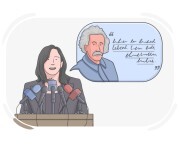
Ex: The question of funding was mooted but ultimately not addressed in the discussion .
Close
Sign in
to quote
to quote
[Verb]

to use a specific statement, source, etc. as evidence or an example
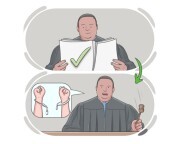
Ex: The student quoted a historical document to support his argument about the cultural significance of a particular event .
Close
Sign in
to cite
to cite
[Verb]

to refer to something as an example or proof
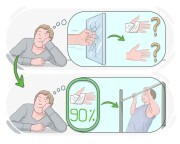
Ex: The manager cited successful business strategies to propose changes in the company .
Close
Sign in
to posit
to posit
[Verb]

to propose or assume something as true or factual, serving as the foundation for further reasoning or argumentation
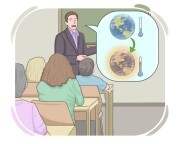
Ex: The computer scientist posited a new algorithm to improve computational efficiency in complex problem-solving tasks .
Close
Sign in
to advance

to propose an idea or theory for discussion

Ex: The architect advanced a unique design concept for the new building .
Close
Sign in
LanGeek
Download LanGeek app