
Словарный Запас для IELTS (Академический) - Психология
Здесь вы выучите некоторые английские слова по психологии, такие как "клинический", "шизофрения", "постоянство" и т.д., которые необходимы для экзамена IELTS.
Обзор
Флэш-карточки
Правописание
Тест


relating to the observation, examination, and treatment of patients in a medical setting

клинический
Врач поставил клинический диагноз на основе симптомов и истории болезни пациента.

related to the process of growth, progress, or improvement over time
развивающий
Развивающая стадия проекта сосредоточена на исследованиях и планировании.

an intense and irrational fear toward a specific thing such as an object, situation, concept, or animal
фобия
Фобия собак, которую она развила после инцидента в детстве, влияет на её способность взаимодействовать с домашними животными.

an explanation based on limited facts and evidence that is not yet proved to be true
гипотеза
Ученый разработал гипотезу для объяснения наблюдаемых явлений.
a medicine without any physiological effect that is given to a control group in an experiment to measure the effectiveness of a new drug or to patients who think they need medicine when in reality they do not
плацебо
В клиническом испытании половина участников получила экспериментальный препарат, а другая половина получила плацебо.
a chronic mental disorder in which a person's ability to think, feel or behave is affected, often associated with the distortion of reality
шизофрения
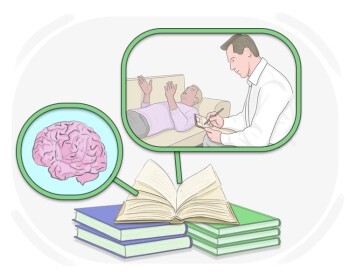
connected with the scientific study of the human mind and its functions
психологический
the ability of mind to keep and remember past events, people, experiences, etc.
память
Она полагалась на свою память, чтобы вспомнить тексты своих любимых песен во время караоке.
any branch of psychology that deals with finding practical solutions for human or animal behavioral problems
прикладная психология

(psychology) a state of mental or emotional strain or suspense
стресс
Хронический стресс может привести к тревоге или депрессии.
(psychology) a mental condition in which a person has a false belief system that is contradicted by evidence
бред
(psychology) the conscious act of holding a thought or feeling back
подавление
(psychology) the way a person or an animal acts in different situations or responds to stimuli
поведение
(psychology) the tendency to keep the same perception of an object despite changes in the stimuli
постоянство
(psychology) a person that is preoccupied with external things and prefers social situations
экстраверт
Как экстраверт, она преуспевает в социальных ситуациях и любит знакомиться с новыми людьми.
(psychology) the tendency to show an identical response to similar but distinct stimuli
обобщённость
(psychology) any regularly repeated pattern of behavior that is shown almost automatically in response to a specific situation
привычка

(psychology) a person who is preoccupied with their own thoughts and feelings rather than the external world
интроверт
Она интроверт и любит читать.
(psychology) a person's social representation or the impression other's have of a certain individual which is concealing the true self
персона
a mental operation or set of cognitive activities that manipulates, organizes, or interprets information
процесс
Решение проблем — это сложный когнитивный процесс.
(psychology) the conscious part of the mind that mediates between the unconscious and the reality which gives one a sense of self
Я, самость
(psychology) the part of the mind that is only partly conscious, representing social norms learned from the parents
Сверх-Я
(psychology) the part of the unconscious mind that is the source of basic instincts and drives
Оно
(psychology) the unconscious process in which an individual associates their feelings, ideas or attitudes to someone else as a defense mechanism
проекция
(psychology) the process of relieving a complex by bringing it to consciousness and directly addressing it
катарсис
Ведение дневника может дать чувство катарсиса, позволяя людям выражать и обрабатывать свои эмоции.
| Словарный Запас для IELTS (Академический) | |||
|---|---|---|---|
| Энергия и топливо | Экономика | Психология | Глобальные проблемы |
| Проблемные слова | Собирательные существительные | Разговор о тенденциях | Равенство |
| Феминизм | торговля | ||
