B2 Level Wordlist - Monarchy

Here you will learn some English words about monarchy, such as "dynasty", "empire", "castle", etc. prepared for B2 learners.

review-disable

review

flashcard-disable

flashcard

spelling-disable

spelling

quiz-disable

quiz

start-learning
B2 Level Wordlist

to be the neighboring country or region next to another, sharing a line
Ex:
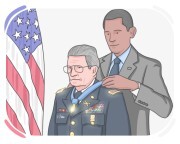
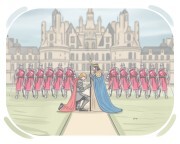
to honor [verb]

to show a lot of respect for someone or something

Ex: The soldiers honored their fallen comrades with a solemn ceremony at the war memorial .

people in the highest class of society who have a lot of power and wealth and usually high ranks and titles

Ex: The aristocracy often lived in grand estates and manors .
dynasty [noun]

a lineage of kings who rule a country or nation over a long period of time

Ex: The business was run like a modern-day dynasty , passed down through three generations of the family .
empire [noun]

a territory governed by an emperor or empress, under imperial authority
Ex: The empire maintained order through a complex bureaucracy .

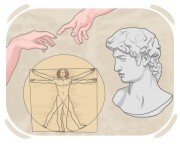
the period between the 14th and 16th centuries in Europe, marked by a rise of interest in Greek and Roman cultures, which is dominant in the art, philosophy, etc. of the times
Ex: The Renaissance saw the rediscovery of classical philosophy and learning from ancient Greece and Rome .

an era in European history, between about AD 1000 and AD 1500, when the authority of kings, people of high rank, and the Christian Church was unquestionable
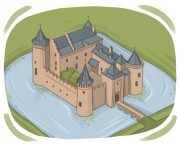
Ex: The Middle Ages saw the spread of Gothic architecture , evident in the grand cathedrals built during this time .
castle [noun]

a large and strong building that is protected against attacks, in which the royal family lives

Ex: During the summer vacation , the family visited several castles across Europe , each with its unique history .
fortress [noun]

a structure or town that has been designed for military defense against enemy attacks
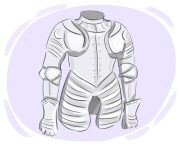
Ex: The walls of the fortress were built thick and high to withstand sieges .
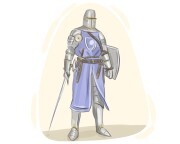
armor [noun]

a protective metal clothing used by soldiers in the past in order not to be harmed or injured during battles
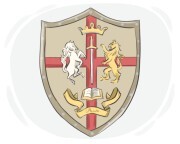
Ex: The movie 's battle scenes were enhanced by realistic armor worn by the actors , adding authenticity to the historical setting .

the symbol of a nation, country, family, etc. that is usually printed on shields or flags
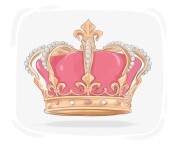
Ex: Each element of the coat of arms has a specific meaning , often linked to the family 's history .
crown [noun]

a round object often decorated with gems that kings or queens put on their heads as a symbol of power and authority
Ex: The ceremonial crown was used in various state functions to emphasize the importance of the event .
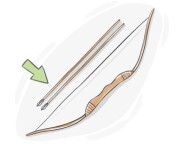
arrow [noun]

a type of weapon consisting of a metal or wooden bar with a sharp head and feathers at the end

Ex: The hunter nocked an arrow and aimed carefully at the deer .
sword [noun]

a type of weapon consisting of a long metal blade and a handle

Ex: The pirate brandished his sword menacingly as he approached his opponent .
emblem [noun]

a special design or sign that represents a nation, monarchy, etc.
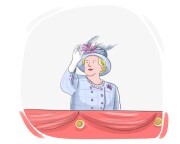
Ex: The city ’s emblem is used on official seals and documents to signify municipal authority .
royal [adjective]

relating to the king or queen or belonging to the monarchy
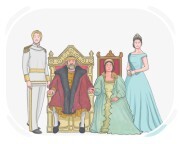
Ex: The royal chef prepared a special feast for the visiting dignitaries .
royalty [noun]

kings and queens and any member of their families

Ex: The charity gala was graced by members of royalty , who helped raise significant funds for the cause .
noble [adjective]

belonging to the highest social or political class

Ex: The noble family 's crest adorned the gates of their ancestral castle , signifying their esteemed status .
nobility [noun]

the class of people with the highest social or political ranks and titles

Ex: The nobility often held significant influence over political and social matters in medieval Europe .
count [noun]

a noble title in European countries, ranking below a marquess and above a viscount

Ex: As a count , he had the privilege of attending royal court ceremonies and functions .
countess [noun]

a woman holding the rank of a count or earl
Ex: The countess managed her estates with skill and authority .
knight [noun]

(in the Middle Ages) a man of high social rank, wearing armor and riding a horse, who is loyal to his king

Ex: Knights trained rigorously in martial arts and chivalry .
duchess [noun]

the title of a woman with the rank of a duke

Ex:
king [noun]

the male ruler of a territorial unit that has a royal family
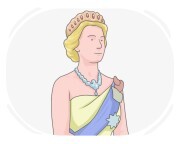
Ex: The king 's coronation ceremony was attended by nobles from across the realm .
queen [noun]

the female ruler of a territorial unit that has a royal family
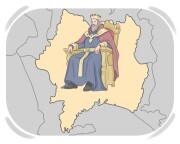
Ex: The queen addressed her subjects from the balcony of the palace on her birthday .
kingdom [noun]

an area or territory that is governed by a king or queen

Ex: The kingdom 's borders expanded through conquest and diplomacy during the reign of the monarch .
lady [noun]

a title given to a lord's wife

Ex: The historical novel featured the daily life and duties of a lady in the English countryside .
majesty [noun]

a title used to address a king or queen with respect

Ex:
lord [noun]

a man of high rank who belongs to the nobility

Ex: In medieval times , lords controlled vast estates and had authority over the peasants who lived on their lands .
monarch [noun]

a person who has the power to rule over a kingdom or empire, especially someone who inherits this power
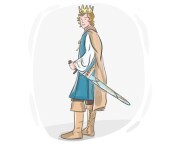
Ex: She studied the history of the monarchs who ruled during the medieval period for her research project .
prince [noun]

a male royal heir or ruler, typically the son of a king or queen
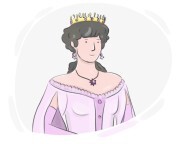
Ex: The prince was groomed from a young age to assume leadership of the realm .
princess [noun]

a female member of a royal family, typically the daughter of a king or queen

Ex: The princess visited the charity event to support causes related to education and health .
Duke [noun]

a man of high rank in various European countries, ranking just below a prince and above a count or earl

Ex:
slavery [noun]

the practice of owning and controlling people as property, denying them basic human rights and freedoms

Ex: