Vocabulary for IELTS Academic (Band 6-7) - Chemistry

Here, you will learn some English words related to Chemistry that are necessary for the Academic IELTS exam.

review-disable

review

flashcard-disable

flashcard

spelling-disable

spelling

quiz-disable

quiz

start-learning
Vocabulary for IELTS Academic (Band 6-7)
solution [noun]

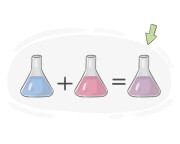
a mixture of different liquids

Ex: Chemists often study solutions to understand how different substances interact .
solvent [noun]

a liquid that is capable of dissolving another substance

Ex:

a tabular arrangement of chemical elements organized based on their atomic number, electron configuration, and recurring chemical properties

Ex: The periodic table is divided into groups ( columns ) and periods ( rows ) , each with specific characteristics and trends in properties .
isotope [noun]

each of two or more forms of the same element that contain equal numbers of protons but different numbers of neutrons in their nuclei, leading to variation in atomic mass

Ex: Uranium-235 and uranium-238 are isotopes of uranium , playing crucial roles in nuclear fission reactions .
halogen [noun]

a type of chemical element found in Group 17 of the periodic table, known for being highly reactive and commonly used in disinfectants and lights

Ex: Bromine , a halogen with properties similar to chlorine , is employed as a disinfectant in swimming pools and hot tubs .

any of the elements in Group 18 of the periodic table, including helium, neon, argon, krypton, xenon, and radon, characterized by their inert nature and stable electron configurations

Ex: Argon , a noble gas commonly used in welding , provides an inert atmosphere to prevent the oxidation of metals during the process .
emulsion [noun]

a mixture of two liquids where tiny droplets of one are evenly dispersed in the other, like oil in water

Ex: Milk is a natural emulsion of fat in water , stabilized by proteins like casein to prevent the fat from separating .

the time required for half of a quantity of a substance to undergo a change or decay, typically in the context of radioactive decay or chemical reactions

Ex: The half-life of a chemical reaction refers to the time it takes for the reactant concentration to decrease by half during a reaction .

the emission of ionizing radiation or particles caused by the spontaneous disintegration of atomic nuclei in radioactive substances

Ex: Marie and Pierre Curie conducted pioneering research on radioactivity , discovering the elements polonium and radium .

a type of uranium that has most of its more radioactive isotopes removed, primarily used for armor-piercing ammunition and shielding

Ex: The military uses depleted uranium in armor-piercing ammunition and armor plating due to its high density and ability to penetrate armor .
Vocabulary for IELTS Academic (Band 6-7)
Size and Scale Dimensions Weight and Steadiness Increase in Amount
Decrease in Amount Intensity Time and Duration Space and Area
Shapes Speed Significance Insignificance
Strength and Influence Uniqueness Commonness Complexity
High Quality Low Quality Value Challenges
Wealth and Success Poverty and Failure Age and Appearance Body Shape
Wellness Intellectual Capability Intellectual Incapabilities Positive Human Traits
Negative Human Traits Moral Traits Financial Behaviours Social Behaviours
Short-tempered Traits Positive Emotional Responses Negative Emotional Responses Positive Emotional States
Negative Emotional States Tastes and Smells Sounds Textures
Temperature Probability Attempt and Prevention Opinions
Thoughts and Decisions Encouragement and Discouragement Knowledge and Information Request and Suggestion
Respect and Approval Regret and Sadness Relational Actions Physical Actions and Reactions
Body Language and Gestures Postures and Positions Movements Engaging in Verbal Communication
Understanding and Learning Perceiving The Senses Commanding and Giving Permissions Predicting
Touching and Holding Changing and Forming Creating and Producing Organising and Collecting
Preparing Food Eating and Drinking Science Education
Research Astronomy Physics Biology
Chemistry Geology Philosophy Psychology
Maths and Graphs Geometry Environment Landscape and Geography
Engineering Technology Internet and Computer Manufacture and Industry
History Religion Culture and Custom Language and Grammar
Arts Music Film and Theatre Literature
Architecture Marketing Finance Management
Medicine Sickness and Symptoms Law Energy and Power
Crime Punishment Government Politics
Measurement War Positive Emotions Negative Emotions
Travel and Tourism Migration Food and Drinks Materials
Pollution Disasters Weather Animals
Adverbs of Manner Adverbs of Degree Adverbs of Comment and Certainty Adverbs of Time and Frequency
Adverbs of Purpose and Emphasis Conjunctive Adverbs