Animals - Animal Reproduction

Here you will learn some words about animal reproduction in English such as "spawn", "hatch", and "larva".

review-disable

review

flashcard-disable

flashcard

spelling-disable

spelling

quiz-disable

quiz

start-learning
Animals

the ability of a living organism to produce a large number of offspring or viable eggs or seeds

a sexual orientation characterized by a lack of sexual attraction or desire for sexual activity

a type of reproduction where a single organism can produce offspring without the involvement of another organism
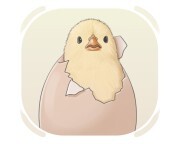
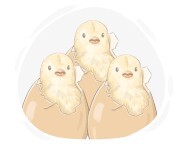
to hatch [verb]

(of birds, fish, etc.) to come out of an egg

Ex: In the classroom , students watched in excitement as the ducklings hatched from their eggs .
breeding [noun]

the process of mating animals, plants, or microorganisms with desirable characteristics to produce offspring with those same traits
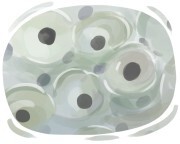
spawn [noun]

the eggs that an aquatic animal or an amphibian lays and are covered with a transparent layer
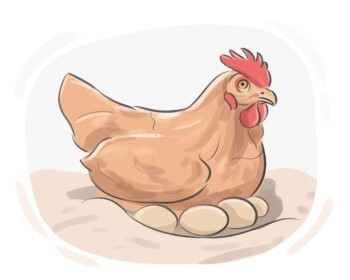
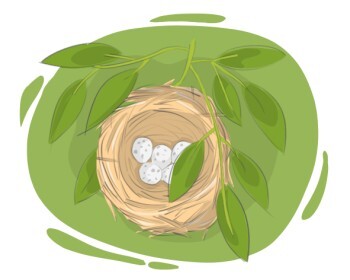
to lay [verb]

(of a bird, insect, fish, etc.) to produce eggs
Ex: The robin began to lay eggs in its nest as spring approached .
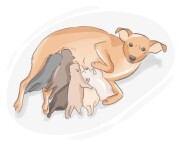
to breed [verb]

(of an animal) to have sex and give birth to young
Ex: Wolves in the wild have a complex social structure that influences when and with whom they breed .
larva [noun]

a young form of an insect or an animal that has come out of the egg but has not yet developed into an adult

to introduce male reproductive cells into the female reproductive system for reproduction
Ex: Scientists have been researching ways to fertilize eggs in a lab setting .

the stage of the metamorphosis that comes between the larval and adult stages of a moth or butterfly

androgen [noun]

a male sex hormone, such as testosterone, that is responsible for the development and maintenance of male characteristics in humans and animals
to mate [verb]

(of animals) to have sex for breeding or reproduction
Ex: Bees mate mid-flight , with the queen mating with multiple drones .

the union of a sperm and an egg to form a zygote, which marks the beginning of sexual reproduction in organisms

pedigree [noun]

the recorded lineage or ancestry of a purebred animal, used to verify its breeding

Ex: Pedigrees are essential for registering show animals .
to spay [verb]

to remove the sexual organs of a female animal, called ovaries

Ex: We scheduled an appointment to spay our female hamster to ensure her well-being .

the inability of a person, animal or plant to reproduce

breeder [noun]

a person or animal that produces offspring through reproduction

to make an animal or plant breed with a different type

Ex: Farmers often crossbreed cattle to enhance milk production .

to remove the sex organs of a domestic animal in order to keep it from reproduction
Ex: Many animal shelters require pet owners to neuter their cats and dogs before adoption .
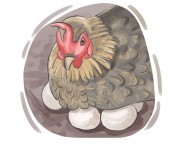
broody [noun]

a hen that sits on her eggs with the intention of hatching them

to keep an egg in a favorable condition to help it develop until it hatches
Ex: The penguin parents took turns to incubate their egg .
brood [noun]

all the young of a bird hatched at the same time, or the young of an animal cared for together
Ex: The spider guarded her brood carefully , ensuring each of her young emerged safely from their eggs .

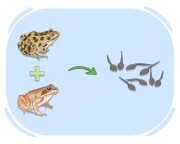
the eggs laid by a frog, covered in a jelly-like mucus

to calve [verb]

to give birth to a calf (a young bovine animal)

grub [noun]

the young wormlike larva of an insect

Ex: She accidentally dug up a grub while planting vegetables in her garden .
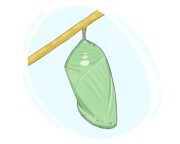
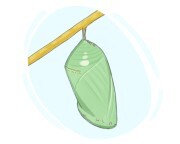
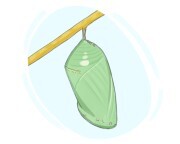
pupa [noun]

an insect which is in an inactive transitory stage of its metamorphosis, between the larval and adult stages
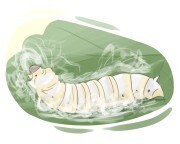
silkworm [noun]

the caterpillar of a silk moth that forms a cocoon during metamorphosis, which is later processed into silk

barren [adjective]

unable to bear offspring

Ex: The barren tree bore no fruit this season .
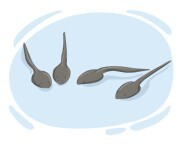
polliwog [noun]

an amphibian in larval stage; a tadpole

to foal [verb]

to produce or to give birth to a young horse or pony

gamete [noun]

a special cell used for reproduction, with sperm cells being the male gametes and egg cells being the female gametes

to carry a developing embryo or fetus inside the uterus of a female mammal until it is ready to be born

an organism that has both male and female reproductive organs

to fertilize an egg and make it capable of developing into an embryo
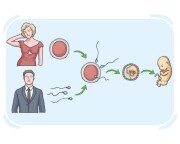
Ex: The reproductive success of mammals depends on the ability of sperm to navigate the female reproductive tract and impregnate the egg .
to lamb [verb]

to give birth to a lamb, usually used in reference to sheep

to produce offspring sexually, typically involving the union of male and female reproductive cells

Ex: The desire to procreate is a fundamental biological instinct in many organisms .

(of a living being) to produce offspring or more of itself

Ex: Humans reproduce through sexual reproduction , leading to the birth of babies .
to whelp [verb]

to give birth to puppies or young dog

the ancestry or lineage of a purebred animal, often emphasizing pedigree or genetic quality

Ex: The horse 's bloodline includes several award-winning racers .

to engage in sexual reproduction or mating

Ex: The biologist observed how insects couple and reproduce in their natural habitat .
to rut [verb]

to go through a period of sexual activity or sexual aggression, especially in certain animals during their mating season
to sire [verb]

to beget, procreate, or father offspring, typically used in reference to male animals

to introduce semen into the reproductive system, often by artificial means

sperm [noun]

the smallest and most motile cells in the male reproductive system responsible for fertilizing the female egg

estrus [noun]

the recurring period of sexual receptivity and fertility in female mammals

egg [noun]

an oval or rounded object laid by birds, reptiles, fish, or certain invertebrates as part of their reproductive process

Ex: The chicken laid a fresh egg in the nesting box .