pattern

C2 Level Wordlist - Music

Here you will learn all the essential words for talking about Music, collected specifically for level C2 learners.

Review

Flashcards

Forms

Spelling

Quiz

Start learning
CEFR C2 Vocabulary
arpeggio
arpeggio
[noun]

a musical technique where the notes of a chord are played individually in a sequence rather than simultaneously

Ex: In the classical guitar piece, the musician showcased his skill with a beautiful arpeggio, highlighting the individual notes of the chord. 
Close
Sign in
atonality
atonality
[noun]

the quality that marks the absence of a key in a musical composition

Ex: The composer's bold experimentation with atonality marked a significant departure from traditional harmonic structures. 
Close
Sign in
counterpoint

a musical composition in which two or more independent melodies are played or sung simultaneously, creating harmony and interplay

Ex: Bach's fugues are masterpieces of counterpoint. 
Close
Sign in
libretto
libretto
[noun]

the text of a musical play, an opera, or other extended vocal works

Ex: The composer and the librettist worked closely together to ensure the libretto perfectly complemented the music in the opera. 
Close
Sign in
rendition
rendition
[noun]

a performance of a musical composition, dramatic role, or other artistic work

Ex: The pianist gave a moving rendition of Chopin's nocturne. 
Close
Sign in
cadenza
cadenza
[noun]

a solo section at the end of a musical piece for the performer to show their skill and creativity

Ex: The composer wrote a challenging cadenza for the soloist to demonstrate her musicality and expressiveness. 
Close
Sign in
chaconne
chaconne
[noun]

a musical composition in moderate triple time, popular in the baroque era

Ex: The concert concluded with a stunning performance of Bach's Chaconne in D minor, a piece renowned for its emotional depth and complexity. 
Close
Sign in
ditty
ditty
[noun]

a short and simple song or poem

Ex: The children sang a cheerful ditty as they skipped down the path, filling the air with laughter and melody. 
Close
Sign in
rhapsody
rhapsody
[noun]

an instrumental composition marked with irregular form and improvisation, expressing strong emotions

Ex: Rachmaninoff's Rhapsody on a Theme of Paganini is a masterful display of romanticism that sweeps the listener away in a torrent of rich melodies. 
Close
Sign in
repertoire

a stock of plays, songs, dances, etc. that a company or a performer is prepared to perform

Ex: The jazz band had an extensive repertoire of standards from the Great American Songbook, ensuring a lively and diverse setlist for every performance. 
Close
Sign in
treble
treble
[noun]

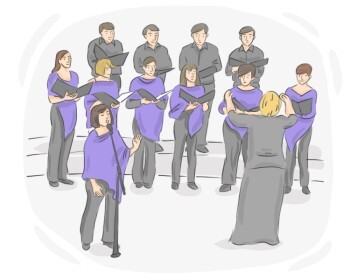
the part in harmonic music or the voice with the highest pitch that belongs to a boy or female vocalist
Ex: The treble soared effortlessly above the rest of the choir, adding a celestial quality to the ensemble's performance. 
Close
Sign in
clef
clef
[noun]

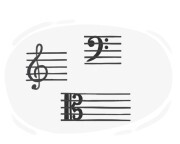
any of the signs written on the left-hand end of a staff indicating the pitch of the notes

Ex: The sheet music was marked with a treble clef at the beginning of the staff, indicating that it was intended for higher-pitched instruments or voices. 
Close
Sign in
crossover
crossover
[noun]

the process of changing the style or form by a musician in order to appeal to a wider range of people

Ex: The singer's latest album marked a successful crossover from country to pop, attracting a new and diverse audience. 
Close
Sign in
lo-fi
lo-fi
[noun]

a raw, unpolished, and low-fidelity music production or recording style characterized by a DIY aesthetic and nostalgic or vintage vibes

Ex: She enjoyed studying to lo-fi beats, finding the relaxed and nostalgic vibe conducive to concentration. 
Close
Sign in
solfege
solfege
[noun]

a singing method that uses a system of vocal syllables to represent musical pitches in order to facilitate sight-singing and ear training

Ex: In music class, we learn solfege to improve our singing skills. 
Close
Sign in
riff
riff
[noun]

a short, repeated musical pattern found in both jazz and popular music, serving as a prominent and recognizable element within a song or composition
Ex: The guitarist played a catchy riff that got everyone on their feet. 
Close
Sign in
ensemble
ensemble
[noun]

a collective of musicians performing together

Ex: The orchestra ensemble sounded magnificent during the symphony performance. 
Close
Sign in
fanfare
fanfare
[noun]

a short and lively ceremonial sounding of trumpets or other brass instruments, usually to announce something important

Ex: The brass section played a powerful fanfare to introduce the bride and groom, signaling the start of the wedding ceremony. 
Close
Sign in
metronome
metronome
[noun]

a device that helps musicians regulate their desired speed and rhythm

Ex: The pianist used a metronome during practice to ensure she kept a consistent tempo throughout the piece. 
Close
Sign in
spiccato
spiccato
[noun]

a technique in music for string instruments where the bow bounces lightly off the strings, creating short, crisp notes

Ex: The violinist used spiccato to add a lively texture to the piece. 
Close
Sign in
orchestra pit

the place in front of the stage, which is slightly lower, where an orchestra sits and performs for an opera, ballet, etc.

Ex: The musicians gathered in the orchestra pit, tuning their instruments and preparing for the evening's performance. 
Close
Sign in
fingering
fingering
[noun]

the act of positioning and using fingers on an instrument to play specific notes or chords

Ex: The pianist practiced her fingering to ensure smooth transitions between notes. 
Close
Sign in
outsider music

unconventional, experimental, and non-mainstream music created by individuals who do not conform to established musical conventions or industry expectations

Ex: Outsider music often defies conventional norms, featuring unique and unconventional sounds that challenge mainstream tastes. 
Close
Sign in
euphony
euphony
[noun]

a harmonious combination of sounds that is pleasing to the ear

Ex: The orchestral piece was a masterclass in euphony, captivating every listener. 
Close
Sign in
virtuoso
virtuoso
[noun]

someone who is highly skilled at playing a musical instrument

Ex: The young pianist was hailed as a virtuoso, astonishing audiences with his technical brilliance and emotional depth. 
Close
Sign in
fugue
fugue
[noun]

a classical piece of music with one or two simple repeated themes that develop into a polyphonic pattern which is more sophisticated

Ex: Bach's "The Art of Fugue" is a masterpiece that exemplifies the complexity and beauty of fugue writing. 
Close
Sign in
overture
overture
[noun]

the introductory piece of an opera, ballet, oratorio or any lengthy musical performance

Ex: The orchestra's rendition of the "William Tell Overture" was electrifying, setting an exhilarating tone for the concert. 
Close
Sign in
coda
coda
[noun]

the final passage of an extended musical composition

Ex: The symphony concluded with a powerful coda, bringing the piece to a dramatic and satisfying close. 
Close
Sign in
LanGeek
Download LanGeek app