SAT Humanities - Activity and Behavior

Here you will learn some English words related to activity and behavior, such as "galvanize", "caprice", "frivolous", etc. that you will need to ace your SATs.

review-disable

review

flashcard-disable

flashcard

spelling-disable

spelling

quiz-disable

quiz

start-learning
SAT Humanities

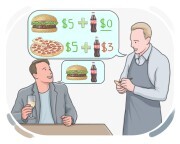
to make someone do something specific, often by offering something attractive
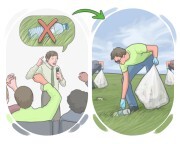
Ex: The company enticed customers to sign up for their loyalty program by offering a 20 % discount on their first purchase .

to push someone into taking action, particularly by evoking a strong emotion in them
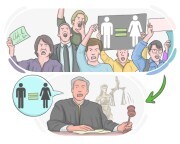
Ex: By sharing her personal story , she galvanized others to contribute to the fundraiser .
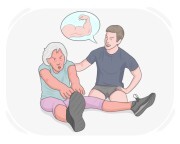
to impel [verb]

to strongly encourage someone to take action
Ex:
to spur [verb]

to give someone encouragement or motivation

Ex: Last week , they spurred each other to achieve their fitness goals .
to urge [verb]

to try to make someone do something in a forceful or persistent manner
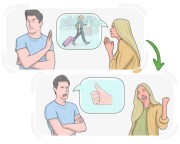
Ex: During the rally , the speaker urged the crowd to take action and make their voices heard .
to coax [verb]

to persuade someone to do something by being kind and gentle, especially when they may be unwilling
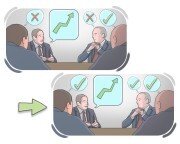
Ex: The owner had to coax the reluctant cat to take its medicine by mixing it with a favorite treat .

to make a person do something through reasoning or other methods
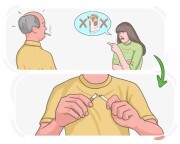
Ex: During the business negotiation , the salesperson tried to persuade the client to agree to a favorable deal .

to make someone not to do something

Ex: The campaign aims to dissuade youth from experimenting with drugs .

to engage in an activity without deep commitment or serious involvement

Ex: As a music enthusiast , he enjoyed dabbling in different instruments .

to participate in an event or activity
Ex: As a tradition , the whole family would partake in decorating the Christmas tree together .

to undertake a risky or daring journey or course of action
Ex: He ventured across the country to start a new life in an unfamiliar city .

to make an attempt at matching or surpassing someone or something, particularly by the means of imitation

Ex: The artist aimed to emulate the masterpieces of the Renaissance painters in her own artwork .
to mimic [verb]

to copy the style, technique, or subject matter of another artist or artwork
Ex: The band 's early songs often mimicked the sound of their musical idols .

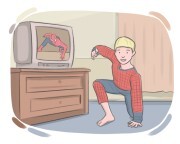
to copy someone's behavior or appearance accurately
Ex: The actor practiced for hours to imitate the character 's gestures perfectly .
to tease [verb]

to playfully annoy someone by making jokes or sarcastic remarks

Ex: Colleagues at the office like to tease each other to create a relaxed and friendly atmosphere .

to torment someone by showing or promising something desirable that remains just out of reach

Ex: He tantalized the dog with a treat he would n't give .
to belie [verb]

to create an impression of something or someone that is false

Ex: Her friendly smile belies a competitive nature .

to continuously expose someone to something, such as information, questions, or criticisms

Ex: The news station bombarded viewers with coverage of the breaking story .
to lurk [verb]

to remain hidden or move stealthily, often with a sinister or suspicious intent

Ex: She noticed a shadow lurking behind the trees and quickened her pace .

one's natural desire and feeling to take a specific action or act in a particular manner

tendency [noun]

a natural inclination or disposition toward a particular behavior, thought, or action

Ex: There is a natural tendency for people to resist change .

a natural inclination to behave in a certain way or exhibit particular characteristics

Ex: The child showed a propensity for music at a very young age .

a person's or animal's natural or inherent characteristics, influencing their behavior, mood, and emotional responses

Ex: The teacher 's patient temperament helped her manage her classroom effectively .
caprice [noun]

a sudden and unpredictable change in mood, behavior, or decision

Ex: The king ruled by caprice , making laws that changed with his moods .
ritual [noun]

a set of fixed actions or behaviors performed regularly

Ex: Graduation ceremonies include traditional rituals like wearing caps and gowns .
regimen [noun]

a set of instructions given to someone regarding what they should eat or do to maintain or restore their health

Ex: She followed a strict exercise regimen , working out at the gym five days a week to improve her fitness level .
leverage [noun]

the ability to influence a person or situation through the strategic use of resources to achieve a desired outcome

Ex: She realized she had little leverage in the negotiation without more substantial evidence .

the act or state of avoiding excess or extremes in thought, behavior, or action

Ex: The key to financial stability is practicing moderation in spending and saving .

the ability to perceive and respond to subtle changes, signals, or emotions in one's environment or in others

Ex: The therapist 's sensitivity to body language helps in understanding clients ' unspoken emotions .

the state of having mixed or opposing feelings

Ex: She experienced ambivalence about the job offer , torn between the higher salary and longer commute .

the manner in which a child is raised, including the care, guidance, and teaching provided by parents or guardians

Ex: Cultural values often play a significant role in a child ’s upbringing .

an excessive or abnormal tendency to lie and fabricate stories, often without any clear motive or benefit
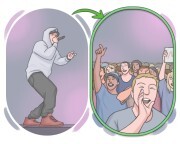
Ex: In cases of mythomania , the individual often believes their own fabrications , blurring the line between truth and fiction .
uproar [noun]

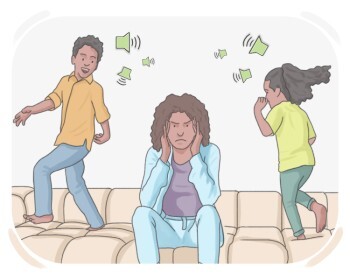
a situation where there is a lot of noise caused by upset or angry people

rote [noun]

mechanical learning by repetition and frequent recall rather than meaningful understanding

Ex:

a small degree or appearance of something that is not completely present or fully realized, implying a somewhat similarity

Ex: After the scandal , the company tried to restore a semblance of trust with its customers .

the manner or method of managing or dealing with something or someone

Ex: Proper treatment of the data ensured accurate results in the scientific study .
paranoiac [adjective]

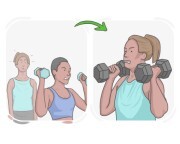
exhibiting excessive or irrational suspicion and mistrust of others
Ex:
competitive [adjective]

having a strong desire to win or succeed

Ex: Despite the friendly atmosphere , the competitive gamer was determined to emerge victorious in every match .
participatory [adjective]

characterized by the active involvement and engagement of people in decision-making or activities

Ex: Participatory budgeting allows citizens to have a direct say in how public funds are allocated .
frenetic [adjective]

fast-paced, frantic, and filled with intense energy or activity

Ex: After the announcement , the crowd reacted with frenetic excitement .
rowdy [adjective]

(of a person) noisy, disruptive, and often behaving in a disorderly or unruly way

Ex: The teacher struggled to keep the rowdy students focused during the lesson .
adventurous [adjective]

(of a person) eager to try new ideas, exciting things, and take risks

Ex: The adventurous foodie loves to sample exotic cuisines and daring flavor combinations .
vibrant [adjective]

full of energy, enthusiasm, and life

Ex: The market is always vibrant , bustling with vendors and shoppers .
addictive [adjective]

(of a substance, activity, behavior, etc.) causing strong dependency, making it difficult for a person to stop using or engaging in it

Ex: Caffeine is an addictive stimulant , which is why many people rely on coffee to start their day .
impetuous [adjective]

done swiftly and without careful thought, driven by sudden and strong emotions or impulses

Ex: The impetuous adventurer set out on a dangerous journey without proper preparation or planning .
expeditious [adjective]

done very quickly without wasting time or resources

Ex: With the goal of achieving expeditious results , the organization invested in advanced technology and automation .
brisk [adjective]

quick and energetic in movement or action
Ex: He answered the questions in a brisk manner , not wasting any time .
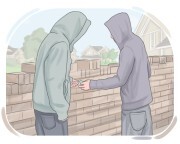
undercover [adjective]

working or conducted secretly under the supervision of a law enforcement agency to gather information or catch criminals

Ex:
sedentary [adjective]

(of a job or lifestyle) including a lot of sitting and very little physical activity

Ex: She found that her sedentary work environment was affecting her health .
tumultuous [adjective]

having chaotic and unstable characteristics
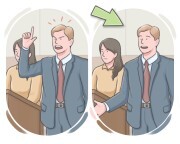
Ex: The company 's tumultuous reorganization process led to confusion and anxiety among employees .
sedate [adjective]

calm, quiet, and composed, often with a serious demeanor

Ex: Her sedate demeanor at the funeral reflected the somber mood of the occasion .
hectic [adjective]

extremely busy and chaotic

Ex: The holiday season was particularly hectic for retail employees .
responsive [adjective]

reacting to people and events quickly and in a positive way

Ex: The new manager proved to be responsive to the team 's suggestions , implementing changes to enhance productivity .
hands-on [adjective]

involving direct participation or intervention in a task or activity, rather than simply observing or delegating it to others

Ex: As a hands-on leader , she actively participates in daily operations .
bungled [adjective]

poorly executed or managed, resulting in a failure to achieve the intended outcome

Ex: The bungled construction project faced numerous setbacks , leading to delays and cost overruns .
exploratory [adjective]

involving or intended for the purpose of discovering or investigating something new or unknown

Ex:
excursive [adjective]

(of a lecture, writing, etc.) likely to wander off the main topic in a confusing and incomprehensible way

Ex: His excursive writing style , filled with digressions , made it difficult to grasp the main argument .
frivolous [adjective]

having a lack of depth or concern for serious matters
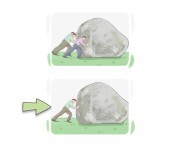
Ex: She 's often seen as frivolous , but beneath the facade , she 's quite shrewd .

without anyone's help, solely relying on one's own efforts

Ex: The athlete single-handedly carried the team to victory with outstanding performance .
rigorously [adverb]

in a very thorough and precise manner, paying close attention to every detail

Ex: The team rigorously analyzed the data for errors .

in a manner that relates to strategies, plans, or the overall approach designed to achieve long-term goals or objectives
Ex: The manager strategically scheduled the team meeting to maximize productivity during peak hours .
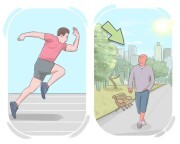
leisurely [adverb]

in a relaxed, unhurried manner

Ex: She took her time and answered the questions leisurely during the interview .

in a manner driven by an uncontrollable urge or need, often repetitive or excessive

Ex: They compulsively rearranged the furniture late at night .
tenderly [adverb]

in a gentle, affectionate, or caring manner

Ex: They tenderly embraced after being apart for months .
studiously [adverb]

with great care, attention, and effort

Ex: The team planned the event studiously , leaving no detail unattended to ensure its success .