
pattern

Opinion and Argument - Perspectives in Discussion

Here you will learn some English words related to perspectives in discussion such as "misjudge", "infer", and "impression".

Review

Flashcards

Forms

Spelling

Quiz
Start learning
Words Related to Opinion and Argument
if
if
[conjunction]

used to express one's opinion

Close
Sign in
if anything
if anything
[phrase]

used to suggest that the opposite of what has been stated may be closer to the truth

Ex: He claimed to have lost weight during the holiday, but if anything, he seemed to have gained a few pounds. 
Close
Sign in
if you ask me

used to introduce one's personal opinion or perspective on a topic, emphasizing on the fact that it is their personal view

Ex: If you ask me, the book was much better than the movie adaptation. 
Close
Sign in
I am easy
I am easy
[sentence]

used to mean one does not have a strong preference and is happy to go along with whatever others decide

Ex: Where should we eat tonight? — I'm easy, you pick! 
Close
Sign in
in my humble opinion

an abbreviation that is used in texting to express one's personal opinion about a particular subject
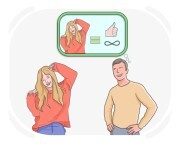
Ex: In my humble opinion, this book is a masterpiece. 
Close
Sign in
impression

an opinion or feeling that one has about someone or something, particularly one formed unconsciously

Ex: Her cheerful demeanor gave me the impression that she was always happy. 
Close
Sign in
in all honesty

used to emphasize that the speaker is being sincere and truthful in their statement

Ex: In all honesty, I believe this is the best solution to our problem. 
Close
Sign in
inclined
inclined
[Adjective]

giving an opinion in a way that is not strong
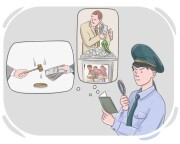
Ex: She's inclined to think the project will succeed, but she's not entirely convinced yet. 
Close
Sign in
to infer
to infer
[Verb]

to reach an opinion or decision based on available evidence and one's understanding of the matter

Ex: After observing the pattern of behavior, the detective could infer that the suspect was familiar with the victim. 
Close
Sign in
inference
inference
[noun]

a conclusion one reaches from the existing evidence or known facts

Ex: The detective made a crucial inference about the suspect's alibi based on the new evidence. 
Close
Sign in
inflexibility

the quality of being unable or unwilling to change

Close
Sign in
inflexibly
inflexibly
[Adverb]

in a way that is unwilling to change or adapt

Ex: She insisted inflexibly on following the original plan despite new challenges. 
Close
Sign in
in my book
in my book
[phrase]

according to one’s own personal opinion

Close
Sign in
in {one's} eyes

according to one's opinion

Ex: In the eyes of the law, he was a criminal. But in my eyes, he was a man who was trying to do the right thing. 
Close
Sign in
in {one's} opinion

used to express what one thinks or believes, which is not necessarily a fact

Close
Sign in
to interject

to insert a comment, remark, or question abruptly into a conversation

Ex: He interjected a sarcastic remark that broke the tension. 
Close
Sign in
in the sight of

according to someone's opinion or perception

Close
Sign in
intransigence

unwillingness to agree about something or change one's views

Ex: His intransigence during the negotiations made it impossible to reach a deal. 
Close
Sign in
judge
judge
[noun]

an official who scores, evaluates, or enforces the rules during a sports competition

Ex: The judge deducted points for an incomplete landing during the gymnastics routine. 
Close
Sign in
judgment
judgment
[noun]

an opinion that is formed after thinking carefully

Ex: Her judgment about the project's potential risks was highly valued by the team. 
Close
Sign in
to judge
to judge
[Verb]

to form a decision or opinion based on what one knows

Ex: She judges the quality of the book based on its plot and character development. 
Close
Sign in
to [keep] {one's} own counsel

to keep one's thoughts or plans to oneself and not share them with others

Ex: Despite the heated debate, she preferred to keep her own counsel. 
Close
Sign in
leaning
leaning
[noun]

a tendency to believe in or favor something

Ex: She has a strong leaning towards progressive policies. 
Close
Sign in
to lean
to lean
[Verb]

to have a tendency to choose or support something

Ex: She leans politically to the left. 
Close
Sign in
left field

an opinion that is uncommon, unpopular, or strange

Close
Sign in
like
like
[preposition]

used in a question asking for a description of someone or something

Close
Sign in
to maintain

to firmly and persistently express an opinion, belief, or statement as true and valid

Ex: She maintains that her interpretation of the data is correct despite the opposition. 
Close
Sign in
to [make] {one's} voice heard

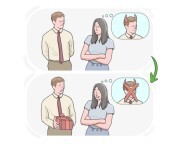
to ascertain that one's feeling, opinion, point of view, etc. is considered, understood, or has an impact
Close
Sign in
middle ground

a specific set of opinions, ideas, etc. on which conflicting parties agree; a position that is intermediate

Close
Sign in
to misjudge

to form an incorrect opinion or assessment about someone or something

Ex: I misjudged her abilities, and she performed much better than I expected. 
Close
Sign in
misjudgment

‌an incorrect or unjust opinion that is formed about someone

Close
Sign in
mistake
mistake
[noun]

an act or opinion that is wrong

Ex: Recognizing and admitting your mistakes is the first step toward personal growth. 
Close
Sign in
mistaken
mistaken
[Adjective]

(of a person) wrong in one's judgment, opinion, or belief

Ex: She was mistaken about the date of the event and missed it. 
Close
Sign in
mistakenly
mistakenly
[Adverb]

in a wrong or incorrect manner

Ex: She was mistakenly accused of breaking the vase. 
Close
Sign in
to mold
to mold
[Verb]

to shape or influence the way someone’s character or opinions develop

Ex: The teachings of his parents and mentors molded his worldview. 
Close
Sign in
to moralize

to be critical of people and tell them what is right and wrong in order to establish one’s superiority

Close
Sign in
to muzzle
to muzzle
[Verb]

to restrain someone from freely expressing their opinions in public

Close
Sign in
name
name
[noun]

a person's reputation or standing in the community

Ex: He worked hard to make a good name for himself. 
Close
Sign in
non-committally

‌in a way that deliberately refrains from giving a definitive answer or expressing one's opinion or intentions clearly

Close
Sign in
notice
notice
[noun]

(usually plural) a short review on a new play, book, film etc., especially one that is written exclusively for a newspaper or magazine

Ex: The film received rave notices from critics and quickly became a box office hit. 
Close
Sign in
not half
not half
[phrase]

used to emphasize a fact, opinion, statement or quality

Close
Sign in
LanGeek
Download LanGeek app
