pattern

Das Buch Headway - Obere Mittelstufe - Einheit 12

Hier finden Sie den Wortschatz aus Unit 12 im Headway Upper Intermediate Lehrbuch, wie "cushy", "digest", "apparent" usw.

Überprüfen

Lernkarten

Formen

Rechtschreibung

Quiz

Lernen beginnen
Headway - Upper Intermediate
to [take] time
to take time
[Phrase]

to need a significant amount of time to be able to happen, be completed, or achieved
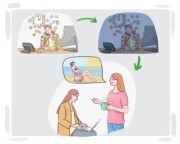
Ex: Completing the construction of a skyscraper takes a lot of time and careful planning. 
Schließen
Anmelden
get a life

used to tell someone to change their life style and start doing more exciting or important things

fang endlich an zu leben, such dir was Sinnvolleres

fang endlich an zu leben, such dir was Sinnvolleres

Ex: You have been refreshing the ticket page for six hours; get a life. 

Du aktualisierst seit sechs Stunden die Ticketseite; fang endlich an zu leben.

Schließen
Anmelden
to [kill] (the|) time

to spend or use time in a way that does not achieve anything or have a particular goal

Ex: While waiting for the train, she decided to kill time by reading a book. 
Schließen
Anmelden
third time lucky
third time lucky
[Interjektion]

used to express that after failing twice, one is bound to succeed on the third try

Drittes Mal lucky, Aller guten Dinge sind drei

Drittes Mal lucky, Aller guten Dinge sind drei

Ex: I’ve failed twice already, but third time lucky, I’m sure I’ll pass this test! 

Ich bin schon zweimal gescheitert, aber aller guten Dinge sind drei, ich bin sicher, ich werde diesen Test bestehen!

Schließen
Anmelden
no time to lose

used in a situation when there is only a little time to do something and one must be careful not to waste any of it
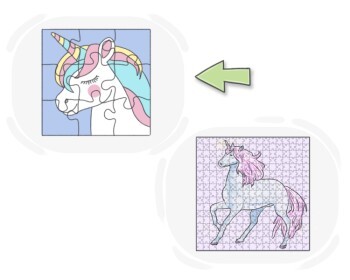
Ex: They realized there was no time to be lost and immediately began working on a solution. 
Schließen
Anmelden
cushy
cushy
[Adjektiv]

involving minimal effort or hardship

bequem, mühelos

bequem, mühelos

Ex: His cushy assignment allowed him to work from home and set his own schedule. 

Seine bequeme Aufgabe erlaubte es ihm, von zu Hause aus zu arbeiten und seinen eigenen Zeitplan festzulegen.

Schließen
Anmelden
to [come] to life

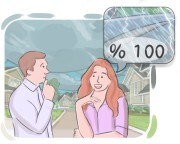
to become lively and energetic

lebendig werden, in Schwung kommen

lebendig werden, in Schwung kommen

Ex: The market comes to life every Saturday morning. 

Der Markt wird jeden Samstagmorgen lebendig.
Schließen
Anmelden
to [bet] {one's} (life|boots|bottom dollar)

to express strongly and confidently that something is undoubtedly true or will certainly happen

sich absolut sicher sein, felsenfest überzeugt sein

sich absolut sicher sein, felsenfest überzeugt sein

Ex: He'll deny everything, I'd bet my bottom dollar. 

Er wird alles abstreiten, da bin ich mir absolut sicher.

Schließen
Anmelden
better luck next time
[Interjektion]

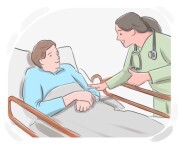
used to encourage someone who has just missed an opportunity or failed to succeed in a particular field

Beim nächsten Mal mehr Glück, Nächstes Mal mehr Glück

Beim nächsten Mal mehr Glück, Nächstes Mal mehr Glück

Ex: It didn’t go as planned, but remember, better luck next time. 

Es lief nicht wie geplant, aber denk daran, nächstes Mal mehr Glück.
Schließen
Anmelden
new lease of life

another chance for someone to become more healthy, energetic, or adopting a more optimistic view on life
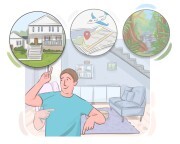
Ex: A break from work can offer a new lease of life, allowing you to return feeling recharged. 
Schließen
Anmelden
for the time being

for a limited period, usually until a certain condition changes

bis auf weiteres

bis auf weiteres

Ex: I'll take care of this task for the time being, but we should discuss a more permanent solution. 

Ich werde mich vorerst um diese Aufgabe kümmern, aber wir sollten eine dauerhaftere Lösung besprechen.

Schließen
Anmelden
to [stand] the test of time

to remain strong, valuable, or effective over a long period, despite changes or challenges
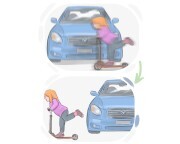
Ex: The teaching method has stood the test of time.  It is still used in schools today. 
Schließen
Anmelden
in the nick of time

just before it is too late

gerade noch rechtzeitig, im letzten Moment

gerade noch rechtzeitig, im letzten Moment

Ex: She called me in the nick of time, before I started worrying. 
Schließen
Anmelden
to [do] (anything|) for a quiet life

to be willing to do whatever it takes to avoid trouble or conflict and have a peaceful and stress-free existence
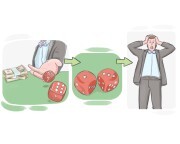
Ex: She does anything for a quiet life. 
Schließen
Anmelden
story of {one's} life

used to say that it is typical of a person to experience an unfortunate event

typisch mein Glück, das ist so typisch für mich

typisch mein Glück, das ist so typisch für mich

Ex: Every time I start saving money, something breaks.  Story of my life. 

Jedes Mal, wenn ich anfange zu sparen, geht irgendwas kaputt. Typisch mein Glück.

Schließen
Anmelden
to [run] the risk of {sth}

to be in or to get oneself into a situation that may result in an unpleasant or dangerous outcome

Gefahr laufen, das Risiko eingehen

Gefahr laufen, das Risiko eingehen

Ex: If we cut the budget again, we run the risk of losing experienced staff. 

Wenn wir das Budget erneut kürzen, laufen wir Gefahr, erfahrene Mitarbeiter zu verlieren.
Schließen
Anmelden
to carry out

to complete or conduct a task, job, etc.

durchführen, eine Aufgabe oder Arbeit erledigen

durchführen, eine Aufgabe oder Arbeit erledigen

Ex: The technician will carry out routine maintenance on the machinery to prevent any potential issues. 

Der Techniker wird durchführen routinemäßige Wartungsarbeiten an den Maschinen, um mögliche Probleme zu verhindern.

Schließen
Anmelden
research
research
[Nomen]

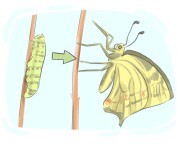
a careful and systematic study of a subject to discover new facts or information about it

Forschung
Forschung

Ex: The scientist conducted extensive research on the effects of climate change. 
Schließen
Anmelden
to become
to become
[Verb]

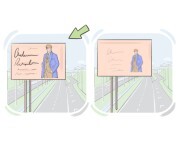
to start or grow to be

werden,  werden
werden, werden

Ex: How can I become a more confident individual? 
Schließen
Anmelden
apparent
apparent
[Adjektiv]

easy to see or notice

offensichtlich

offensichtlich

Ex: His apparent confusion indicated that he didn't understand the instructions. 

Seine offensichtliche Verwirrung deutete darauf hin, dass er die Anweisungen nicht verstand.

Schließen
Anmelden
to [take] {sth} into account

to consider something when trying to make a judgment or decision

etwas berücksichtigen, etwas in Betracht ziehen

etwas berücksichtigen, etwas in Betracht ziehen

Ex: Her experience should be taken into account, even if she doesn't have the formal qualifications. 

Ihre Erfahrung sollte berücksichtigt werden, auch wenn sie keine formalen Qualifikationen hat.

Schließen
Anmelden
to [get] {sth} going

to start or begin something, often with a sense of urgency or purpose
Ex: To get the class going, the teacher asked everyone to introduce themselves. 
Schließen
Anmelden
to suffer
to suffer
[Verb]

to experience and be affected by something bad or unpleasant

leiden, erdulden
leiden, erdulden

Ex: He suffered a lot of pain after the accident. 
Schließen
Anmelden
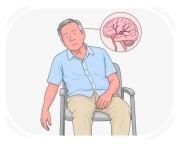
stroke
stroke
[Nomen]

a dangerous condition in which a person loses consciousness as a result of a blood vessel breaking open or becoming blocked in their brain, which could kill or paralyze a part of their body

Schlaganfall, Hirnschlag
Schlaganfall, Hirnschlag

Ex: Symptoms of stroke can include sudden numbness or weakness in the face, arm, or leg, especially on one side of the body. 
Schließen
Anmelden
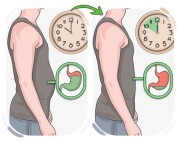
to digest
to digest
[Verb]

to break down food in the body and to absorb its nutrients and necessary substances

verdauen

verdauen

Ex: It takes time for the stomach to digest complex carbohydrates. 

Der Magen braucht Zeit, um komplexe Kohlenhydrate zu verdauen.

Schließen
Anmelden
to [break] the ice

to make two or more strangers get comfortable with each other and engage in a conversation

das Eis brechen, die Stimmung auflockern

das Eis brechen, die Stimmung auflockern

Ex: A little small talk can help break the ice between new coworkers. 

Ein bisschen Small Talk kann helfen, zwischen neuen Kollegen das Eis zu brechen.

Schließen
Anmelden
to [stand] on {one's} own (two|) feet

to be able to take care of oneself without needing any assistance from others

auf eigenen Beinen stehen, selbstständig sein

auf eigenen Beinen stehen, selbstständig sein

Ex: Stop solving every problem for him; he needs to stand on his own feet. 

Hör auf, jedes Problem für ihn zu lösen; er muss auf eigenen Beinen stehen.

Schließen
Anmelden
to grab
to grab
[Verb]

to attract and hold someone's attention or interest

fesseln, packen

fesseln, packen

Ex: The advertisement is designed to grab the viewer's attention. 
Schließen
Anmelden
to [follow] {one's} nose

to follow one's intuition instead of rules or what others say

auf sein Bauchgefühl hören, seinem Instinkt folgen

auf sein Bauchgefühl hören, seinem Instinkt folgen

Ex: He ignored everyone's advice and followed his nose into journalism. 

Er ignorierte den Rat aller und folgte seinem Instinkt in den Journalismus.
Schließen
Anmelden
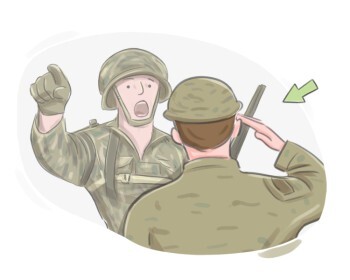
to follow
to follow
[Verb]

to act accordingly to someone or something's advice, commands, or instructions

folgen

folgen

Ex: He has trouble following complex directions. 
Schließen
Anmelden
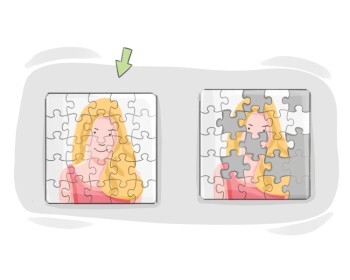
pattern
pattern
[Nomen]

the way according to which something normally happens or is done

Muster, Schema

Muster, Schema

Ex: She noticed a recurring pattern of behavior in her friend that indicated he was feeling stressed. 
Schließen
Anmelden
to put on
to put on
[Verb]

to gain weight, often in a short period of time

zunehmen, ansetzen

zunehmen, ansetzen

Ex: It's easy for me to put weight on if I don't exercise regularly. 

Es ist leicht für mich, Gewicht zuzunehmen, wenn ich nicht regelmäßig trainiere.
Schließen
Anmelden
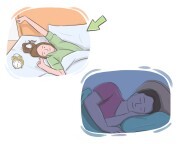
awake
awake
[Adjektiv]

not sleeping

Ex: He lay awake thinking about the next day's meeting. 
Schließen
Anmelden
to withdraw

to remove oneself from social interaction or avoid contact with others

zurückziehen, sich isolieren

zurückziehen, sich isolieren

Ex: As an introvert, she often needs to withdraw from social situations to recharge her energy. 
Schließen
Anmelden
that is life (for you|)

used to express acceptance or resignation to the way things are, particularly when faced with an unpleasant or difficult situation

Ex: Sometimes you try your hardest and still don't succeed.  That's life. 
Schließen
Anmelden
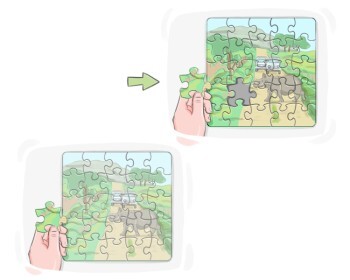
two (can|could) play (that|this|the) game

used to show one's confidence in dealing with another person's behavior and using it to their disadvantage

du bist nicht der Einzige, ich kann genauso zurückspielen

du bist nicht der Einzige, ich kann genauso zurückspielen

Ex: If you want to be petty, two can play that game. 

Wenn du kleinlich sein willst, bist du nicht der Einzige, der das kann.
Schließen
Anmelden
enough
enough
[Bestimmungswort]

to a necessary amount

genug, ausreichend

genug, ausreichend

Ex: We have enough food for everyone. 
Schließen
Anmelden
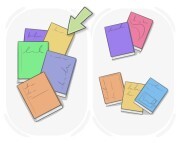
whole
whole
[Adjektiv]

including every part, member, etc.

ganz, vollständig
ganz, vollständig

Ex: She read the whole book in one weekend. 
Schließen
Anmelden
all
all
[Bestimmungswort]

used to refer to every number, part, amount of something or a particular group

all-

all-

Ex: He dedicated all his time to studying for the exam. 

Er widmete alle seine Zeit dem Lernen für die Prüfung.

Schließen
Anmelden
each
each
[Bestimmungswort]

used to refer to every one of two or more people or things, when you are thinking about them separately

jeder, jede

jeder, jede

Schließen
Anmelden
plenty
plenty
[Pronomen]

a plentiful or abundant amount of something

viel, reichlich

viel, reichlich

Ex: The farmer harvested plenty of apples this season, more than ever before. 
Schließen
Anmelden
a great deal
a great deal
[Phrase]

to a large extent

Ex: He appreciated your help a great deal and thanked everyone. 
Schließen
Anmelden
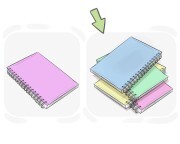
hardly
hardly
[Adverb]

to a very small degree or extent

kaum, fast nicht

kaum, fast nicht

Ex: he issue was hardly addressed in the initial stages of the discussion. 

Das Problem wurde in den Anfangsphasen der Diskussion kaum angesprochen.
Schließen
Anmelden
several
several
[Bestimmungswort]

used to refer to a number of things or people, more than two but not many

mehrer-

mehrer-

Ex: Several friends joined us for dinner last night. 

Mehrere Freunde schlossen sich uns gestern Abend zum Abendessen an.

Schließen
Anmelden
none
none
[Bestimmungswort]

not any of the members of a group of people or things

kein-

kein-

Ex: She asked for volunteers, but none of the employees were willing to stay late. 
Schließen
Anmelden
no
no
[Bestimmungswort]

used to say there is none of something

kein

kein

Ex: The recipe requires no sugar at all. 

Das Rezept erfordert keinen Zucker.

Schließen
Anmelden
few
few
[Bestimmungswort]

a small unspecified number of people or things

wenig-

wenig-

Ex: There are a few apples left in the basket. 

Es sind noch ein paar Äpfel im Korb.

Schließen
Anmelden
few
few
[Bestimmungswort]

a small unspecified number of people or things

wenig-

wenig-

Ex: There are a few apples left in the basket. 

Es sind noch ein paar Äpfel im Korb.

Schließen
Anmelden
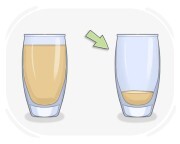
a little
a little
[Adverb]

used to indicate a small or limited amount of something, often uncountable

ein wenig, leicht

ein wenig, leicht

Ex: The room is a little cold today. 

Das Zimmer ist heute ein bisschen kalt.
Schließen
Anmelden
little
little
[Bestimmungswort]

used to indicate a small degree, amount, etc.

etwas
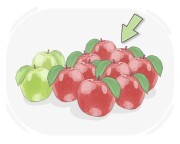
etwas

Ex: She showed little interest in the topic. 
Schließen
Anmelden
most
most
[Bestimmungswort]

used to refer to the largest number or amount

meist-

meist-

Ex: In the survey, most participants expressed satisfaction with the product. 

In der Umfrage äußerten die meisten Teilnehmer Zufriedenheit mit dem Produkt.

Schließen
Anmelden
to [get] the bug

to become interested or enthusiastic about something, often to the point of obsession

Ex: He didn’t like running at first, but he got the bug after his first marathon. 
Schließen
Anmelden
(such|what) a pain
such a pain
[Phrase]

someone or something that is irritating, troublesome, or causes inconvenience
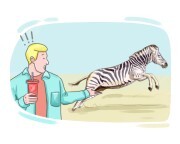
Ex: This traffic is such a pain—we're going to be late! 
Schließen
Anmelden
to [hit] {sb} like a ton of bricks

to experience the sudden, surprising, and overwhelming impact of something, that catches someone off guard and leaves them feeling stunned or overwhelmed

hart treffen, wie ein Schlag treffen

hart treffen, wie ein Schlag treffen

Ex: It hit me like a ton of bricks that I might never see that place again. 

Es traf mich hart, dass ich diesen Ort vielleicht nie wiedersehen würde.

Schließen
Anmelden
(and|) not before time (too|)

used to express relief that something has finally happened, after a long delay or period of waiting

Ex: They’ve fixed the road, and not before time—it’s been dangerous for months. 
Schließen
Anmelden
any old time
any old time
[Phrase]

at any convenient or available time, without the need for careful planning or scheduling

Ex: She’ll accept your invitation any old time if you ask her. 
Schließen
Anmelden
(that|this) [is] more like it

used to indicate satisfaction or approval with a change or improvement in a situation

Ex: After all the delays, this is more like it—we’re finally making progress. 
Schließen
Anmelden
fancy that
fancy that
[Interjektion]

used to express surprise, disbelief, or amazement about something that has just been said or observed

Stell dir das vor!, Das gibt's doch nicht!

Stell dir das vor!, Das gibt's doch nicht!

Ex: He’s the one who found the solution?  Fancy that, I wouldn’t have guessed. 

Er ist derjenige, der die Lösung gefunden hat? Stell dir das vor, das hätte ich nicht erraten.

Schließen
Anmelden
this and that

a variety of unspecified things or situations

Ex: We talked about this and that for hours, just catching up. 
Schließen
Anmelden
those were the days

used to refer nostalgically to a past time or era, often implying that the time being referred to was a better or more enjoyable time

Ex: I remember when we used to walk to school together every morning.  Those were the days. 
Schließen
Anmelden
that is all {~noun}

used to indicate that there is nothing more to say or do about a particular matter

Ex: We've made our decision, and that is all there is to it. 
Schließen
Anmelden
these things happen

used to say that unfortunate or unexpected events sometimes occur and that it is a natural part of life to experience them

Ex: I spilled coffee on my shirt—it happens, right? 
Schließen
Anmelden
to [be|have] one of those days

used to describe a day that is particularly difficult or frustrating

Ex: After the meeting, I felt like I was having one of those days where nothing works out. 
Schließen
Anmelden
these things are sent to try us

used to say that difficult or challenging situations are a natural part of life and are meant to test our strength and resilience

Ex: The long hours at work can be exhausting, but these things are sent to try us and help us grow. 
Schließen
Anmelden
to [leave] it at that

to stop talking about or discussing something, especially when there is no need for further elaboration or action

Ex: We had a disagreement, but let’s leave it at that and move on. 
Schließen
Anmelden
how does {sth} grab you?

used to ask for someone's opinion or reaction to a particular idea, proposal, or suggestion

Ex: I’ve got a few designs for the logo.  How does this one grab you? 
Schließen
Anmelden
that is the spirit

used to encourage or praise someone for their positive attitude or determination in a difficult or challenging situation

Ex: He tackled every obstacle with optimism.  That is the spirit! 
Schließen
Anmelden
to [have] (a|the|this) feeling

to have an intuition or a premonition about something without any logical or rational explanation

Ex: I have a feeling it will be a good day. 
Schließen
Anmelden
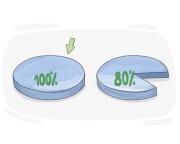
to come to

to reach a conclusion or make a choice after careful consideration and evaluation of various options or possibilities

gelangen zu, kommen zu

gelangen zu, kommen zu

Ex: The board of directors met to discuss the proposal and came to a resolution. 

Der Vorstand traf sich, um den Vorschlag zu besprechen, und kam zu einer Resolution.
Schließen
Anmelden
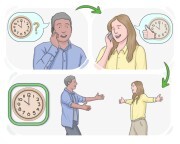
dead
dead
[Adverb]

to an absolute or complete extent

völlig, absolut

völlig, absolut

Ex: He was dead opposed to the idea from the start. 

Er war von Anfang an völlig gegen die Idee.
Schließen
Anmelden
on time
on time
[Adverb]

exactly at the specified time, neither late nor early

pünktlich

pünktlich

Ex: The train arrived on time at the station. 

Der Zug kam pünktlich am Bahnhof an.

Schließen
Anmelden
(about|high) time
about time
[Phrase]

used to indicate that something should have happened or been done earlier

höchste Zeit, längst überfällig

höchste Zeit, längst überfällig

Ex: It is high time we stopped pretending everything is fine. 

Es ist höchste Zeit, dass wir aufhören, so zu tun, als sei alles in Ordnung.

Schließen
Anmelden
LanGeek
LanGeek-App herunterladen