
Elenco di Parole Livello C1 - Storia
Qui imparerai alcune parole in inglese sulla storia e sugli artefatti, come "carrozza", "dungeon", "abolizione", ecc., preparate per gli studenti di livello C1.
Revisione
Flashcard
Ortografia
Quiz


a collection of records or documents preserved for their historical value, or the place where such materials are kept

archivio
the study of books' history, their classification, production, editions, etc.
bibliografia
Il corso sulla bibliografia copre lo sviluppo della miniatura dei manoscritti e delle tecniche di illustrazione.
the act of formally and completely ending a system, practice, institution, or law
abolizione
an area where a battle is being or was fought
battaglia
Gli archeologi hanno scoperto manufatti sepolti sotto il campo di battaglia, gettando luce sulle tecniche di guerra antiche.
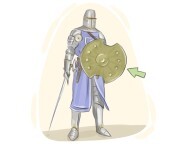
a broad piece of armor carried on the arm to protect the body from weapons
scudo
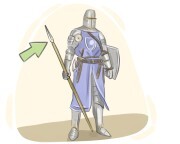
a weapon with a long handle and a metal pointed tip, used for fighting and fishing in the past
lancia
Durante la caccia, i membri della tribù hanno lavorato insieme per circondare il cinghiale selvatico e attaccarlo con lance.
a small-sized ax used by Native Americans for fighting or as a tool
tomahawk, ascia da guerra dei nativi americani
L'esploratore ammirava la fattura del tomahawk ornatamente decorato in mostra al centro culturale.
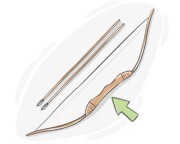
a curved weapon with a string stretched between its ends, used for shooting arrows
inchino
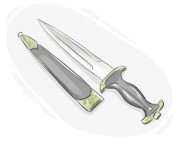
a short weapon with a pointed blade
pugnale
Nei tempi antichi, i pugnali venivano usati per il combattimento ravvicinato e come strumenti per le attività quotidiane.
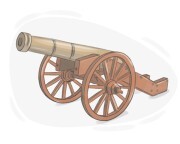
a large and powerful gun that was used in the past to fire stone or metal balls
cannone
I cannoni hanno svolto un ruolo cruciale nel determinare l'esito delle battaglie nel corso della storia.
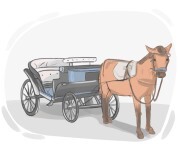
a wheeled vehicle, usually with four wheels, that is pulled by one or more horses and carries people
carrozza
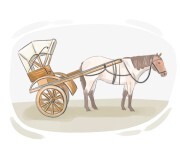
a vehicle with two wheels, drawn by horses, used in ancient times for warfare and racing
carro
Le corse dei carri erano uno sport popolare nell'antica Roma, attirando grandi folle al Circus Maximus.
an underground room in which prisoners were confined, particularly in a castle
Dungeon
Ha esplorato il dungeon durante il tour del castello, immaginando le difficoltà di coloro che vi erano imprigionati.
a strong defensive building or enclosed position designed to resist military attack
forte
someone who forcibly takes control of a city or country and its citizens
conquistatore
Gengis Khan, un rinomato conquistatore, espanse l'Impero mongolo in vaste regioni dell'Asia e dell'Europa.
a person who takes over a job, position, title, or role after someone else
successore
the period during which a particular monarch rules
Regno
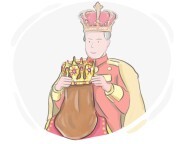
to place a crown on someone's head in a ceremony so that person officially becomes a king or queen
incoronare
a farmer who owns or rents a small piece of land, particularly in the past or in poorer countries
contadino
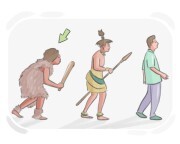
belonging to an early stage in the evolutionary development of humans or animals
primitivo
able to be dated to a specific time
databile
I manufatti scoperti nella tomba erano facilmente databili grazie alle iscrizioni che indicavano il regno di un faraone specifico.
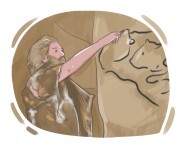
relating or belonging to the time before history was recorded
preistorico
I ricercatori utilizzano la datazione al carbonio per determinare l'età dei manufatti preistorici.
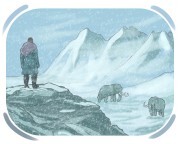
one of the periods in history when ice covered large parts of the world
glaciale
Le prove geologiche suggeriscono che l'era glaciale ha plasmato molti degli attuali paesaggi ed ecosistemi della Terra.
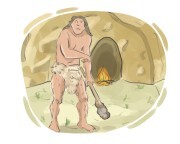
the early period of human history when people used things such as stone, horn, bone, etc. to make tools
età della pietra
La transizione dall'età della pietra all'età del bronzo ha segnato un significativo cambiamento tecnologico e culturale nella storia umana.
the period when iron was not discovered and people used bronze to make tools
bronzo
Il commercio fiorì durante l'età del bronzo, mentre le culture si scambiavano beni in bronzo, idee e innovazioni su vastissime distanze.
the period that began about 1100 BC when people used iron tools for the first time
Età del ferro
L'Età del Ferro portò cambiamenti nelle strutture sociali e nel commercio, poiché il ferro divenne una risorsa preziosa e ampiamente utilizzata.
an idealized or imagined period of peace, prosperity, and happiness
età dell'oro
Il villaggio sembrava intrappolato in un età dell'oro senza tempo di semplicità.
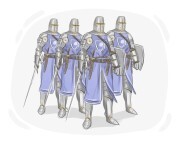
belonging or related to the Middle Ages, the period in European history from roughly the 5th to the 15th century
medievale
Il suo romanzo è ambientato in un villaggio medievale, catturando lo stile di vita e le credenze di quel tempo.
a philosophical movement in the late 17th and 18th centuries that emphasized reason and science were of more importance than tradition and religion
schiarimento
L'Illuminismo ha avuto un profondo impatto sul pensiero politico, influenzando le idee di democrazia e diritti individuali.
a war that is between people who are in the same country
guerra civile
Le guerre civili tipicamente nascono da conflitti interni su differenze politiche, sociali o economiche all'interno di una nazione.
relating to a colony, colonial rule, or colonialism
coloniale
relating to an empire or to an emperor or empress
imperiale
a collection of ancient myths, particularly one that belongs to a group of people and their history, etc.
mitologia
Molte culture in tutto il mondo hanno la propria mitologia, che riflette la loro storia, valori e visione del mondo.
the period of time in the 18th and 19th centuries that machines were used for the first time for mass production of goods, started in Britain
rivoluzione industriale
La Rivoluzione Industriale ha portato profondi cambiamenti economici, sociali e tecnologici che continuano a plasmare il mondo moderno.
a title used for ancient Egyptian rulers
Faraone
Le iscrizioni geroglifiche sui muri dei templi e sui monumenti spesso glorificavano i successi e lo status divino dei faraoni.
the study of civilizations of the past and historical periods by the excavation of sites and the analysis of artifacts and other physical remains
Archeologia
Il campo dell'archeologia include varie sottodiscipline come l'archeologia marittima, l'archeologia storica e la bioarcheologia.
all family members of a person over several generations, particularly a notable person
lignaggio, discendenza
Il genetista ha studiato la discendenza reale per tracciare tratti ereditari e condizioni mediche attraverso più generazioni.
a man-made object, tool, weapon, etc. that was created in the past and holds historical or cultural significance
artefatto
Questo manufatto, una statua splendidamente scolpita, è stato un ritrovamento significativo che ha aiutato a datare il sito storico.
(of a country or place) damaged or destroyed severely as an aftermath of war
devastato dalla guerra, distrutto dalla guerra
I giornalisti hanno riportato dal cuore della zona devastata dalla guerra, documentando l'impatto del conflitto in corso sui civili.
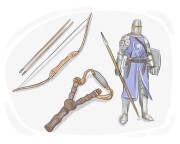
any weapon that is capable of hitting a target at a distance beyond the reach of hands
arma a distanza, arma da lancio
I cacciatori nella natura si affidavano alle loro fidate balestre come arma a distanza silenziosa ed efficace per abbattere la selvaggina.
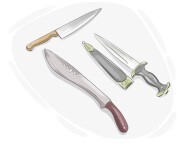
a hand-held weapon such as a sword, spear, etc., used when one attacks enemies at a close range
arma da mischia, arma corpo a corpo
I guerrieri tribali nei tempi antichi forgiavano lance e asce come versatili armi da mischia per la caccia e la difesa.
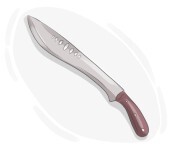
a long knife that has a wide and heavy blade, used as a weapon or a tool to cut plants and trees
machete, coltello lungo
La lama affilata del machete lo rende un'arma formidabile in situazioni di autodifesa e sopravvivenza.
relating to a city-state in ancient Greece called Sparta or its people
relativo alla città-stato di Sparta nell'antica Grecia o al suo popolo, spartano
Le donne spartane godevano di più diritti e libertà rispetto alle altre città-stato greche, partecipando attivamente alla vita pubblica e allo sport.
| Elenco di Parole Livello C1 | |||
|---|---|---|---|
| Cambiare | Astronomia | Legge | Matematica |
| Avverbi | Viaggio | Storia | |
