
Listă de Cuvinte Nivel C1 - Istorie și Artefacte
Aici vei învăța câteva cuvinte în engleză despre istorie și artefacte, cum ar fi "trăsură", "temniță", "abolire", etc., pregătite pentru elevii de nivel C1.
Revizuire
Fișe de studiu
Ortografie
Chestionar


a place or a collection of records or documents of historical importance

arhivă, depozit de documente istorice
Arhiva bibliotecii conține manuscrise rare și documente istorice care datează de secole în urmă.
the study of books' history, their classification, production, editions, etc.
bibliografie, studiul cărților
Bibliografia, ca studiu al producției și diseminării cărților de-a lungul istoriei, cuprinde evoluția tehnologiilor de tipărire și a practicilor editoriale.
the act of formally and completely ending a system, practice, institution, or law
abolire
Abolirea sclaviei în secolul al XIX-lea a marcat un pas semnificativ în lupta pentru drepturile omului.
an area where a battle is being or was fought
câmp de luptă, teren de luptă
Soldații au înaintat cu prudență pe câmpul de luptă, găsindu-și adăpost în spatele copacilor și stâncilor.
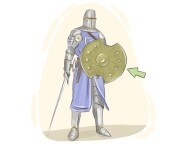
a large piece of armor made of strong material, carried on the arm by soldiers in the past
scut, pavăză
Cavalerul și-a ridicat scutul pentru a devia sabia inamicului în timpul bătăliei.
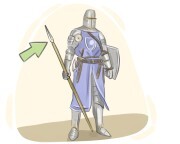
a weapon with a long handle and a metal pointed tip, used for fighting and fishing in the past
suliță, harpon
Vânătorul a folosit o suliță pentru a prinde pește în râu.
a small-sized ax used by Native Americans for fighting or as a tool
tomahawk, topor mic folosit de amerindieni pentru luptă sau ca unealtă
Războinicul nativ american a mânuit cu îndemânare un tomahawk în luptă.
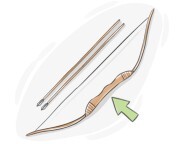
a curved weapon joined at both ends by a string, capable of shooting arrows
arc, arc de săgeți
Arcașul și-a întins arcul și a așezat o săgeată, țintind cu grijă la ținta îndepărtată.
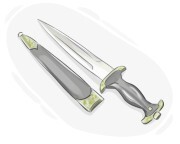
a short weapon with a pointed blade
pumnal, dagger
Asasinul a ascuns un pumnal în mantia lui în timp ce se apropia de țintă.
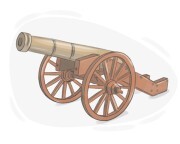
a large and powerful gun that was used in the past to fire stone or metal balls
tun, piesa de artilerie
Cetatea apăra orașul cu rânduri de tunuri aliniate de-a lungul zidurilor sale.
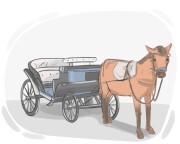
a vehicle with usually four wheels, pulled by one or more horses
trăsură, căruță
Eleganta trăsură se rostogoli pe strada pavată, trasă de o pereche de cai albi.
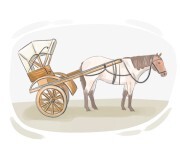
a vehicle with two wheels, drawn by horses, used in ancient times for warfare and racing
car, căruță
Carul a alergat în jurul arenei, încurajat de spectatori la jocurile antice.
an underground room in which prisoners were confined, particularly in a castle
temniță, beciul castelului
Temnița din castelul vechi era umedă și întunecată, cu pereți groși de piatră.
a building or group of buildings used by troops to protect an area
fort, cetate
Soldații staționați la fort au apărat dealul strategic de atacurile inamice.
someone who forcibly takes control of a city or country and its citizens
cuceritor
Alexandru cel Mare este amintit ca un legendar cuceritor care a creat unul dintre cele mai mari imperii din istorie.
a person or thing that is next in line to someone or something else
succesor, moștenitor
CEO-ul și-a anunțat retragerea și l-a numit pe adjunctul său de mult timp ca succesor al său.
the length of time during which a king, queen, or other monarch rules
domnie, domnie
Domnia regelui Henric al VIII-lea a fost marcată de tulburări politice și religioase.

to place a crown on someone's head in a ceremony so that person officially becomes a king or queen
încorona
În elaborata ceremonie de încoronare, Arhiepiscopul va încorona noul monarh.
a farmer who owns or rents a small piece of land, particularly in the past or in poorer countries
țăran, agricultor
Țăranul a lucrat neobosit în câmpuri, cultivând recolte pentru a-și hrăni familia și a le vinde pe piață.
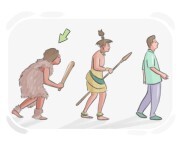
characteristic of an early stage of human or animal evolution
primitiv, arhaic
Picturile rupestre înfățișează viața omului primitiv.
able to be dated to a specific time
databil, care poate fi datat
Fragmentelor de ceramică veche li s-a putut data epoca bronzului, oferind informații valoroase despre civilizația umană timpurie.
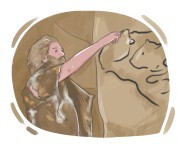
relating or belonging to the time before history was recorded
preistoric, antepopor
Arheologii au descoperit artefacte preistorice în peșteră.
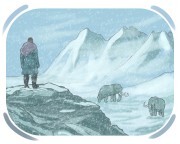
one of the periods in history when ice covered large parts of the world
epoca glaciară, era glaciară
În timpul ultimei epoci glaciare, ghețarii vaste acopereau o mare parte din America de Nord și Europa.
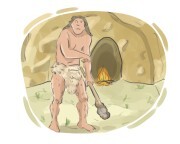
the early period of human history when people used things such as stone, horn, bone, etc. to make tools
epoca de piatră, era pietrei
Epoca de piatră a fost caracterizată prin utilizarea uneltelor simple de piatră și dezvoltarea primelor societăți umane.
the period when iron was not discovered and people used bronze to make tools
Epoca Bronzului, Perioada Bronzului
Epoca Bronzului a marcat un avans semnificativ în tehnologia umană cu dezvoltarea abilităților de prelucrare a metalelor.
the period that began about 1100 BC when people used iron tools for the first time
Epoca Fierului, Perioada Fierului
Epoca Fierului a urmat Epoca Bronzului și a fost marcată de utilizarea largă a fierului pentru unelte și arme.
an idealized or imagined period of peace, prosperity, and happiness
epoca de aur, vârsta de aur
Romanul a înfățișat o epocă de aur a armoniei în regat.
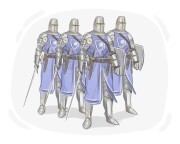
belonging or related to the Middle Ages, the period in European history from roughly the 5th to the 15th century
medieval, aparținând Evului Mediu
Literatura medievală, cum ar fi poveștile despre Regele Arthur, continuă să captiveze cititorii moderni.
a philosophical movement in the late 17th and 18th centuries that emphasized reason and science were of more importance than tradition and religion
Iluminismul, Epoca Luminilor
Iluminismul a contestat autoritatea tradițională și a promovat rațiunea ca bază pentru înțelegerea lumii.
a war that is between people who are in the same country
război civil, conflict intern
Războiul civil american a fost purtat între statele din Nord (Uniune) și statele din Sud (Confederație) pe probleme de sclavie și drepturi ale statelor.
related to a country that controls another territory or country
colonial
Perioada colonială a văzut schimburi culturale și conflicte semnificative între popoarele indigene și colonizatori.
related to the characteristics or actions of an empire or emperor
imperial, împărătesc
Dinastia imperială a condus vastelor teritorii și popoare diverse.
a collection of ancient myths, particularly one that belongs to a group of people and their history, etc.
mitologie
Mitologia greacă include povești despre zei, zeițe și eroi precum Zeus, Atena și Hercule.
the period of time in the 18th and 19th centuries that machines were used for the first time for mass production of goods, started in Britain
revoluția industrială, Revoluția Industrială
Revoluția Industrială a transformat societatea prin introducerea mașinilor și a puterii aburului în procesele de fabricație.
a title used for ancient Egyptian rulers
faraon, suveran al Egiptului antic
Faraonii Egiptului antic erau considerați zei-regi, conducând cu autoritate absolută asupra regatului lor.
the study of civilizations of the past and historical periods by the excavation of sites and the analysis of artifacts and other physical remains
arheologie, studiul civilizațiilor antice
Arheologia este studiul istoriei umane și preistoriei prin excavarea și analiza artefactelor, siturilor și altor rămășițe fizice.
all family members of a person over several generations, particularly a notable person
linie de sânge, descendență
Influența politică a familiei Kennedy se întinde pe generații, reflectând un neam vestit în istoria americană.
a man-made object, tool, weapon, etc. that was created in the past and holds historical or cultural significance
artefact, obiect fabricat
Artefactele fabricării timpurii a uneltelor, cum ar fi cuțitele de piatră și vârfurile de proiectile, arată ingeniozitatea și spiritul inventiv al oamenilor paleolitici.
(of a country or place) damaged or destroyed severely as an aftermath of war
devastat de război, distrus de război
Organizația umanitară a oferit ajutor familiilor strămutate din casele lor distruse de război.
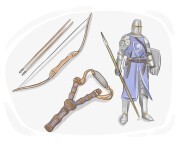
any weapon that is capable of hitting a target at a distance beyond the reach of hands
armă la distanță, armă de aruncare
Arma preferată de distanță a arcașului era un arc lung fin lucrat, capabil să lovească ținte de la o distanță mare.
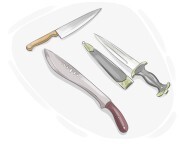
a hand-held weapon such as a sword, spear, etc., used when one attacks enemies at a close range
armă de luptă corp la corp, armă melee
Cavalerul mânuia o sabie lată ca principală sa armă de luptă corp la corp în luptă.
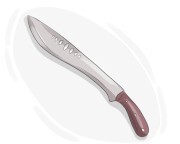
a long knife that has a wide and heavy blade, used as a weapon or a tool to cut plants and trees
maceta, cuțit lung
Fermierul a folosit o maceta pentru a curăța tufișurile dese și vegetația de pe terenul său.
relating to a city-state in ancient Greece called Sparta or its people
referitor la orașul-stat Sparta din Grecia antică sau la poporul său, spartan
Războinicii spartani erau cunoscuți pentru antrenamentul lor riguros și stilul de viață disciplinat.
| Listă de Cuvinte Nivel C1 | |||
|---|---|---|---|
| Schimbări și Impact | Astronomie | Drept și Criminalitate | Matematică |
| Adverbe | Călătorie | Istorie și Artefacte | |
