


일상 생활 - Motion & Departure

Here you will find slang for motion and departure, capturing terms used to describe movement, leaving, or heading out in casual conversation.

review-disable

리뷰

flashcard-disable

플래시카드

spelling-disable

철자법

quiz-disable

퀴즈

학습 시작
일상 생활
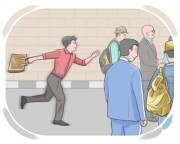
to bail [동사]
اجرا کردن

뛰쳐나가다

Ex: She was ready to bail from the meeting as soon as it started running late .

회의가 지체되기 시작하자마자 그녀는 도망칠 준비가 되어 있었다.
to swerve [동사]
اجرا کردن

피하다

Ex: I tried to talk to him , but he swerved me like I was n't even there .

나는 그에게 말을 걸려고 했지만, 그는 마치 내가 거기에 없는 것처럼 나를 피했다.

on the fly [부사]
اجرا کردن

즉석에서

Ex: She fixed the presentation on the fly before the meeting started .

그녀는 회의가 시작되기 전에 프레젠테이션을즉석에서 수정했다.

اجرا کردن

살금살금 다가가다

Ex:

그들은 어젯밤에 라이벌 크루에게 몰래 접근했다.

to bag up [동사]
اجرا کردن

가방에 담다

Ex:

나는 내 모든 도구를 포장해야 합니다.

to dip [동사]
اجرا کردن

슬쩍 빠지다

Ex: He dipped when things got awkward .

그는 상황이 어색해졌을 때 도망쳤다.

to bounce [동사]
اجرا کردن

슬쩍 빠지다

Ex: We bounced before the party ended .

우리는 파티가 끝나기 전에 도망쳤다.

to pull up [동사]
اجرا کردن

들르다

Ex: He pulled up outside my house .

그는 내 집 앞에서 차를 세웠다.

اجرا کردن

들르다

Ex:

우리는 새로운 장소를 보기 위해 들릅니다.

to drop in [동사]
اجرا کردن

들르다

Ex:

집에 가는 길에 들르는 것을 망설이지 마세요; 이야기 나누고 싶어요.

اجرا کردن

to leave or go away, often used as a dismissive command

Ex:
to scram [동사]
اجرا کردن

급히 떠나다

Ex: Faced with unexpected rain , the picnic-goers had to scram and find shelter under nearby trees .

예상치 못한 비를 맞이하자, 피크닉을 즐기던 사람들은 급히 도망쳐 근처 나무 아래로 피난처를 찾아야 했습니다.