
Științe Naturale SAT - Electromagnetism și Mecanică
Aici vei învăța câteva cuvinte în engleză legate de electromagnetism și mecanică, cum ar fi "cuplu", "anod" și "circuit", de care vei avea nevoie pentru a trece de SAT-urile tale.
Revizuire
Fișe de studiu
Ortografie
Chestionar

the measure of electric potential difference between two points in a circuit, expressed in volts

tensiune, voltaj
Tensiunea pe condensator a atins un vârf de 5V.
an electrical component designed to limit or control the flow of electric current in a circuit, typically by providing resistance
rezistor, rezistență
În circuitele electronice, rezistoarele sunt utilizate în mod obișnuit pentru a regla fluxul de curent și a proteja componentele sensibile.
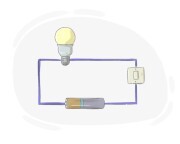
the complete circle through which an electric current flows, typically consists of the source of electric energy
circuit
Circuitul electric este conceput pentru a alimenta becul când comutatorul este pornit.
a solid substance that conducts electricity or heat better than insulators, but not as well as most metals
semiconductor, semiconductoare
a phenomenon where certain materials conduct electricity without resistance when cooled to extremely low temperatures
supraconductibilitate, superconductibilitate
Oamenii de știință cercetează noi materiale pentru a obține supraconductibilitatea la temperaturi mai ridicate.
to apply an electric charge to a conductor
electrifica, încărca electric
Tehnicianul a folosit un dispozitiv special pentru a electrifica tija metalică pentru experiment.
a conductor through which electricity travels to or from an object, such as batteries
electrod, conductor electric
a form of electricity generated by friction between two materials, resulting in an imbalance of electric charges on their surfaces
electricitate statică, electrostatică
Când îți freci picioarele de un covor, se acumulează electricitate statică, provocând un șoc atunci când atingi mânerul ușii.
(of a battery or device) capable of being supplied with electrical power again
reîncărcabil, cu posibilitate de reîncărcare
Lampa funcționează cu baterii reîncărcabile.
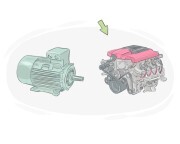
a machine that produces electricity by converting mechanical energy into electrical energy
generator, alternator
Generatorul hidroelectric utilizează puterea apei curgătoare pentru a produce energie electrică pentru comunitățile din apropiere.
a positively charged electrode in an electrical device where oxidation occurs, resulting in the release of electrons
anod, electrod pozitiv
Anodul tubului de raze X emite electroni atunci când este încălzit, producând raze X pentru imagistica medicală.
a negatively charged electrode within an electrical device, from which electrons flow out into the external circuit
catod, electrod negativ
Catodul bateriei furnizează electroni circuitului extern atunci când dispozitivul este în uz.
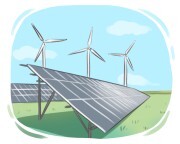
a device that converts the energy of the sun into electricity
celulă solară, fotocelulă
O celulă solară, cunoscută și sub numele de celulă fotovoltaică, convertește direct lumina solară în electricitate.
the amount of solar energy received per unit area on Earth's surface
iradiație solară, radiație solară
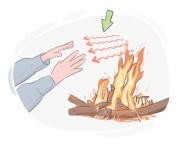
energy transmitted through space or matter in the form of waves or particles
radiație, iradiere
Soarele emite radiație care încălzește Pământul.
related to the technology that turns sunlight directly into electricity
fotovoltaic, referitor la tehnologia care transformă lumina solară direct în electricitate
Panourile solare folosesc celule fotovoltaice pentru a converti lumina solară în electricitate.
referring to the combined interaction of electric and magnetic fields, often associated with waves or radiation
electromagnetic, referitor la interacțiunea combinată a câmpurilor electrice și magnetice
Lumina este o undă electromagnetică care poate călători prin vid.
an invisible area around a magnetic object where magnetic forces can attract or repel other objects
câmp magnetic, zonă magnetică
Pământul are un câmp magnetic care ajută la ghidarea navigației busolelor.
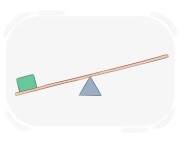
a long rigid bar that is put under a heavy object in order to move it
pârghie, pied de cabra
A folosit o pârghie pentru a ridica piatra grea de pe sol.
a point or support on which a lever pivots or rotates in order to lift or move objects
pivot, punct de sprijin
Scândura a funcționat ca punct de sprijin pentru leagăn, permițând copiilor să se alterneze urcând și coborând.
the rapid back-and-forth movement of an object
vibrație, oscilație
Vibrația telefonului pe masă a alertat-o despre un apel primit.
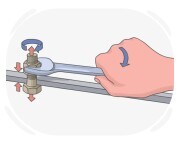
a rotational force measured in newton-meters or foot-pounds
cuplu, moment de forță
Cheia a aplicat un cuplu pentru a slăbi piulița încăpățânată de pe șurub.
a measure of a spring's stiffness, indicating how much force is needed to stretch or compress it
constanta elastică, rigiditatea arcului
a mass used to provide balance to another mass
contragreutate, masă de echilibrare
Liftul folosește un contragreutate pentru a ajuta la ridicarea și coborârea mașinii în mod uniform.
having a speed greater than that of sound
supersonic, ultrasonic
Avionul de luptă poate zbura la viteze supersonice, ceea ce îl face foarte agil în luptele aeriene.
(physics) the increase in velocity over time
accelerație, creșterea vitezei
Accelerația măsoară cât de repede se schimbă viteza unui obiect.
the constant speed reached by a falling object when the drag force equals the gravitational force pulling it downward, resulting in no further acceleration
viteză terminală, viteză limită
Parașutiștii ating viteza terminală în timpul căderii libere înainte de a deschide parașutele.
the study of the design, development, and operation of aircrafts, focusing on principles of aerodynamics, propulsion, and material science
aviație, aeronautică
a branch of science and engineering that deals with the mechanical properties of liquids, particularly their behavior in confined spaces and under pressure
hidraulică, mecanica fluidelor
Multe unelte agricole, cum ar fi tractoarele și plugurile, folosesc hidraulica pentru a efectua diverse sarcini pe câmp.
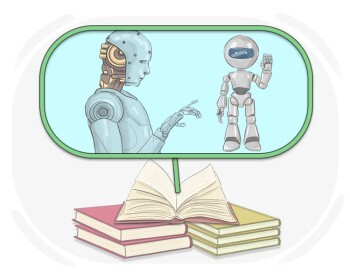
an area of technology that is concerned with the study or use of robots
robotica, știința roboților
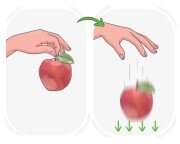
(physics) the universal force of attraction between any pair of objects with mass
gravitație
Gravitația este ceea ce menține planetele pe orbită în jurul Soarelui și Luna pe orbită în jurul Pământului.
