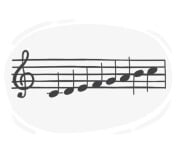

音乐 - 音乐元素

在这里,你将学习一些与音乐元素相关的英语单词,如“音阶”、“调性”和“颤音”。

review-disable

审查

flashcard-disable

闪卡

spelling-disable

拼写

quiz-disable

测验

开始学习
音乐
pitch [名词]
اجرا کردن

音高

Ex:

小提琴手演奏了一个高音调,以在作品中营造出一种紧迫感。

scale [名词]
اجرا کردن

音阶

Ex: The guitarist practiced various scales to improve their finger dexterity and knowledge of musical theory .

吉他手练习了各种音阶,以提高手指的灵活性和音乐理论的知识。

mode [名词]
اجرا کردن

调式

Ex: Modal interchange involves borrowing chords from different modes to create harmonic interest .

模态互换涉及从不同的模式借用和弦以创造和声兴趣。

dissonance [名词]
اجرا کردن

不和谐音

Ex: The chord 's dissonance added an unsettling feeling to the music .

和弦的不和谐音为音乐增添了一种不安的感觉。

consonance [名词]
اجرا کردن

协和音

Ex:

协和音赋予了作品一种平静的效果。

measure [名词]
اجرا کردن

小节

Ex: Each measure in the composition had a distinct rhythmic pattern .

作品中的每个小节都有一个独特的节奏模式。

interval [名词]
اجرا کردن

音程

Ex: She practiced playing intervals to improve her sight-reading skills .

她练习演奏音程以提高她的视奏技能。

motif [名词]
اجرا کردن

a short musical idea or pattern that is repeated or developed within a composition

Ex: Beethoven 's Fifth Symphony is built around a four-note motif .
step [名词]
اجرا کردن

Ex: The melody ascended by step , creating a smooth and sequential progression of notes .

旋律步上升,创造出音符流畅而连续的进行。

harmony [名词]
اجرا کردن

和声

Ex: The band 's tight harmony added depth to their performance , enhancing the overall musical experience .

乐队紧密的和声为他们的表演增添了深度,提升了整体的音乐体验。

melody [名词]
اجرا کردن

旋律

Ex: She hummed the melody to herself as she walked down the street , lost in thought .

她一边走在街上,一边沉浸在思绪中,哼着旋律给自己听。

rhythm [名词]
اجرا کردن

节奏

Ex: The drummer set a steady rhythm for the band .

鼓手为乐队设定了一个稳定的节奏

timbre [名词]
اجرا کردن

音色

Ex: A violin and a flute playing the same note have different timbres .

演奏相同音符的小提琴和长笛具有不同的音色

beat [名词]
اجرا کردن

the fundamental unit of time that forms the basis of musical rhythm
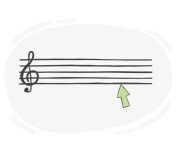
Ex: The composer emphasized the first beat of each bar .
harmonic [名词]
اجرا کردن

泛音

Ex:

小提琴手仔细调整了每根弦,以产生清晰而 vibrant 的谐波

stave [名词]
اجرا کردن

五线谱

Ex: Each stave in the score represents a different instrument or vocal part in the ensemble .

乐谱中的每个五线谱代表合奏中不同的乐器或声部。

downbeat [名词]
اجرا کردن

强拍

Ex: Jazz drummers often accentuate the downbeat with a powerful stroke on the bass drum , anchoring the rhythm of the ensemble .

爵士鼓手经常用底鼓上的强力一击来强调下拍,从而固定乐队的节奏。

tone [名词]
اجرا کردن

音调

Ex: The musician experimented with different tones to find the best one for the piece .

音乐家尝试了不同的音调,以找到最适合这首曲子的。

اجرا کردن

自然音阶

Ex: The diatonic scale is characterized by its stepwise arrangement of tones and semitones , providing a framework for melodies and harmonies .

自然音阶以其音调和半音逐步排列为特征,为旋律和和声提供了框架。

discord [名词]
اجرا کردن

不和谐

Ex: The composer intentionally used discord to create a sense of tension .

作曲家故意使用不和谐音来制造紧张感。

unison [名词]
اجرا کردن

齐奏

Ex: The violins played the melody in unison , emphasizing the melody 's clarity and strength .

小提琴以齐奏的方式演奏了旋律,强调了旋律的清晰和力量。

riff [名词]
اجرا کردن

连复段

Ex: The bassist improvised a funky riff during the jam session .

贝斯手在即兴演奏会上即兴演奏了一个放克的即兴重复段

tonality [名词]
اجرا کردن

调性

Ex: Baroque composers often employed tonality to structure their compositions around clear harmonic progressions and cadences .

巴洛克作曲家经常使用调性来围绕清晰的和声进行和终止式来构建他们的作品。

phrasing [名词]
اجرا کردن

乐句处理

Ex: Jazz improvisers focus on creative phrasing , using rhythmic variation and articulation to convey their musical ideas .

爵士即兴演奏者专注于创造性的乐句处理,利用节奏变化和发音来表达他们的音乐想法。

phrase [名词]
اجرا کردن

乐句

Ex: The pianist shaped the phrase with careful attention to dynamics and articulation , creating a sense of musical continuity .

钢琴家通过仔细注意动态和发音来塑造乐句,创造出一种音乐连续性的感觉。

tremolo [名词]
اجرا کردن

颤音

Ex: The guitarist used tremolo to add texture and intensity to the chord progression .

吉他手使用颤音为和弦进行增添了质感和强度。

vibrato [名词]
اجرا کردن

颤音

Ex: The cellist 's vibrato enriched the tone of the melody , imbuing it with depth and character .

大提琴手的颤音丰富了旋律的音调,赋予它深度和特色。

form [名词]
اجرا کردن

形式

Ex: Pop songs often follow a verse-chorus form , with repeated sections that create familiarity and catchiness .

流行歌曲通常遵循一种形式,即主歌-副歌,通过重复的部分创造出熟悉感和吸引力。