
250 Most Common English Phrasal Verbs - Top 101 - 125 Phrasal Verbs
Here you are provided with the part 5 of the list of the most common phrasal verbs in English such as "keep up", "go after", and "care for".
Review
Flashcards
Forms
Spelling
Quiz
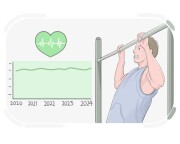
to preserve something at a consistently high standard, price, or level

(of a portion or piece) to become detached or separated from a larger whole

to take something from someone so that they no longer have it

to use a sharp object like scissors or a knife on something to remove a piece from its edge or ends

to pursue or try to catch someone or something

to end a relationship, typically a romantic or sexual one

to provide treatment for or help a person or an animal that is sick or injured
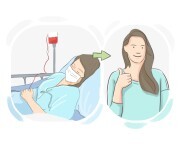
to recover from an unpleasant or unhappy experience, particularly an illness

to be prominent and easily noticeable

to leave a situation, place, or person
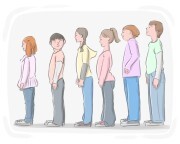
to stand in a line or row extending in a single direction
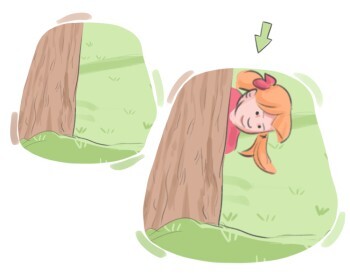
to appear or happen unexpectedly

to leave a bus, train, airplane, etc.

to place something somewhere noticeable

to go someplace with another person

to give something as a gift or donation to someone
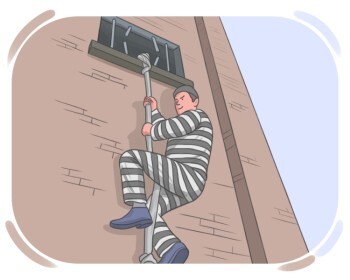
to escape from or suddenly leave a specific place, situation, or person, often in a hurried manner
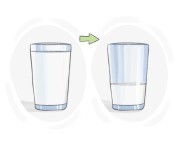
to have a decrease in price, temperature, etc.
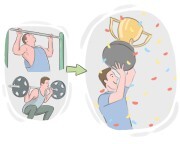
(of a plan or action) to succeed and have good results

to find a solution to overcome a problem or obstacle
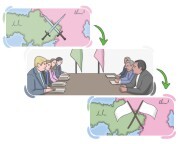
to make something or someone return or be returned to a particular place or condition

to suddenly move toward someone to threaten them or physically attack them

to continue an activity


to no longer be alive
| 250 Most Common English Phrasal Verbs | |||
|---|---|---|---|
| Top 1 - 25 Phrasal Verbs | Top 26 - 50 Phrasal Verbs | Top 51 - 75 Phrasal Verbs | Top 76 - 100 Phrasal Verbs |
| Top 101 - 125 Phrasal Verbs | Top 126 - 150 Phrasal Verbs | Top 151 - 175 Phrasal Verbs | Top 176 - 200 Phrasal Verbs |
| Top 201 - 225 Phrasal Verbs | Top 226 - 250 Phrasal Verbs | ||
