pattern

Relational Adjectives - Adjectives of Chemistry

These adjectives relate to the field of chemistry, which encompasses the study of matter, its properties, composition, reactions, etc.

Review

Flashcards

Forms

Spelling

Quiz

Start learning
Categorized English Relational Adjectives
cellular
cellular
[Adjective]

relating to or consisting of cells, the basic structural units of living organisms or systems

Ex: The human body is made up of trillions of cellular units, each performing specific functions. 
Close
Sign in
molecular
molecular
[Adjective]

consisting of or relating to molecules, which are groups of atoms bonded together

Ex: Molecular bonding determines the arrangement of atoms in a compound. 
Close
Sign in
chemical
chemical
[Adjective]

concerning or used in the scientific field of chemistry
Ex: Chemical reactions involve the rearrangement of atoms to form new substances. 
Close
Sign in
radioactive
radioactive
[Adjective]

containing or relating to a dangerous form of energy produced by nuclear reactions

Ex: Radioactive isotopes are used in medical imaging for diagnostic purposes. 
Close
Sign in
elemental
elemental
[Adjective]

relating to the basic building blocks of matter, known as chemical elements

Ex: Elemental analysis determines the composition of a substance by identifying the elements present. 
Close
Sign in
oxidative
oxidative
[Adjective]

referring to processes or reactions involving the addition of oxygen or the loss of electrons from a substance

Ex: Oxidative metabolism involves the breakdown of molecules with the release of energy. 
Close
Sign in
acidic
acidic
[Adjective]

referring to substances or solutions that have a pH value lower than 7, indicating a higher concentration of hydrogen ions and often a sour taste

Ex: Lemon juice is acidic due to the presence of citric acid. 
Close
Sign in
basic
basic
[Adjective]

having the characteristics of a base, such as a pH above 7, the ability to neutralize acids, or the presence of hydroxide ions

Ex: Soap is basic and often used for cleaning due to its ability to remove grease and oils. 
Close
Sign in
catalytic
catalytic
[Adjective]

referring to substances or processes that facilitate or speed up chemical reactions without being consumed in the process

Ex: Platinum is used as a catalyst in catalytic converters to reduce harmful emissions from vehicles. 
Close
Sign in
opioid
opioid
[Adjective]

related to pain-relieving medications derived from opium or synthetic alternatives
Ex: Opioid medications such as morphine and oxycodone are commonly prescribed for severe pain management. 
Close
Sign in
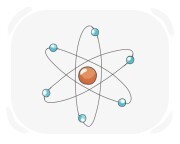
atomic
atomic
[Adjective]

related to atoms, the smallest units of matter, including their structure, properties, and interactions

Ex: The atomic structure of an element includes its nucleus, composed of protons and neutrons, surrounded by electrons. 
Close
Sign in
subatomic
subatomic
[Adjective]

relating to particles or forces that exist within atoms, including particles smaller than atoms themselves or the interactions between these particles

Ex: Subatomic particles interact through fundamental forces, such as electromagnetism and the strong and weak nuclear forces. 
Close
Sign in
thermal
thermal
[Adjective]

related to heat or temperature, including how heat moves, how materials expand with temperature changes, and the energy stored in heat

Ex: As the temperature increased, the metal expanded due to thermal expansion. 
Close
Sign in
biochemical
biochemical
[Adjective]

referring to processes or substances related to the chemical reactions that occur within living organisms

Ex: Biochemical reactions in cells produce energy for cellular processes. 
Close
Sign in
aliphatic
aliphatic
[Adjective]

referring to organic compounds with straight or branched carbon chains, not cyclic or aromatic structures

Ex: Alkanes are a type of aliphatic hydrocarbon with straight or branched carbon chains. 
Close
Sign in
isomeric
isomeric
[Adjective]

relating to molecules or compounds that have the same molecular formula but different arrangements of atoms

Ex: Isomeric compounds have the same number of atoms of each element but arranged differently. 
Close
Sign in
nuclear
nuclear
[Adjective]

relating to or involving the central part of an atom, called the nucleus

Ex: Nuclear energy is generated through the process of splitting or combining atomic nuclei to produce heat. 
Close
Sign in
arsenic
arsenic
[Adjective]

relating to or involving the chemical element arsenic, known for its toxic properties

Ex: Arsenic poisoning can occur through ingestion, inhalation, or skin contact with arsenic-containing substances. 
Close
Sign in
LanGeek
Download LanGeek app